Intentions of the Holy Father for April

Ecology and Justice. That governments may foster the protection of creation and the just distribution of natural resources.
Hope for the Sick. That the Risen Lord may fill with hope the hearts of those who are being tested by pain and sickness.
Showing posts with label saints. Show all posts

The Spirituality of the Fast

This post was going to start out about the spirituality of fasting, as you may have guessed from the title. I hadn't put down the first words yet when I realized how pompous it would be to sit down to such a topic, that has graced the pens of sages and saints from St. Matthew to St. John Paul II. With these men of deep prayer and learning, who labored and loved the Lord, having doubtless spent thousands of hours and days learning about this subject the hard way, anything I can say in an abstract vein will be glib. I might as well talk about the ardors of child rearing.

Instead, I will leave it alone and note that while I am fasting, I feel the deep hunger in my soul, that the rest of the time I cover up with all sorts of things trivial or terrible. Fasting is sacramental in this way, that it makes physically manifest a spiritual reality.

The days I fast are long, and tiring, and usually more peaceful than the days in which I do not. That seems odd, in a sense, because things like hunger are supposed to add tension to the nerves. Maybe an added element is that when I fast, I lay my fast at the feet of Our Lady as often as I can remember to do so. She who prays for us now and at the hour of our death cannot help but notice my hunger and assuage it somewhat with her love.

But Can I Be Peter?

The readings today (Third Sunday of Easter: Acts 5:27-32, 41-44; Ps 30; Rev 5:11-14; Jn 21:1-19) got me thinking on an old topic.  A few weeks ago, I asserted that I am Judas.  A friend blogger begged to differ.  LuceMichael commented:

I dunno Ryan, I'm going to have to disagree with you on this one. What Judas did was purely evil. Not just sinful, but truly and historically evil. Saying "I am Judas" is akin to reckoning ourselves as the contemporaries of Jesus who condemned Him to death, a view which VII rejects, btw.

More appropriate is a comparison to Peter, or the other apostles who abandoned Jesus in fear and denial. They sinned, turned away from doing the right thing, but in the end, were redeemed and in the case of Peter, who was exhorted by the Lord to "turn back and strengthen" the others, much good came from a flawed man. In fact, the papacy and Magisterium came from him, once he was humbled, contrite and forgiven.

There is always the philosophical and theological conundrum of whether Judas is in Hell. While none of us can say for sure, there is at least a strong likelihood that he *is* in Hell, having sold out the Lord, and taking his own life in despair of mercy.

Judas and Peter make an interesting contrast in their response to the own guilt in the passion. But most of we Christians are NOT Judas; most of us, though we sin carelessly, thoughtlessly, or maliciously and with intent, still do not come to the level of evil that Judas attained. With the grace of God, I will never completely deny Jesus. Through all my sins and faults, I know Him to be my Lord and Savior.

And He is Risen!
My major point was that my sins are the things that necessitate the death of the Messiah.  In a way, Judas was less culpable than I, perhaps, because he was more confused about who Jesus is.  I, on the other hand, know precisely who Jesus is, and yet sin and sin again.  We must be careful here, because the sin that landed Judas in hell, if that is where he is, was not treason against God, nor was it apostasy.  Those sins are forgivable (Jn 20:23).  St. Peter committed the same sins after all, though in a different way.  The sin of Judas was rejection of forgiveness, rejection of the Holy Spirit prompting him to repentence.  Judas thought that somebody like himself, someone so enormously important who had done a thing so enormously wrong, could never be forgiven.  And, in a sense, he was right.  Without repentence, there can be no forgiveness of sins (Mk 3:29; CCC 1864).

But St. Peter repented.

Her point is very well made.  Judas killed himself (Mt 27:5-8) but St. Peter repented.  In today's gospel reading, our Lord asks St. Peter three times if he loved Him as they strolled along the beach together, perhaps arms-over-shoulders.  The threefold act of love that St. Peter makes rehabilitates him after the threefold betrayal.  Note well that these acts of love, these acts of contrition, do not undo what Peter has done, but rather, they set him on a new path.  So it is with the penances that we perform after our confessions.  They actualize our repentence and put us on a new path  So how do we get to be like St. Peter, who did so many wonderful things for the Church, even dying for the sake of our blessed Lord?
 
We repent.

Face it.  We are probably not going to stop sinning any time soon - though make no mistake: in grace, it is possible, so strive for heavenly perfection.  Strive for sanctity!  But, observing our own failure, our own repeat failures, even our own egregious failures, we must not give up.  We must not go hang ourselves as Judas did, either literally or metaphorically.  Do not say of our holy religion, "This is a hard saying; who can listen to it?" (Jn 6:60) and then abandon it as those who could not stand the Eucharistic teaching of our blessed Lord (John 6:66).  Examine your conscience and pray for the grace of honesty.  So many people are afraid to confront their own sins, so they say, "Oh yeah, well the Church sucks because of X."  When we have reached our maximal efforts and failed yet again, perhaps we will then realize on a deep, deep level that it is not our own efforts that save us.  Most of us, Catholic, Protestant, Evangelical, Pentecostal, really believe deep down inside believe that we can save ourselves, that we must save ourselves, that we must prove ourselves to God.  That is all bosh.

Jesus Christ saves us.

"While we were yet sinners Christ died for us," (Rom 5:8).  He loves us even in the midst of sin.  And no matter how badly we sin, we have only to turn back, confess our sins to a priest, and receive the gift of a fresh start.  We must pray for the courage to face our sins head on, for the grace to be St. Peter.

If You Are Feeling Weighed Down

If you are Catholic, and trying to do it (i.e., be Catholic) well, and are paying attention, you probably feeling a little down about all the stuff going on right now.  I know I am.  I don't have anything really articulate to write.  The thing feels to me like a very dense storm cloud, fiercer than normal anti-Church nonsense.  It's very incongruous with the weather being so fine outside my window.  The cross is not ours to bear alone, though.  Please do not give up looking to Jesus, looking to heaven for help.

There should be some consolation in this: that our blessed Lord told us that we would be persecuted (Jn 15:20).  Now, don't get me wrong.  Getting called on sin - that's not persecution, it's a public service that we apparently need.  Being gleefully, ferociously stalked by self-appointed "watchdogs" who completely neglect their own house and who bay and howl for the House of God to be torn down to its foundations, head first - that is a little bit closer to what is meant by persecution.  At least, it gives us a watered-down taste of what our brothers and sisters in other countries face every day on a much more violent scale.  We should allow this animosity provoke us to prayer for our enemies and for our brethren whom they treat worse.
We should also take comfort in this prophecy of St. Peter, the first pope, who himself came against fierce opposition:
For the time has come for judgment to begin with the household of God; and if it begins with us, what will be the end of those who do not obey the gospel of God? (1 Pt 4:17)
If you find yourself fazed or perturbed, please remember these words of Teresa of Avila:
Let nothing perturb you,
nothing frighten you.
All things pass.
God does not change.
Patience achieves everything.
Whoever has God
lacks nothing.
God alone suffices.
 It's going to be OK.  Hold fast, pray, enter into the Triduum with your whole heart.  Remember Jesus.

Beautiful Snippets from the Fifth Sunday of Lent

From the first reading, Is 43:16-21:

Thus says the LORD,
who opens a way in the sea
and a path in the mighty waters,
who leads out chariots and horsemen,
a powerful army,
till they lie prostrate together, never to rise,
snuffed out and quenched like a wick.
Remember not the events of the past,
the things of long ago consider not;
see, I am doing something new!
After starting with a reminder of God's powerful, demonstrated by mighty deeds in real history, the prophet tells Israel, and us, that God is going to set us on a new path, in which former sins are transcended.  The joy that His plans for us will bring is described in Ps 126:
When the LORD brought back the captives of Zion,
we were like men dreaming.
Then our mouth was filled with laughter,
and our tongue with rejoicing.
Our bondage to sin and its ugly consequences will be broken.  St. Paul tells us how much this new life should be worth to us in the Epistle, taken from Phil 3:8-14:
For his sake I have accepted the loss of all things
and I consider them so much rubbish,
that I may gain Christ and be found in him...
depending on faith to know him and the power of his resurrection
and the sharing of his sufferings by being conformed to his death,
if somehow I may attain the resurrection from the dead.
St. Paul continues to encourage us with his own efforts:
...forgetting what lies behind
but straining forward to what lies ahead,
I continue my pursuit toward the goal,
the prize of God’s upward calling, in Christ Jesus.
He would like us to share in them, no doubt.  Not only that, he wants us to join him in forgetting our spotty pasts except in as much as they humble us and become fertile soil for wisdom.  But guilt and shame from our past must fall away.  And lastly, Jesus' beautiful, beautiful words to the woman caught in adultery, whom he saved from stoning (Jn 8:1-11):
Then Jesus straightened up and said to her,
“Woman, where are they?
Has no one condemned you?”
She replied, “No one, sir.”
Then Jesus said, “Neither do I condemn you.
Go, and from now on do not sin any more.”
Let's use these last two weeks of Lent to our great advantage.  Let's enter into it with our whole hearts, praying fervently for the grace to rise higher in Christ, leaving behind sin and the scars it leaves, to be transfigured with Our Blessed Lord.

St. Patrick and the Snakes

I am rather inclined by nature to prefer natural explanations to supernatural ones, when it comes to understanding natural events or, for that matter, when it comes to analyzing claims of supernatural phenomena. I also understand the difficulties in interpreting historical accounts written by people more or less willing than myself to believe reports they have heard of the supernatural.

Don't get me wrong, I do believe in miracles as a possibility - and not just the "sunshine is a miracle" sort, either. I have made four pilgrimages to Lourdes and while there, I witnessed what seems to me to be the supernatural healing of a paraplegic. I also have had a couple near brushes with death that have given me great confidence in my guardian angel, whose existence I do not take to be figurative, but very, very real. Realer than my own.

All of this is said by way of disclaimer, because I want also to say that I think the account of St. Patrick driving the snakes from Ireland is probably at least somewhat allegorical rather than purely factual in nature.
The Ireland of Patrick's day, the Ireland that enslaved him and the Ireland that the missionary bishop evangelized, was not a nice place. Britain being the edge of Roman civilization, Hibernia (as they called Ireland) was the beginning of the shadows. Beyond that was the dark and brooding North Atlantic, which no man had sailed. The island did not have a government and laws, but had warlords and power. It did not have manorial estates or great cities like those found in the Roman world, but id did have slaves like the Romans had. It did not have elegant priests with elaborate cults to various gods gathered from around the world by explorers and soldiers; no, it had gods of its own, and fearsome priests who conducted deadly and secret rituals. Those fearsome priests fed their fearsome gods with the fearful blood of human victims.

I believe that the snakes in this allegory about St. Patrick represent the evil demons hidden behind the masks provided by the names of those Celtic gods. Wherever those dark gods have been worshiped - Hibernia, Mesoamerica, Phoenicia, and beyond - they have demanded blood, and they have shared a remarkable interest in the blood of virgins and children. The most virginal of virgins (except for the Virgin) and childish of children is, of course, a little baby. No blemish nor spot, on the skin or in the heart - the perfect sacrifice for demons that hate God, that hate goodness, that hate innocence and purity, that hate. I believe they hate babies for this reason, and I believe that they are trying to prevent the final return of Jesus Christ, whom they believe will return as he came the first time: a little child.


St. Patrick, who prayed and fasted, who was unsuccessfully poisoned and burned, who loved his enemies, drove the demons out of Hibernia. I bet the people, living long under those dark shadows, were immediately interested in self-sacrificial love as a, shall we say "viable," alternative to the scheming sacrifice of others that was taught by their own priests. When they saw that immense love in his own person, they were hooked. What is known is that within a few years of his arrival, many average folks and several chieftains in Hibernia had been converted by the ex-slave with the shamrock. He provoked fierce opposition from entrenched religious and political interests in doing so, but by the time he passed to eternal reward, St. Patrick seems to have converted almost the whole darned place. In any event, Hibernia was well on its way to becoming Ireland. Ireland is not the First Daughter of the Church (that is France), nor the Finest Flower of Catholic Culture (I am going to award that title to Italy), nor the Most Ardent Defender of the Faith (let's say Spain, which conquered the Moors). But I will say that Ireland, her recent religious malaise aside, is perhaps of all rocky and cracked places, the country with the most tenacious faith.

St. Patrick did that.

Think of our country. We have immense potential and tremendous accomplishments. We unfortunately have a recent fascination with solving our problems by killing them. Even our littlest little "problems" get killed without quarter or mercy by our modern, scientific, medical and judicial priesthoods. Our country is, I believe, in the feverish and menacing grip of very wicked spirits. They pervert our leaders, enchant our spokespeople, drowse our people, mutilate our laws, and are eroding our nation in so many ways.
St. Patrick might very well be a powerful intercessor for us.  Think on that over your drinks tonight.

St. Patrick, please drive away the snakes from our nation. Amen.

St. Agnes of Bohemia

This life of St. Agnes of Bohemia, whose memorial is today, is taken from AmericanCatholic.org:

Agnes was the daughter of Queen Constance and King Ottokar I of Bohemia. At the age of three, she was betrothed to the Duke of Silesia, who died three years later. As she grew up, she decided she wanted to enter the religious life.
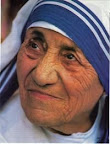
After declining marriages to King Henry VII of Germany and Henry III of England, Agnes was faced with a proposal from Frederick II, the Holy Roman Emperor. She appealed to Pope Gregory IX for help. The pope was persuasive; Frederick magnanimously said that he could not be offended if Agnes preferred the King of Heaven to him.

After Agnes built a hospital for the poor and a residence for the friars, she financed the construction of a Poor Clare monastery in Prague. In 1236, she and seven other noblewomen entered this monastery. Saint Clare sent five sisters from San Damiano to join them, and wrote Agnes four letters advising her on the beauty of her vocation and her duties as abbess.

Agnes became known for prayer, obedience and mortification. Papal pressure forced her to accept her election as abbess; nevertheless, the title she preferred was "senior sister." Her position did not prevent her from cooking for the other sisters and mending the clothes of lepers. The sisters found her kind but very strict regarding the observance of poverty; she declined her royal brother’s offer to set up an endowment for the monastery.

Devotion to Agnes arose soon after her death on March 6, 1282. She was canonized in 1989.
Agnes was the daughter of Queen Constance and King Ottokar I of Bohemia. At the age of three, she was betrothed to the Duke of Silesia, who died three years later. As she grew up, she decided she wanted to enter the religious life.
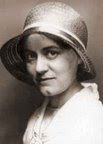
After declining marriages to King Henry VII of Germany and Henry III of England, Agnes was faced with a proposal from Frederick II, the Holy Roman Emperor. She appealed to Pope Gregory IX for help. The pope was persuasive; Frederick magnanimously said that he could not be offended if Agnes preferred the King of Heaven to him.
After Agnes built a hospital for the poor and a residence for the friars, she financed the construction of a Poor Clare monastery in Prague. In 1236, she and seven other noblewomen entered this monastery. Saint Clare sent five sisters from San Damiano to join them, and wrote Agnes four letters advising her on the beauty of her vocation and her duties as abbess.

Agnes became known for prayer, obedience and mortification. Papal pressure forced her to accept her election as abbess; nevertheless, the title she preferred was "senior sister." Her position did not prevent her from cooking for the other sisters and mending the clothes of lepers. The sisters found her kind but very strict regarding the observance of poverty; she declined her royal brother’s offer to set up an endowment for the monastery.

Devotion to Agnes arose soon after her death on March 6, 1282. She was canonized in 1989.

Did you catch that? Seven hundred and seven years (707!) from the time she died until Holy Father John Paul II canonized her. Talk about patience! St. Agnes of Bohemia strikes me as a great saint for Lent. She spent much of her life in the secular world doing good for Jesus. She entered a convent that she founded, did not seek prominent position or honors, was a gentle servant, but uncompromising in her devotion to Jesus. This Lent, let's continue to burrow into the interior monastery that God wants us to build in our heart. Let's deepen our devotion to prayer, detachment, and service to the poor.

St. Agnes, Poor Princess of Bohemia, pray for us.

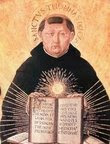
Thank You, St. Thomas Aquinas...

...for some of the most beautiful verse in the Western tradition.

Adoro te devote, latens Deitas,
Quæ sub his figuris vere latitas;
Tibi se cor meum totum subjicit,
Quia te contemplans totum deficit.
I devoutly adore you, O hidden God,
Truly hidden beneath these appearances.
My whole heart submits to you,
And in contemplating you, it surrenders completely.
Visus, tactus, gustus in te fallitur,
Sed auditu solo tuto creditur.
Credo quidquid dixit Dei Filius;
Nil hoc verbo veritátis verius.
Sight, touch, taste are all deceived about you,
But hearing suffices firmly to believe.
I believe all that the Son of God has spoken;
There is nothing truer than this word of truth.
In cruce latebat sola Deitas,
At hic latet simul et Humanitas,
Ambo tamen credens atque confitens,
Peto quod petivit latro pœnitens.
On the cross only the divinity was hidden,
But here the humanity is also hidden.
I believe and confess both,
And ask for what the repentant thief asked.
Plagas, sicut Thomas, non intueor:
Deum tamen meum te confiteor.
Fac me tibi semper magis credere,
In te spem habere, te diligere.
I do not see the wounds as Thomas did,
But I confess that you are my God.
Make me believe more and more in you,
Hope in you, and love you.
O memoriale mortis Domini!
Panis vivus, vitam præstans homini!
Præsta meæ menti de te vívere,
Et te illi semper dulce sapere.
O memorial of the Lord's death!
Living bread that gives life to man,
Grant my soul to live on you,
And always to savor your sweetness.
Pie Pelicane, Jesu Domine,
Me immundum munda tuo sanguine:
Cujus una stilla salvum facere
Totum mundum quit ab omni scelere.
Lord Jesus, Good Pelican,
wash me clean with your blood,
One drop of which can free
the entire world of all its sins.
Jesu, quem velatum nunc aspicio,
Oro, fiat illud quod tam sitio:
Ut te revelata cernens facie,
Visu sim beátus tuæ gloriæ. Amen
Jesus, whom now I see veiled,
I ask you to fulfill what I so desire:
That on seeing you face to face,
I may be happy in the seeing of your glory. Amen

Happy feast day, Domicans!

St. Bernard of Clairvaux on the Church

O humility! O sublimity! Both tabernacle of cedar and sanctuary of God; earthly dwelling and celestial palace; house of clay and royal hall; body of death and temple of light; and at last both object of scorn to the proud and bride of Christ! She is black but beautiful, O daughters of Jerusalem, for even if the labor and pain of her long exile may have discolored her, yet heaven's beauty has adorned her.

St. Bernard of Clairvaux, In Cant. Sermo 27:14 PL 183:920D

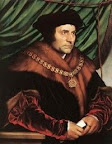
Give Me, Good Lord... a Prayer of St. Thomas More

Glorious God, give me grace to amend my life, and to have an eye to my end without begrudging death, which to those who die in you, good Lord, is the gate of a wealthy life.  And give me, good Lord, a humble, lowly, quiet, peaceable, patient, charitable, kind, tender and pitiful mind, in all my works and all my words and all my thoughts, to have a taste of your holy, blessed Spirit.

Give me, good Lord, a full faith, a firm hope, and a fervent charity, a love of you incomparably above the love of myself.  Give me, good Lord, a longing to be with you, not to avoid the calamities of this world, nor so much to attain the joys of heaven, as simply for love of you.  And give me, good Lord, your love and favor, which my love of you, however great it might be, could not deserve were it not for your great goodness.

These things, good Lord, that I pray for, give me your grace to labor for.  Amen.
St. Thomas More, 1535 - a week before his martyrdom

All Called to Be Saints

Here is the first contribution of Rev. Mr. David Wells to this blog.  I have adapted slightly, with his permission, the homily that he gave on the Feast of All Saints, about two weeks ago.  Before long, his posts will appear with his own signature.  Enjoy!

The Marine Corps Marathon on a recent Sunday in D.C. and I know a few people who ran in the race.  One was a priest who used to be where I currently serve as deacon, at St. Jude’s, Rockville, Maryland; he goes by the name of Fr. Rob Walsh.  From what I hear, Fr. Walsh finished the marathon but it was not beautiful to behold.  Even with months of training, running a marathon is no easy feat.  Everyone who runs a marathon follows a training regimen, more or less strictly, so that when race day comes, they don’t get to mile seven and start looking for the nearest metro stop.  In other words, they have a goal—finishing the marathon—and a plan for how they will carry that out—their training regimen.

"My uncle was fond of saying that the goal of life is heaven.  “The goal of life is heaven.”  One spiritual writer puts it this way: “The ultimate failure in life is not to be a saint.”   Recently, the Church celebrated the Feast of All Saints.  We honor those who have reached that goal of heaven and we ask for their help and prayers to rally us on to the finish line.  The saints are like those people who cheer us on after they’ve finished the race, because they know that the award is well worth the struggle.  But even if we have the goal firmly established, how do we reach that goal?  The last thing we want is to be like that person who decides to run a marathon and has no plan for running it.

"Now the plan for going about reaching our goal of heaven is unique for each of us.  God has a distinct plan, a distinct mission, for each one of us.  But that being said, there are some things we all share in common.  There are certain things that if we keep them in mind and carry them out, will aid all of us in reaching our goal of heaven.  I’ve come up with three suggestions, but the Lord knows there are many other things.

"The first piece of advice I have is “keep your eye fixed on the prize.”  When you first begin training for the marathon and you’re sore and out of breath after a half mile; when it’s 95 degrees out and not a bit of shade on the route; and when those shoes everyone says you have to buy cost more than your last suit.  When you encounter all of these setbacks, if your goal is not fixed firmly in place—to run a marathon—you’ll soon give up and head back for the air conditioning.

"The saints recognized and always kept at the forefront that the goal of life is union with God in heaven.  This motivated not just their big decisions but was the motivating factor behind their small decisions as well.  We should think about heaven . . . a lot.  It should fascinate us.  The first reading from the Book of Revelation powerfully and symbolically illustrates the glory of the saints in heaven.  St. John asks who the persons wearing white robes and holding palm branches are.  He is told that these are the saints who suffered great tribulations on earth but whose robes have been washed by Christ’s blood and now glorify God forever.

"In the second reading, St. John reminds the community to whom he writes that they are God’s children now.  This great saint and mystic admits next, “What we shall be hasn’t been revealed.”  It’s beyond our wildest imagination and surpasses our greatest hopes what we shall be like in heaven.  And finally, in the Gospel, Jesus encourages his disciples to undergo suffering and face difficulties during this life, because they will enjoy great glory in heaven.  “Blessed are the poor in spirit, for theirs is the kingdom of heaven.”  “Blessed are they who are persecuted for the sake of righteousness for theirs is the kingdom of heaven.”  The saints greatly look forward to heaven and to being with God forever.  We, too, must keep our eye fixed on the prize, and not get too distracted by our everyday problems.  This world is short, eternity is forever.

"The second thing we should keep in mind to reach our goal of heaven is that it’s possible.  It’s possible to be a saint.  No, this is too weak a statement.  It’s expected of us, it’s normal in God’s eyes.  Not only that, but God wants us to be saints and will give us every aid necessary in order to reach our goal.  Sometimes it feels like God is working against us, but this is never the case.  He’s our number one fan and supporter.   Pope John Paul II canonized more saints in his 25 years as pope than were canonized in the previous 450 years.  In doing this, he wanted to show us that not only is it possible to be a saint, it should be thought of as normal to be one.  We’re all called to be one.

"One of the things that makes this difficult is that we think the saints were superhuman and we could never equal their feats.  We don’t read souls, pray all day, talk with God in mystical prayer, or appear in two places at once.  Well, don’t worry, because the saints, apart from Mary, were far from perfect.  St. Padre Pio, an Italian, was known for being short-tempered.  St. John Marie Vianney failed out of seminary and was sent to the middle-of-nowhere city of Ars, France because it was thought there he could do the least damage.  St. Teresa of Avila got so mad at God once, she shouted at him, “if this is the way you treat your friends, no wonder you have so few!”  The saints weren’t great because they were superhuman or perfect, but because they realized they were sinners and relied totally on God.  Reaching our goal is possible, because God desires it, the saints root us on, and the Church is like our mother, giving us the spiritual nourishment to accomplish it.

"The third thing to keep in mind as we strive toward our goal is that we fail daily, but we should persevere nonetheless.  Discouragement is one of the most debilitating things for us as faithful Christians.  Scripture says that even the just man falls seven times a day.  Mother Teresa wisely said that she received so much grace because she was such a great sinner.  The great St. Paul tells us that he is the foremost of sinners.  But this doesn’t get him down.  He recognizes his sin, and then abandons himself to god’s infinite mercy.  After a century of two World Wars, countless other massacres, and many other evils, humanity is tempted to reflect and concentrate on its own sinfulness.  This couldn’t be any more false.  The message Christ gives us is that of mercy.  His mercy completely swallows up the worst of our sins if we turn to him with true contrition.  If we are faithful to the sacrament of confession, we are well on our way to reaching our goal.

"If we keep our eyes fixed on the prize of heaven, realize that it is not only possible but it’s expected of us, and if in spite of our failings we persevere in the race, we shall surely be among those who are with God forever in heaven.  This is our hope and this drives us on.  My brothers and sisters, let us enter the race, so that one day we may share the joy of the communion of saints in heaven.  My all the angels and saints pray for us and intercede for us."
Awesome, Deacon Dave! Thanks!

St Jude, You're the Man!

Today is the last day of my novena to St. Jude.  I am asking him for a full-time job, and for a couple other bleak prospects.  If he doesn't pull through this time, I'll give him another shot.  I hear he's good for it, though, so I am gonna trust him and wait and see.


(As a side note, I'd like to point out that I am very grateful for the part time work that I do have.  Thank you, Jesus.)

I Just Met the Coolest People


Bl. Valentin Paquay
Bl. Lodovico Pavoni
Bl. Eusebia
Palomino Yenes

Belgium
Italy
Spain

I recently finished writing three articles for an encyclopedia, each about one of the blessed Christians pictured above. When I applied to contribute biographies of new saints and beati to the publication, I had hoped to receive the names of VIP saints. That was all my ego doing the hoping. In the course of doing my research, I got to speak with a kind librarian, dig around in CUA's library, and dust off my Latin. The final product was three brief articles and a lesson from each of them.
  • The lesson I received from Bl. Valentin is this: the simple love of Jesus goes a long way.
  • Bl. Lodovico taught me that big things begin small, and that noble people are not do not feel themselves to be stooping when they attend to them.
  • Bl. Eusebia taught me that small is beautiful and that we will be happiest if we entrust our littleness to Jesus.
The lesson I learned from all three of them was really more of a reminder: Jesus has given me my britches and I shouldn't try to be too big for them.

I really enjoyed the learning about them, and hope you will too. Each one of them speaks to me from across the generations in a different way, but like all the saints, they say the same thing, only in their own way: "Do whatever He tells you," (Jn 2:5). Click their names beneath their portraits to read the Vatican's bio of each my new favorite pals.

Our Lady of Mt. Carmel


"But Mary kept all these things, pondering them in her heart," (Luke 2:19).

Necks Stretched Out

Today is the second anniversary of my blog. Also, and more importantly, it is the feast of Ss. John Fisher and Thomas More. Two years ago, I started off my blog with these reflections about those two men and the moral life. For the last two years those two men, especially St. Thomas, have played a heftier role in my devotional life, or at least become more important as role models. Below are some more thoughts I've thunk in the last two years.

When all the bishops of England yielded to the demand of King Henry VIII, John, the Bishop of Rochester refused. The King insisted that they break their ties with the Bishop of Rome and declare Him to be their spiritual sovereign. They soothed their consciences by convincing themselves that they weren't changing their religion, but only some political stances. The Pope, after all, was also the Prince of the Papal States and a political figure as well as religious. But St. John saw clearly that either the Church and her religion were constituted by Christ, or not. If not, then why bother with any of it? If so, then how dare one change it? And that the Pope was the leader of the Church, he could see no way around. In our own times many voices, even inside the Church, call for political compromises that offend the Law of God. Let us never yield.

St. Thomas More was executed by the King for even more diabolical reasons. The Church of England having broken from the universal Church founded by Christ, its new head proceeded to allow himself to divorce his wife and marry another (and another, and another, and another...) while she yet lived. St. Thomas didn't publicly oppose the thing. But then, he didn't have to: silence from one of the most celebrated commentators of the age was deafening. St. Thomas only seems to have wished to be allowed to resign his office (since he could not support the King's actions) and live out his days in peace and quiet. But the King wanted Thomas' blessing, because Thomas had been the senior judge of the Kingdom, and famously upright and honest. St. Thomas could not give his blessing to a sin. Badgered and beleaguered by the King, his country, and even his family, St. Thomas still refused. The whole world, except for the smothered voice of distant Rome, opposed St. Thomas. But the King's Good Servant refused to cooperate with sin regardless of how many thousands did. Let us never cooperate with evil.

For their troubles, St. John Fisher was executed today, 22 June, in 1535. St. Thomas More was executed a couple weeks later, on 6 July of the same year.

Ss. John Fisher and Thomas More, pray for us.

Seek to Know...

"Seek to know the path of spiritual childhood, without forcing yourself to follow this path. Leave works to the Holy Spirit," The Way #852, St. Josemaria Escriva.


Hadn't heard from him in a while, and I read this one at my desk when I got to work this morning. He is so excellent.

The People God Puts

I am from time to time amazed by the quality of the people that God puts into my life, and the timeliness with which our paths converge, and the fruit of the friendships that He gives us in each other. Today is St. Matthias day. St. Matthias was the disciple inducted by the Apostles into their little college to replace the fallen Judas Iscariot (Acts 1:23-26). Can you imagine how unnerving and humbling it must have been for him to be told, "Matthias, we feel that the Holy Spirit wants us to lay hands upon you and to share with you the ministry that Jesus gave to us before he ascended to his glory." "Me?" would be a reasonable, humble response.

I used very often to feel unworthy of my friends. Maybe I am - it's not for me to say. Now, I mostly just feel grateful for them, and that is all the difference in the world, and much better, I think. Reflecting on how much my friends tolerate in me helps motivate me to try to be tolerant with others. All this makes me think that it is probably a good thing to stretch ourselves a bit about who we are willing to be friends with.

Father, I pray You kindle in my heart love for those You bring into my life, so that in each other, we may encounter You, through Your Son Jesus Christ. Amen.


"Affection is responsible for nine-tenths of whatever solid and durable happiness there is in our lives," C. S. Lewis

Losing Your Life

Before I put up posts on the priesthood, prophecy, and kingship of the Christian lay faithful, I have a brief observation to make.

"For whoever would save his life will lose it, and whoever loses his life for my sake will find it. For what will it profit a man, if he gains the whole world and forfeits his life? Or what shall a man give in return for his life?" (Mt 16:25-26).

Many people may prance through life happily doping themselves up and dodging reality. They might try to do things their own way, and then find diversions and medications to cover up the pain - TV, sex, drugs, exercise, career, whatever. But we Christians do not have that option. We will either give up Christ's way or give up our own way. We can try to play it both ways, to serve both God and Mammon, but we will end up hating one or the other (Mt 6:24). Something has to give way, and if we continue to serve Christ, but have a hard time dying to ourselves, then Christ will kill us.

That sounds horrible, but I mean it, though not as it might sound. What I mean is that as we cling to him, he will will continue to work on us, to cut out the sick and cancerous parts of our souls. If we are recalcitrant and backslide, it will take longer to die to ourselves, but as long as we keep clinging to Christ, He will keep killing us, peeling away the things that we use to hide from Him, to hide from reality.

When we have finished dying to ourselves, or maybe even as we learn to die to ourselves (oh God, bring it sooner), a new sort of Life begins to grow in us. That Life is Christ in us, the engine (if you will) by which we are propelled into an eternity of joy. But the old way of living has got to die first.

The Perennial Philosophy

The Perennial Philosophy is a philosophy not invented, but identified, by Aldous Huxley - yes, the same dude who would go on to recommend LSD as a way to gain a new view of reality. Ok, so, before he got to that point, he wrote extensively about how certain elements of thought appeared in diverse sources. The basic principles of this philosophy found among puritans and pygmies are simple. Reality is real - both spiritual stuff and material stuff, and we cannot make them whatever we like just by intending to do so, or by calling them something different. A rose is a rose is a rose, and by any other name, it still smells the same. St. Thomas Aquinas saw it. Confucius saw it, and even said that the restoration of proper names to their things was the foundation of any real reform. We have to call a spade a spade. So those are the basic principles - reality is real, and we have to call things what they are. When we get away from this path, we get into real danger, the sort of danger of a man driving a car through a shopping mall, the whole way telling his passengers, "Relax, it's just the normal 9th Street Tunnel traffic! I can handle it."

The traditional moral code prohibiting murder, theft, etc., is part of it. The same perennial philosophy, this common inheritance of humanity's common sense, also sees marriage as the foundational unit of society and prohibits those things that directly attack it, like adultery, and also those things that call its purpose and function into question, such as contraception and homosexual relationships. These things call the purpose of marriage into question because, according to the perennial philosophy whether found in the West's Aristotelian Thomism or in China's Confucism, the purpose of marriage is the begetting of children and the mutual benefit of the spouses. Lopping off one of those purposes does not merely leave a sterilized marriage, but a crippled or imitation marriage. You can call it what you like. The pioneers of our present situation called it "companionate marriage," marriage for companionship only. But whatever they called it, it was not marriage according to the perenniel philosophy.

The trick in undermining the perennial philosophy in the West has been that the worst things are saved for last. Nobody came out eighty years ago and said what they wanted for this foundational institution not merely of the West but of all human society. They didn't say that they wanted to see it virtually liquidated. They said they wanted to make it more about love. That sounded real nice, I bet. But they snuck in a concept of love that had chiefly to do with feelings, and was not so much about permanence and the begetting of children. Everything since regarding marriage has been legitimated on the basis of this new, false concept of love - love as a feeling. The problem with feelings isn't that they are bad. They are unstable. And obedience to feelings as if they were gods explains a great deal of the fifty percent divorce rate, for starters.

It's going to be hard for us to transcend our feelings and do what's right even when it doesn't feel good. We won't be able to do it on our own, and as a culture we've gone too far down this road of irresponsibility masquerading as love merely to tweak our course. We need wholesale repentence. Only Jesus can bring it. We who know we need it also need to pray for it. If the Pelosis of the world are leading us into moral oblivion, they will be held accountable. If we who think we know better don't spend hours fervently praying, by our prayers hitting the brakes, we will be held accountable for that.

St. Thomas Aquinas made the bulk of his academic career going around Europe after a man named Sieger of Brabant, who said you could have contradictory truths (not perceptions, but realities), and that whatever you called a thing, that it was. Everywhere St. Thomas went, he calmly tried to get folks to listen to common sense and reason. While he lived, he was very successful because he was very prayerful. Let's follow his example.

St. Thomas Aquinas, pray for us.

Some Words from Cardinal Dulles

Cardinal Dulles, shortly after September 11, was asked by his society to speak on the catastrophe. The New England province of the Society of Jesus has printed his words in America magazine. They are reproduced below:

"It was suggested to me that I should use this occasion to say a few words about hope, since this virtue seems in short supply in these dark days.

Our hopes tend to fade whenever we cease to be in control. For the moment we Americans seem to have lost control of our destiny. We are afraid because our future does not rest in our own hands. On September 11 two great symbols of our security collapsed, or at least suffered grave damage. The World Trade Center towers looked very solid, as did the walls of the Pentagon, but both proved to be paper thin. The growing likelihood of biological warfare raises our anxiety yet further. Not only our wealth and military power, but also our health is at risk.

It will be for others to address the economic, military, and medical problems. As a theologian, I have to recognize that Christian hope never rests on material things. As individuals we try to follow the teaching of Jesus, who reminds us that rust corrodes, moths consume, and thieves break in and steal. Jesus instructs us to build treasure in heaven, the one bank that can never fail. The only thing that counts in the end is whether or not we hear the greeting of the Lord, “Well done, you good and faithful servant.”

Jesus Christ is not only the personal hope for each one of us. He is also the hope of the world. If the world turns away from Him, it goes terribly astray. The pursuit of riches produces massive poverty; the pursuit of freedom begets slavery; and the pursuit of peace ends in destructive violence. But with the strength and generosity that comes from the Lord we can take part in building here on earth what the liturgy calls “a kingdom of truth and life, of holiness and grace, of justice, love, and peace.”

As I reflect on the past half century and more, I am immensely grateful for my vocation to share in the apostolate of the Society of Jesus. As Jesuits, we are dedicated to the gospel of hope. We seek to place our own hope in God alone and to help others to focus their hopes on Him. This apostolate of hope is immensely relevant today, when many people are on the brink of discouragement and despair. But you, at least, are not. Seeing so many of you, I am reminded that we Jesuits could achieve nothing without friends such as yourselves, who support our work and do it with us. You are as important to our work as any Jesuit is. Whatever the future holds, we can only be assured of this: that nothing we do together in the service of the Lord will be done in vain."


If you've never had the pleasure of meeting the late Cardinal, who among other things was the first future Cardinal to have served the U.S. under arms in time of war, I recommend you do meet him by reading one of his many books or articles.