Intentions of the Holy Father for April

Ecology and Justice. That governments may foster the protection of creation and the just distribution of natural resources.
Hope for the Sick. That the Risen Lord may fill with hope the hearts of those who are being tested by pain and sickness.
Showing posts with label priesthood. Show all posts

How Religious Communities Heal Hearts

Anchoress, thanks for this video from the Boston Globe.


It got me thinking. That's always dangerous. A beautiful couplet of books, The Man on the Donkey, Pt. 1 and Pt. 2, by H. F. M. Prescott, show a similar dynamic.  The pair of books unfold and draw together the lives of disparate historical and fictional characters living in the time of Henry VIII.  In them, a battered and abused girl is sent to a convent so that she will no longer burden her older sister by existing.  Previously, the convent had been portrayed as worldly and petty in its aspirations: life was filled, apparently, with bickering over rugs and boasting over which sister had the most gold pins to hold her veil upon her head.  As the abused girls moves into the convent, the reader begins to see another side.  In this world vastly kinder than the one into which she was born, the girl begins to blossom as a person, having encountered simple, untangled and unmanipulative love for the first time.  I myself was startled by the ease with which the author, without ever re-representing or changing the personality of the convent, shows it first from one perspective, and then from another: worldly than it ought to be, but a haven of sanctity compared to the world.

During my time in seminary I saw something of the same dynamic.  Many of the men, myself included, thought the place very much more worldly than it ought to be.  Yet visitors were always and uniformly amazed by its quiet warmth, friendliness, hospitality, and the ease with which a heart lapses into prayer in that place.  We did not live in a place of lollipops and sunshine, and there weren't love-bombs, either... which is probably a good thing.  But there was a place where genuine love could gradually, organically grow and bring about real healing and a real kind of new life in the men that arrived there.  I saw it happen.  I recall one man who was very poorly socialized, a bore and boor, and very quickly found himself nearly isolated in that house of 150 Christian men because of it.  I suspect it was not the first time people had a hard time saying, "Well, that's just So-and-so.  You know how he is," because for most people, even good people, at some point, enough is enough.

But I also think of a friend of mine, a man who lived across the hall from me - well liked and popular because intelligent, athletic, easy-going, responsible, and kind.  This man told me that he was not going to just watch So-and-so crumble and fall away.  He couldn't bring himself to think, "Good riddance."  I also know that the petty unkindness and gossip against the unpleasant man became so bad that a very popular, well-respected, and high-ranking faculty member addressed So-and-so's class in his absence.  He told them that the faculty were aware of So-and-so's problems and issues.  There was no need to keep pointing them out to the faculty or to each other.  It was best just to be a friend to So-and-so, and to pray for him.  At first, I thought it unprofessional or even reckless of the faculty member to address the class so openly about what would probably be considered their classmate's personnel matter.  At least, that's what it would be considered in the world.  But there, in that house of God, it was a personal matter - and personal matters sometimes require far more delicacy than personnel matters, and sometimes far less.


Lastly, I think about how I watched, saw with my own eyes, the growth of So-and-so.  An irritating mannerism fell away.  A new friend was made.  Someone invited So-and-so to join in.  Another perplexing behavior was moderated.  So-and-so made another friend.  People stopped saying things harshly about So-and-so behind his back.  More people were willing to invite him to more things.  It became clear that he wasn't so stupid as people thought at first, even if a bit more uncouth than they liked.  People went from defending him on principle to defending him on the basis of his actual strengths.  It turned out he was athletic enough that, his abrasive characteristics diminishing, people didn't mind - no, actually wanted him on their team.  He started to enjoy his studies.  More prayers were offered up for So-and-so, doubtless, than anyone on earth will ever know.  For that matter, So-and-so went from being known for the amount of time he spent in front of the community television to being a man noted for the discipline of his prayer.  A man who looked like he wouldn't last the first year because he was so aggravating has since progressed well on the way to being a good and holy priest, certainly of great use to the People of God.  In that seminary, that house where seedlings are transplanted like stalks of rice, that man came alive in a new way.

So it is with the Church as a whole.  In the rock tumbler of our shared life in the Spirit, we are first to grind down sharp edges, then polish natural virtues, and at last glow like gems of holiness.  It is not a romantic thing, but a gritty thing.  Well, it is romantic in the sense of being adventurous, but not in the sense of being smooth or suave.  Temptations do not flee the life of holiness, but flock to it like moths.  We in the Church are called to live in a way different than that found in the world outside.
For as in one body we have many members, and all the members do not have the same function, so we, though many, are one body in Christ, and individually members one of another. Having gifts that differ according to the grace given to us, let us use them: if prophecy, in proportion to our faith; if service, in our serving; he who teaches, in his teaching; he who exhorts, in his exhortation; he who contributes, in liberality; he who gives aid, with zeal; he who does acts of mercy, with cheerfulness.

Let love be genuine; hate what is evil, hold fast to what is good; love one another with brotherly affection; outdo one another in showing honor. Never flag in zeal, be aglow with the Spirit, serve the Lord. Rejoice in your hope, be patient in tribulation, be constant in prayer. Contribute to the needs of the saints, practice hospitality. Bless those who persecute you; bless and do not curse them. Rejoice with those who rejoice, weep with those who weep. Live in harmony with one another; do not be haughty, but associate with the lowly; never be conceited. Repay no one evil for evil, but take thought for what is noble in the sight of all. If possible, so far as it depends upon you, live peaceably with all. Beloved, never avenge yourselves, but leave it to the wrath of God; for it is written, "Vengeance is mine, I will repay, says the Lord." No, "if your enemy is hungry, feed him; if he is thirsty, give him drink; for by so doing you will heap burning coals upon his head." Do not be overcome by evil, but overcome evil with good, (Romans 12:4-21).
We will not always do it very well, but our company should be a place where people will encounter the healing touch of Christ made present in His people, in His priests, in His word and sacraments.  It might not happen all at once, and it certainly will not happen without bumps and bruises along the way... but the more we rely on Jesus to make it happen, the more surely we will see progress before our very eyes - the more we will see souls open and blossom in a way the world can barely conceive, let alone imitate.

For that matter, a Christian family is supposed to be very much the same sort of thing as a Christian church.

Priestly Solidarity with the Poor

I cannot tell you how happy it made me to read that the priests of the French diocese of Lyon have decided to donate a month's wage to a fund established to help those crushed under by the economic troubles we face. What an awesome witness. For your convenience, I've inserted it below:

The End of Celibacy? What next?!

Well, not really, and probably not much that you might be worried about.

If you've heard about the Vatican's creation of provisions for married Anglican/Episcopalian clergy leaving their denomination and becoming Catholic priests, you might be concerned that big things are changing unexpectedly. You need not be.

For that matter, the Eastern Catholic churches, in full union with Rome, believing everything we believe and sharing our sacraments, have always allowed men who are already married to enter the priesthood. In the Western/Latin/Roman church, we very early on started developing a preference for ordaining men who had already committed to celibacy. That celibacy has played a crucial role in the development of Western thinking and culture, and certainly so within the Latin (our) church. That practice grew by the middle of the first millennium into a requirement - that only celibate men should be ordained. St. Paul himself expresses this preference, and our Lord set the example Himself. As such, it is not to be lightly set aside.

That said, most of the apostles were married, and we cannot conceive that they put away their wives like chattel in order to serve God, as if that were compatible with Christian living. Somehow they must have made arrangements or balanced the two, or waited til their wives had deceased in order to embark on missionary work, etc. To some extent, then, priestly life is compatible, at least in essentials if not in fullness, with marriage. The Eastern churches (both Catholic and Orthodox) have recognized this right from the start by never having permitted ordained men to get married subsequent to their ordination. And for that matter, in the East, married men have never been ordained bishops, because bishops hold the fullness of priesthood and must be freest for service to the gospel, unobstructed by any natural concerns.

For a number of years, the Roman church has allowed married clergy from other denominations who become Catholic, and whose former denominations' understanding of ministry is close enough to ours, to be ordained in the Catholic Church after their conversion. These men are typically Episcopal or Lutheran, because those denominations are liturgical, as ours is, and because these ministers typically work in ministry full-time, and so have something of a sense of how to balance ministry and marriage, as Eastern priests must have.

In the West, where we have typically had fewer priests per person, we have had higher expectations for what they can provide. Our priests have typically ridden circuits over large areas, traveled to far mission fields, and left their parishes for service in the diocesan offices - that is, gone wherever their bishops have sent them. Married clergy from other denominations admitted to the priesthood have typically functioned a bit more like deacons - less likely to be transferred from one parish to another, and more likely to be permitted a more normal work schedule. But for something between 500 and 1700 years, such circumstances have been exceptional, and not the norm. Such will likely continue for the foreseeable future.

The key thing is that prior marriage is not inherently incompatible with ordained priesthood; as femaleness is. So the discussion of whether and when and to what extent the Church might ordain married men is not the same sort of question as whether and when and to what extent the Church might ordain women. To the first question, answers are varied and the discussion is open. To the second question, the answers are no, never, not at all, and the discussion is closed. That is because priesthood is essentially connected not to a skill set, but to fatherhood. It has always been conceived as a fatherhood, and an emulation of God's fatherhood. God is not a mere parent; He does not create mere parents any more than he creates mere neuters. Jellyfish are neuter, but humans are male and female. He creates men and women, intended by their complementarity for fruitful union that models the fullness of His nature. He Himself seeks to be in fruitful union with us, the Church, His Bride. Complementarity is not imaginary. It is built into creation, as is fatherhood, as is priesthood.

Maybe I'll begin researching and writing a metaphysical anthropology paper connecting fatherhood and priesthood, and discussing how we are all priests in a vague way by baptism, as we are all vaguely masculine by being human; but how only the more clearly masculine is suitable for the more crystallized priesthood of ordination. Hmmm... Well, best to find a full-time job first.

The media is great at soundbites but bad at nuance and distinctions. Because they are by-and-large enslaved to sex they hate celibacy, for celibates are much more likely to be free with regard to sex. The media perhaps see this as a first step toward all that they hold dear.

Or at the very least, they see it as an interesting conversation starter, which it certainly is.

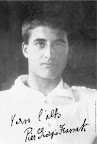
I Love Fr. Frank Pavone

I am honored and flattered to have him speak on our behalf as Christians in the face of a culture that cares little for human life. He undoes stereotypes.

Signs of the Times

It is not terribly shocking to hear that Fr. Alberto Cutié has decided to defect from the Catholic Church, and go to one (the Episcopal - that is, Anglican-in-America) in which things will be more to his liking. For one, they don't mind his inability or lack of ongoing commitment to celibacy. Fair enough - they don't require or esteem celibacy in the first place. More intriguing is the fact that they don't mind that he is an oath-breaker. He made solemn promises of obedience and celibacy, and now has unilaterally dodged them both in one fell swoop. They don't suit him anymore. One would think that Fr. Cutié's new superior would at least want to be sure that he can stick to a vow, no?

Well, it's perhaps fitting, after all. After all, the Anglican Communion was founded when an oath-breaking king became tired of his promises regarding sexuality, and decided to put away his first wife for another. And another. And another. One wonders how many churches Fr. Cutié will put away to suit his evolving tastes before the whole thing is done. It's a little known fact that England and her kings were legal vassals (governmental subordinates) of the Pope until Henry VIII broke his forefathers' faith. In most of Europe, the Pope could take up special collections and so forth; in England, he could collect taxes and call for soldiers. Henry VIII would rather have things his own way, though, rather than honoring the promises of his fathers. Now that Fr. Cutié has broken with Rome, one must wonder if he will really let himself be governed by another master, or if he will be his own... if perhaps he is already his own master. That's the devil's motto, in Milton's Paradise Lost: "I will not serve." That and his television show frankly smack of a towering pride.

Meanwhile, our President has named an ambassador to the Holy See: Miguel Diaz. He is Catholic, in the way that the Sandinistas are. He is "pro-Life," in the way that Douglas Kmiec and the President are. He publishes on presses that call themselves Catholic but are either notorious for dissent, uncommitted to the teachings of the Church, or flat out deny the entirety of Christian revelation. Like Fr. Cutié and the President, he is young, good looking, smooth, and charismatic. He has a track record of supporting social justice issues for the poor and weak (except for, as one commentator has pointed out, the poorest and weakest, i.e., the unborn). He is suave and probably very convincing, and will probably be charged by the White House with getting the Vatican to believe that white is black and black is white, that good is evil, and evil good.

And against these slicksters, whom can Holy Church send forth, tattered and bruised by her own conduct as much as by that of her enemies? The likes of this man:

Now, don't get me wrong. Archbishop Favalora of Miami is likely a very competent administrator, strong shepherd, and loving father. He has enormous responsibilities of which, dear reader, you and I cannot even dream. I wouldn't criticize a bishop to save my life, I hope. I used to, but I'm done with that. It just helps out our enemies. And His Excellency's words regarding Fr. Cutié strike me as very well chosen. Still, looking at him and hearing his words will not be very convincing to most Americans - Catholic or otherwise - when the likes of Fr. Cutié or Prof. Diaz is sitting on the opposite side of the talk-show host. The Archbishop certainly has authority over both them (well, over Diaz only indirectly, since Diaz doesn't live in his diocese), and his reasoning is doubtless sounder than that of Cutié. All the same, I have a sickening feeling in my gut that many, many of the priest's fans, preferring to have their ears tickled, will choose him over Jesus' plump, wrinkly old vicar in Miami.

"For the time is coming when people will not endure sound teaching, but having itching ears they will accumulate for themselves teachers to suit their own likings, and will turn away from listening to the truth and wander into myths," 2 Tim 4:3-4.

A close friend of mine is being ordained a priest this weekend in Burlington, Vermont. Several more friends from my time in seminary will be ordained priests and (transitional) deacons in the next few weeks. They are young. Some are more charming and charismatic than others, but they are all very good men and that shines through. They believe in Jesus. They love and obey his Church. They defend life. I couldn't close without pointing out a few stars amid the dark night sky.