I was thinking about some of my favorite war movies, and about what distinguishes the best of their genre from the worst. Characteristics started coming to mind, and it occured to me:
Lent.
All the war movies that I can think of are trying to do something rather than just be senseless violence. The good ones succeed, and the bad ones fail. The bad ones are just senseless violence.
Lent is very much the same way. In Lent, we are challenged by the Church to do violence to the worst in our nature, and so to free the best in our nature to pursue God more wholeheartedly. We deny the part of ourself that craves creature comforts and luxuries so that we can go wherever God leads. In a "bad" Lent, we either fail to do so entirely, or more commonly perhaps, we do so but with crooked motivations. Bad Lenten motivations are things like self-help, and even to make God happy with us, to prove ourselves to ourselves or to God. In such personalities, the self has unwittingly become god. This self-deification is palpable if we are honest with ourselves. When we think, "This fast will make God happy with me," we often mean, "...make me happy with myself." We do not need to earn God's love. If we feel like we have to prove ourselves to Him, it is likely because we have not yet proven ourselves to ourselves.
But that's not what Lent is about.
Lent is about learning to detach from unnecessary distractions, spend more time in prayer, and serve the poor - that is, Lent is a time to focus more on the things of God than we might normally. We are to focus on God. That's all.
Now, here's where the war movie analogy breaks down a bit. But bear with me. Wars aren't supposed to be for their own sake, and the violence in war movies isn't supposed to be gratuitous. And in the good war movies, the violence isn't gratuitous at all, and nor are the heroes pointless. Instead, in good war movies, the violence shows the peril of the heroes, and the movie shows their heroism: the selflessness, commitment, discipline, love of companions, honor, bravery, defense of innocence. All these virtues are needed in heaps to live the Christian life, and Lent is the perfect time to dig in deeper, to train harder.
Don't worry, you can have chocolate again on Easter.
In the meantime, if you find yourself inspired by movies as I often do, you might consider these movies for a Lenten diet. They start as war movies, and progress to the more explicitly religious. For best results, combine with spiritual exercises and service to the poor. These are not my take on "the best movies of all time." They are just suggestions of some movies to inject in your viewing diet, to give yourself a little Lenten food for thought, if you have not already given up movies or television for Lent.


This excellent movie really is one of my all time favorites. It makes palpable all the virtues I listed above. The backdrop conflict makes the virtues all the more poignant. In a WWII movie, the virtues of individual characters can get lost in the the overarching justice of the Allied cause or the wickedness of the Axis cause. In the context of the shattered idealism of the US's brief Somali engagement, the virtues of these characters shines very brightly.
If you can forgive the very brief, fully clothed, yet graphic sexual scene at the very start, the movie is an amazing story of conversion in the face of suffering. Through a barely perceptible process, opportunistic treasure-hunters become willing to lay down their careers and even their lives to help those in need.
Schindler's List
Not exactly a typical war movie, but being set in wartime counts for something. It is an amazing story of conversion, and closely based on real events. In his contact with suffering people, the eponymous protagonist comes to a powerful change of heart as their humanity and his progressively triumph over every merely material concern.
This story is one of discipline, fraternity, and courage - three chief virtues that make possible living like Jesus in times during which Christians are frowned upon. It is based on historical fact, which makes it all the more appealing.
Sophie Scholl - The Final Days
Also set during war rather than properly speaking about war, this simple, true story has as its major theme the commitment to truth about human nature regardless of personal consequences. It tells the true story, based on actual interrogation and trial transcripts, of Sophie Scholl and other members of the White Rose resistance movement in Munich during the Second World War. Sophie's simple, heartfelt prayers are particularly beautiful.
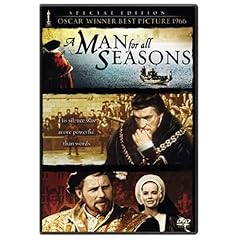
This movie is not at all a war movie. There is no war in it. Except the most important warfare, which is constant, total, and absolute - spiritual warfare. The equivalent of Chief Justice in Henry VIII's England, Sir Thomas More refuses to capitulate and betray the Church and the law of God. The wily soul navigates any number of dangers and temptations, and ultimately the temptation to lose his soul in order to save his life.
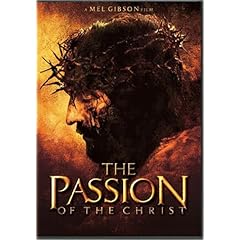
The Passion of the Christ
Watch the Commander-in-Chief of our ragtag brotherhood as he sets the objective and rules of engagement for our Great Battle.



















 Posts
Posts


