Intentions of the Holy Father for April

Ecology and Justice. That governments may foster the protection of creation and the just distribution of natural resources.
Hope for the Sick. That the Risen Lord may fill with hope the hearts of those who are being tested by pain and sickness.
Showing posts with label Lent. Show all posts

The Communion of Sinners

So, I've had this thought bouncing around in my head over the last few weeks.  Lining up for the confessional, I bumped into an acquaintance of mine.  Since I mostly make my confessions at the same time and same place each week, it's actually not that odd for me to bump into people I know in line at the confessional.  A smile or a nod passes between the two of us.  The smile or nod means a lot.  It means, "Hi."  It means, "Glad I'm not the only one I know that uses this thing."  It means, "Hey, another sinner.  That's great!"

 In Line for Confession
Well, clearly it's not great that we are all sinners.  What is great, though, is that it's not just one of us.  Wouldn't that stink?  Literally, one person would be to blame for all the world's mess.  It would be easy for the rest of us to feel self-righteous, especially toward that poor slob, but I do not believe that would be a good thing.

Instead, we have the situation of all of us needing Jesus.  Our sins may be different in "species and number," and even in gravity, but not in essence.  In essence, our sins are all affronts to the will of our Creator and against our own dignity.  We are called to live in the communion of saints, the strong bond of those redeemed and sanctified by Christ.  For the time being, while we haven't left sin behind entirely yet, we might as well get on with the work of building up a strong bond of those being redeemed and sanctified by Christ.  This communion will only grow among us to the extent that we admit what we have in common: that we are all sinners.  There's no use pretending, acting like we don't see each other in line for the confessional.  Instead, it's probably best to admit to ourselves that we are sinners, and in very specific terms what sort of sinners we are.  We should also admit to each other freely, easily in general terms, that we are sinners.  We can do so, if in no other way, by making an appearance in our local parish's confessional line.  To the extent that we can safely do so with people we trust, it might not hurt to share with each other in more specific terms the ways we sin.  In fact, it might heal to know that we are loved, not only by God, but by our brothers and sisters... sins and all.  Confessing our sins to our priest and, when prudent, to each other can only build up the communion of sinners until, hopefully, one day we enter perfectly into the communion of saints.

Oh, wait a minute.  You weren't in line for the confessional?  Oh.  I see.  Well, I suppose there's one thing more priggish than a person who sins and then tries to act like he's perfect: someone who doesn't even think he sins.  You do sin, don't you?  Then 'fess up.  Join the confessional line, the communion of sinners - so that you can be made worthy to enter into that other communion line.

And The Ayes Have It!


One lesson that leaps out on the Feast of the Annunciation is obedience to God.  Mary's yes to God literally revolutionized the entire world and all of human history.  It rerouted us from the downward spiral of sin and slavery onto the upward path of redemption and grace.

But how can a single yes be so powerful?

A clue can be found by delving into what happens to be my favorite beatitude, if beatitudes are the sort of thing that can be ranked.  Blessed are the meek, for they shall inherit the earth (Mt 5:1) provides deep inside once we understand what is meant by meekness.  Meekness is not door-mat-ishness.  Meekness is the acceptance of reality.  Now, that doesn't sound too hard, but when we consider how much time, energy, money, thought, and emotion are invested into iPods, movies, shopping sprees, expensive vacations, distracting hobbies and enterntainment, and worse, darker things like addictions, we can quickly see that a lot of people prefer to avoid reality.  When we look at the power politics in a place like Washington, D.C., the micromanagement in our own office, or the violent behavior that often dominates in places like the Beltway, we can quickly see that a lot of people prefer to control reality.  The meek person, far from passively giving in to adverse forces, evaluates reality, understands what is possible to him without sinning against God or his neighbors, and then works within those parameters.  The meek person realizes that not only he or she, but also reality, is real too.  The meek person realizes that God is God, and that he is not.  Reality is real, and lying, cheating, or stealing won't make it go away.

This message can be really hard.  Some people feel very deeply that they have been jipped by life, and all of us have some hard knocks, from time to time, that tempt us to lash out against them, against somebody in our life, or against God.  The meek person, trusting in God's providence, rolls with the punches.

The virtue of meekness makes me think of a favorite movie of mine, Slumdog Millionaire. If you haven't seen it, you should.  Two of the movie's main characters are brothers.  One spends his life in tremendous violence, always grasping for a better life.  The other sets his heart on love, accepts circumstances as they come without letting them deter him, and refuses either to do wrong or accept discouragement along the way.  The characters are not Christians, but they come very close to a perfect illustration of the polar opposition between the one who does whatever it takes to get what he wants, and the one who accepts reality as the framework for living life.  If to the latter way of life we add humble trust in God's will and fatherly providence for us, we have the Christian virtue of meekness, the virtue that wins us the whole world.

If we, moved by grace, can be open to God's will and say, "Yes," whatever may come, we will be amazed by what follows.  Since we are not immaculately conceived, we'll typically have years or decades of spiritual grime clogging our heart.  But even this first yes will begin to move things along, open things up, turn things around.  God will begin, perhaps slowly, but certainly surely, to move in our life.  He will not suddenly transplant us to a rose garden of a life - that wouldn't be real.  But as long as we keep saying, "Yes," to Him, He will keep giving us more and more of the raw stuff that joy is made of - love, peace, service, friendship, virtue, a clean conscience, and a sound relationship with Him.  He will give us all the things that we can never seize for ourselves or control like masters.

A great way to say, "Yes," to God, to accept the reality of our own sinfulness and to proclaim the reality of God's amazing justice and mercy, is to go to confession.  Especially during these last days of Lent, and especially if you haven't been in a few months or years, consider going.
Take, Lord, and receive all my liberty, my memory, understanding, and will.
All that I have and am You have given to me,
And I surrender it now to be governed entirely by Your will.
Your grace and Your love: these are wealth enough for me.
Grant me these, Lord, and that shall be enough for me.
Amen.
The Suscipe Prayer of St. Ignatius Loyola

Beautiful Snippets from the Fifth Sunday of Lent

From the first reading, Is 43:16-21:

Thus says the LORD,
who opens a way in the sea
and a path in the mighty waters,
who leads out chariots and horsemen,
a powerful army,
till they lie prostrate together, never to rise,
snuffed out and quenched like a wick.
Remember not the events of the past,
the things of long ago consider not;
see, I am doing something new!
After starting with a reminder of God's powerful, demonstrated by mighty deeds in real history, the prophet tells Israel, and us, that God is going to set us on a new path, in which former sins are transcended.  The joy that His plans for us will bring is described in Ps 126:
When the LORD brought back the captives of Zion,
we were like men dreaming.
Then our mouth was filled with laughter,
and our tongue with rejoicing.
Our bondage to sin and its ugly consequences will be broken.  St. Paul tells us how much this new life should be worth to us in the Epistle, taken from Phil 3:8-14:
For his sake I have accepted the loss of all things
and I consider them so much rubbish,
that I may gain Christ and be found in him...
depending on faith to know him and the power of his resurrection
and the sharing of his sufferings by being conformed to his death,
if somehow I may attain the resurrection from the dead.
St. Paul continues to encourage us with his own efforts:
...forgetting what lies behind
but straining forward to what lies ahead,
I continue my pursuit toward the goal,
the prize of God’s upward calling, in Christ Jesus.
He would like us to share in them, no doubt.  Not only that, he wants us to join him in forgetting our spotty pasts except in as much as they humble us and become fertile soil for wisdom.  But guilt and shame from our past must fall away.  And lastly, Jesus' beautiful, beautiful words to the woman caught in adultery, whom he saved from stoning (Jn 8:1-11):
Then Jesus straightened up and said to her,
“Woman, where are they?
Has no one condemned you?”
She replied, “No one, sir.”
Then Jesus said, “Neither do I condemn you.
Go, and from now on do not sin any more.”
Let's use these last two weeks of Lent to our great advantage.  Let's enter into it with our whole hearts, praying fervently for the grace to rise higher in Christ, leaving behind sin and the scars it leaves, to be transfigured with Our Blessed Lord.

Dies Irae


Dies irae, dies illa
solvet saeclum in favilla:
teste David cum Sibylla.
The day of wrath, that day
Will dissolve the world in ashes
As foretold by David and the sibyl!
Quantus tremor est futurus,
quando judex est venturus,
cuncta stricte discussurus!
How much tremor there will be,
when the judge will come,
investigating everything strictly!
Tuba mirum spargens sonum
per sepulcra regionum,
coget omnes ante thronum.
The trumpet, scattering a wondrous sound
through the sepulchres of the regions,
will summon all before the throne.
Mors stupebit et natura,
cum resurget creatura,
judicanti responsura.
Death and nature will marvel,
when creation arises,
to respond to the Judge.
Liber scriptus proferetur,
in quo totum continetur,
unde mundus judicetur.
The written book will be brought forth,
in which all is contained,
from which the world shall be judged.
Judex ergo cum sedebit,
quidquid latet apparebit:
nil inultum remanebit.
When therefore the judge will sit,
whatever hides will appear:
nothing will remain unpunished.
Quid sum miser tunc dicturus?
Quem patronum rogaturus,
cum vix justus sit securus?
What am I, miserable, then to say?
Which patron to ask,
when [even] the just may [only] hardly be sure?
Rex tremendae majestatis,
qui salvandos salvas gratis,
salva me fons pietatis.
King of tremendous majesty,
who freely savest those that have to be saved,
save me, source of mercy.
Recordare, Jesu pie,
quod sum causa tuae viae:
ne me perdas illa die.
Remember, merciful Jesus,
that I am the cause of thy way:
lest thou lose me in that day.
Quaerens me, sedisti lassus:
redemisti Crucem passus:
tantus labor non sit cassus.
Seeking me, thou sat tired:
thou redeemed [me] having suffered the Cross:
let not so much hardship be lost.
Juste judex ultionis,
donum fac remissionis
ante diem rationis.
Just judge of revenge,
give the gift of remission
before the day of reckoning.
Ingemisco, tamquam reus:
culpa rubet vultus meus:
supplicanti parce, Deus.
I sigh, like the guilty one:
my face reddens in guilt:
Spare the supplicating one, God.
Qui Mariam absolvisti,
et latronem exaudisti,
mihi quoque spem dedisti.
Thou who absolved Mary,
and heardest the robber,
gavest hope to me, too.
Preces meae non sunt dignae:
sed tu bonus fac benigne,
ne perenni cremer igne.
My prayers are not worthy:
however, thou, Good [Lord], do good,
lest I am burned up by eternal fire.
Inter oves locum praesta,
et ab haedis me sequestra,
statuens in parte dextra.
Grant me a place among the sheep,
and take me out from among the goats,
setting me on the right side.
Confutatis maledictis,
flammis acribus addictis:
voca me cum benedictis.
Once the cursed have been rebuked,
sentenced to rancorous flames:
Call thou me with the blessed.
Oro supplex et acclinis,
cor contritum quasi cinis:
gere curam mei finis.
I meekly and humbly pray,
[my] heart is as crushed as the ashes:
perform the healing of mine end.
Lacrimosa dies illa,
qua resurget ex favilla
judicandus homo reus.
Tearful will be that day,
on which from the ashes arises
the guilty man who is to be judged.
Huic ergo parce, Deus:
pie Jesu Domine,
dona eis requiem. Amen.
Spare him therefore, God.
Merciful Lord Jesus,
grant them rest. Amen.

Patrick Madrid on the Quakes

On his blog, Patrick Madrid writes:

First, the devastating quake in Haiti 45 days ago, and now this one in Chile. My guess is that more of these disasters will strike more frequently. I hope not, but that's a hunch. Sooner or later, one of these BIG quakes will strike within the U.S. — Los Angeles? St. Louis? Chicago? San Francisco? New York? It's just a matter of time, the scientists have been telling us.

Two things we should do:

1) Always be ready to meet the Lord by staying close to him in prayer and the sacraments, especially frequent confession. This is a no-brainer, but it's amazing how many people, including Catholics, never give the four last things any thought: Death, Judgment, Heaven, and Hell;

and

2) If you haven't already, start making practical preparations in your own home so that, if find yourself in a quake-stricken area, you and your family can fare better and be in a position to help those around you. Lay in a supply (even if just a small one) of extra water, foods that will keep without refrigeration, medicines like Ibuprofen, a hand-crank radio (no batteries needed), etc. Make a plan with your family, especially your kids, so that they will know where to meet up. You know, those kinds of basic preparations.

We should pray to God that these disasters spur us to greater charity, and to deepen our Lenten devotion, in a sense: to remember that we will die, and that we know neither the day nor the hour.

War Movies and Lent

I was thinking about some of my favorite war movies, and about what distinguishes the best of their genre from the worst. Characteristics started coming to mind, and it occured to me:

Lent.

All the war movies that I can think of are trying to do something rather than just be senseless violence. The good ones succeed, and the bad ones fail. The bad ones are just senseless violence.

Lent is very much the same way. In Lent, we are challenged by the Church to do violence to the worst in our nature, and so to free the best in our nature to pursue God more wholeheartedly. We deny the part of ourself that craves creature comforts and luxuries so that we can go wherever God leads. In a "bad" Lent, we either fail to do so entirely, or more commonly perhaps, we do so but with crooked motivations. Bad Lenten motivations are things like self-help, and even to make God happy with us, to prove ourselves to ourselves or to God. In such personalities, the self has unwittingly become god. This self-deification is palpable if we are honest with ourselves. When we think, "This fast will make God happy with me," we often mean, "...make me happy with myself." We do not need to earn God's love. If we feel like we have to prove ourselves to Him, it is likely because we have not yet proven ourselves to ourselves.

But that's not what Lent is about.

Lent is about learning to detach from unnecessary distractions, spend more time in prayer, and serve the poor - that is, Lent is a time to focus more on the things of God than we might normally. We are to focus on God. That's all.

Now, here's where the war movie analogy breaks down a bit. But bear with me. Wars aren't supposed to be for their own sake, and the violence in war movies isn't supposed to be gratuitous. And in the good war movies, the violence isn't gratuitous at all, and nor are the heroes pointless. Instead, in good war movies, the violence shows the peril of the heroes, and the movie shows their heroism: the selflessness, commitment, discipline, love of companions, honor, bravery, defense of innocence. All these virtues are needed in heaps to live the Christian life, and Lent is the perfect time to dig in deeper, to train harder.

Don't worry, you can have chocolate again on Easter.

In the meantime, if you find yourself inspired by movies as I often do, you might consider these movies for a Lenten diet. They start as war movies, and progress to the more explicitly religious. For best results, combine with spiritual exercises and service to the poor. These are not my take on "the best movies of all time." They are just suggestions of some movies to inject in your viewing diet, to give yourself a little Lenten food for thought, if you have not already given up movies or television for Lent.

Black Hawk Down

This excellent movie really is one of my all time favorites. It makes palpable all the virtues I listed above. The backdrop conflict makes the virtues all the more poignant. In a WWII movie, the virtues of individual characters can get lost in the the overarching justice of the Allied cause or the wickedness of the Axis cause. In the context of the shattered idealism of the US's brief Somali engagement, the virtues of these characters shines very brightly.


If you can forgive the very brief, fully clothed, yet graphic sexual scene at the very start, the movie is an amazing story of conversion in the face of suffering. Through a barely perceptible process, opportunistic treasure-hunters become willing to lay down their careers and even their lives to help those in need.


Schindler's List

Not exactly a typical war movie, but being set in wartime counts for something. It is an amazing story of conversion, and closely based on real events.  In his contact with suffering people, the eponymous protagonist comes to a powerful change of heart as their humanity and his progressively triumph over every merely material concern.


This story is one of discipline, fraternity, and courage - three chief virtues that make possible living like Jesus in times during which Christians are frowned upon.  It is based on historical fact, which makes it all the more appealing.


Sophie Scholl - The Final Days

Also set during war rather than properly speaking about war, this simple, true story has as its major theme the commitment to truth about human nature regardless of personal consequences.  It tells the true story, based on actual interrogation and trial transcripts, of Sophie Scholl and other members of the White Rose resistance movement in Munich during the Second World War.  Sophie's simple, heartfelt prayers are particularly beautiful.


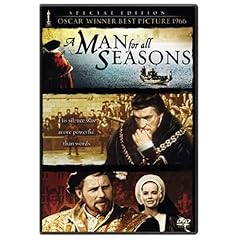
This movie is not at all a war movie. There is no war in it. Except the most important warfare, which is constant, total, and absolute - spiritual warfare. The equivalent of Chief Justice in Henry VIII's England, Sir Thomas More refuses to capitulate and betray the Church and the law of God. The wily soul navigates any number of dangers and temptations, and ultimately the temptation to lose his soul in order to save his life.


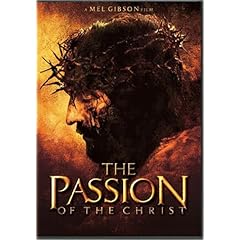
The Passion of the Christ

Watch the Commander-in-Chief of our ragtag brotherhood as he sets the objective and rules of engagement for our Great Battle.

The Terrible Reality of Beauty

Barber's "Adagio for Strings, #11" is a beautiful piece. It is deeply gripping, stirring, and evocative. The theme first played at the very start magnifies with intensity at each repetition throughout the piece.

This YouTube video shows a performance of the adagio interspliced with images from the BBC and ABC News. The performance was four days after September 11, and the images are taken from that and subsequent days.


I include this video because it makes an important point in a very tactile way. Ever since the Fall, human history has been the history of exile from the true life God intended for us, our quest to regain it, and ultimately, God's restoration of that life to us when we could not attain it for ourselves. Human history - and each of our lives - is a canvas painted in shades of tragedy and hope, so it is no coincidence that the two themes speak to us so powerfully as individuals and in groups.

Lent is a time during which we are asked by the Church to re-engage these themes in a more profound way: we examine our conscience, we clarify our own limitedness, we touch the wound, prod it, remind ourselves that sin and death are real and at work in our lives.

Suffering, pain, and tragedy aren't all bad though, as the modern world supposes. They are the natural consequence of sin, and aren't to be avoided. They are also the context in which is set all heroism worthy of the name. Sports "heroes" aren't typically heroic at all, but athletic, and we do a great disserve to ourselves and our children who admire them so if we confuse heroism and athleticism. Athleticism is admirable, and even noble, but it has nothing on heroism, and really, fundamentally, is worthless except as a training ground for heroism.

Heroism might be best described, in my thinking, as entering into the lion's den. A heroic man or woman feels fear and pain, sins and dies - but does not let these little tragedies interfere with hope. The hope in question varies from context to context. It may be hope that "it will all work out for the best," or hope that a life might be saved, or that a person might be brought to know the love of Christ. Fundamentally, all these hopes are tied into the object of our highest hope - the hope of eternal life in blessed, joyful union with God. It is this hope that instills true meaning in the lesser hopes, and it is all these hopes that make our hearts soar in the midst of tragedy. Hope fuels heroism. Who is left unmoved remembering Lenny Skutnik,* who swam into the frozen waters of the Potomac to save a stewardess trapped freezing to death in the wreckage of a Florida Airlines Flight 90?

Or more recently, the firefighters who went into the burning towers on September 11?

The terrible reality is that sorrow and beauty are often intermingled - maybe even, to some extent, necessarily intermingled in this age we live in, the Age of the Cross.  A project, like that of the Enlightenment, to uproot the one will inevitably uproot the other with it.  It is much better, perhaps, to simply train for the one and create the other.  So while we continue to wait in joyful hope for the Resurrection, it is important to touch bases from time to time with suffering, sin, and death.  In the Church, we call the forty days allotted for this purpose, "Lent."

*(For those of you who don't know about Lenny Skutnik, you can see the story on YouTube, of course, by clicking here. In brief, when rescue efforts failed to save Priscilla Tirado from the Potomac, he dove into the freezing waters and pulled her out, at immense risk to himself and without guarantees for her.)

Is Lenten Sacrifice just a Catholic New Year's Resolution?

It’s likely that in the past couple weeks, you’ve heard this question one too many times: “So, what are you doing for Lent?” Or how about this one: “What are you giving up for Lent?” We associate Lent with giving something up—maybe candy, foul language, the TV or computer—or doing something extra—I’ll be nicer to my brother, give money to the poor, or pray more. These things are what we call sacrifices. Lent is a time of sacrifice more than any other season of our Church year. We see in today’s gospel that Jesus goes out into the desert, where it’s hot, there aren’t many comforts, there’s little water, and he doesn’t eat for 40 days. In other words, Jesus himself made great sacrifices during his 40 days in the desert. For us, who desire to be like Christ, to follow in his footsteps, sacrifice will be part of our Lenten journey.

Sacrifice comes from Latin, and means “made holy/sacred.” In essence, a sacrifice is a gift given by us to God. You may have never thought that your sacrifice of giving up chocolate is a gift for God, but it is either a gift for God or it isn’t much use at all. St. Augustine says that whatever good act we do—he uses the example of showing mercy to another—if it is not done for God’s sake, is not a sacrifice. This should make us think. Is the reason why I’m making the sacrifice I am making this Lent a gift for God or is it principally for my own sake? For instance, am I giving up some sort of food so I can get in better shape or because I know that denying myself that food is difficult and I do it for the love of God? Our Lenten sacrifices are no mere New Year’s Resolutions, which have the final goal of self-improvement; rather, they are gifts given to God manifesting and increasing our love for him.

Why do we have to sacrifice at all, though? Where did this idea of giving something up or doing something extra as gift to God come from? First of all, God created us and we are his creatures. The fundamental relationship of us belonging to God and receiving everything from him demands that we sacrifice. As an analogy, we don’t give Mom a gift on Mother’s Day because she’s been particularly good to us this year or because she prepared some pretty good meals. We give her a gift because of that relationship of mother and child, of having received life from her.

There is an additional reason we sacrifice to God evidenced in today’s first reading. After the Jews entered the Promised Land, Moses instructed them to offer the first fruits of their harvest every year in sacrifice to God. The reason they were to do so is given in the reading: God chose Abraham and made his descendents into the great nation of Israel. When they were in slavery in Egypt, God saw their oppression, freed them from their slavery, and brought them through the desert to the Promised Land. In other words, they were to sacrifice to God because of his freely given love for Israel and his powerful actions in saving them. To continue with our analogy, we have an additional reason to give our mothers a gift on Mother’s Day. Not only because of that fundamental relationship of mother and child, but because she loves us. She showed us that love through waking up in the middle of the night when we were crying, feeding us, teaching us to read, and in so many other ways. In a similar way, the Israelites had more incentive to offer gifts to God, because he showed his great love for them through saving them.

As Catholics, we have an even greater reason to sacrifice, to give gifts, to God. And this reason far surpasses any analogy we could make to the love of the mother for her child. As Christians we know that God became one of us. The One who created us became one of us. We see in today’s gospel that he even allowed himself to go through temptation and suffering, all for our sake. Finally, he suffered and died at our hands, he being more innocent and good than all of us put together. My brothers and sisters, Christ’s life was a sacrifice to God. As God he couldn’t give gifts to himself, but as a man, he could give gifts to his Father on our behalf. And the gift he gave, more valuable than anything else, was his own life out of love for us. This is the supreme reason we have for sacrificing as Christians. God didn’t just create us and love us—as if those weren’t reason enough—but in the ridiculousness of his love, he became one of us. This is why we sacrifice to God, especially during Lent: not to perfect ourselves so we can have the glory, but out of love for him.

We now understand why we make sacrifices, but what is it exactly that God wants us to sacrifice? Does God want an extra Our Father prayed or does he like us giving up some food better? The answer is that God finds any sacrifice of ours pleasing, provided what lies behind it is a spirit of interior sacrifice. We can go through a whole Lent and never fail to break our Lenten resolution, but if we aren’t changed, if our hearts aren’t converted, if we don’t have a spirit of inner sacrifice, than it wasn’t a successful Lent. More than anything we give up or do extra, God wants ourselves. That’s the only gift that will satisfy him. The Old Testament describes God as a jealous god. That doesn’t mean he’s envious of our new bike or fancy car; jealousy in Biblical language means that God desires us, and he will do everything possible—except violate our freedom—to win us to himself. Just as Jesus’ whole life was a sacrifice to the Father, a gift to the Father, so our whole lives should be a gift. My brothers and sisters, it’s good for us to make these exterior sacrifices during Lent, but they should always coincide with an interior spirit of sacrifice; that is, a desire to give ourselves to God. In one of the Eucharistic Prayers at Mass, the priest prays “make us an everlasting gift to you.” It’s one of the most beautiful prayers of the whole Mass and should be a motivating factor for us this Lent and throughout our lives really.

Usually, I open with a story, but today I close with one. The example of this person illustrates in a way much better than I can explain what true sacrifice is. (Plus, this story has to do with the Olympics, so I thought it’d be appropriate.)
In 1998, Kirstin Holum competed as a speed skater for the U.S. at the Winter Olympics. She was only 17 years old, but she finished sixth in the grueling 3,000 meter competition. Long distance speed skating is a sport, like marathon running, that requires aerobic endurance that only comes with age and training. In other words, this 17-year-old was predicted to one day be a star in the sport. These Olympic Games were supposed to be the time for her to shine—at 29 years old, she would just have been entering the prime of her career. Instead, after the ’98 Olympics she hung up her skates and followed a stronger calling, one from God. Now known as Sister Catherine, she joined a Franciscan order, and has never looked back. Kirstin walked away from would-be fame, maybe a gold medal, accolades, and honors to give her life to God as sister. Her exterior sacrifice of turning down fame was only a sign of her interior sacrifice of desiring to give her life to God. “Make us an everlasting gift to you.”

Meditation for Lent


In translation (courtesy of Catholic.org):

Hearken, O Lord,
and have mercy,
for we have sinned against Thee.
Crying, we raise our eyes to Thee, Sovereign King,
Redeemer of all.
Listen, Christ, to the pleas of the supplicant sinners.

Hearken, O Lord,
and have mercy,
for we have sinned against Thee.
Thou art at the Right Hand of God the Father,
the Keystone,
the Way of salvation and Gate of Heaven,
cleanse the stains of our sins.

Hearken, O Lord,
and have mercy,
for we have sinned against Thee.
O God, we beseech Thy majesty to hear our groans;
to forgive our sins.

Hearken, O Lord,
and have mercy,
for we have sinned against Thee.
We confess to Thee our consented sins;
we declare our hidden sins with contrite heart;
in Thy mercy, O Redeemer, forgive them.

Hearken, O Lord,
and have mercy,
for we have sinned against Thee.
Thou wert captured, being innocent;
brought about without resistance,
condemned by impious men with false witnesses.
O Christ keep safe those whom Thou hast redeemed.

Hearken, O Lord,
and have mercy,
for we have sinned against Thee.

Ashes for a Sinner

At Mass today, Msgr. Rossi made a really striking point. He said that we do not wear ashes on our to proclaim to the world that we are pious, or even to be proud of being Catholic, and certainly not for cultural reasons.  We wear ashes on our foreheads to proclaim that we are sinners in need of mercy.

If those who meet us are challenged to repentence by our ashes, so be it.  But it is crucial that we be challenged to repentence.

Wall Street in Ashes (Lent for Everyone)

Today is Ash Wednesday. Don't forget to go get your ashes!

Here's an article from the Wall Street Journal about Lent and how the lenten principle of disciplined self-sacrifice can be very useful even for unreligious people and for non-Christians.  You would think that such insight wouldn't be rocket science or even newsworthy, but there it is.  I am grateful all the same that a major media outlet sees the sensibility in sensible living.  And I am grateful to Erin Johnson for pointing the article out to me.

The article makes the point that little sacrifices, like a cup of latte, can add up to a lot of savings.  These little things that add up can be the key to getting out of debt and building up substantial savings.  The article doesn't go a step further: that we might give some of the fruit of that savings to the poor, thereby fulfilling another precept of Lent: almsgiving.

Don't forget, during Lent we are called by the Church to deepen our Christian living in three chief areas: prayer, fasting, and giving to the poor.  Each of our Lenten disciplines should be something that is difficult, a challenge for us, but also something that is doable.  It does no good to "blow it" three times a week.  Our disciplines should also be things that are good in themselves and also things that we are allowed to give do.  So that means no prayer routines that interfere with our real duties, and no giving up fornication for Lent, either - don't wait for Lent to give that up!  And no giving up homework, either!  It's an added bonus if our Lenten prayer, fasting, and almsgiving can all interrelate to each other somehow, and a double bonus if we retain them to some extent after Lent.

For example, one might
Prayer: Spend 10 minutes with a daily devotional;
Fast: Abstain from morning latte on the way to work, thereby saving $3 and 10 minutes for prayer;
Give to the Poor: $3/day saved from the morning latte, paid upfront early in Lent if possible, to make sure.

Doesn't sound too dramatic, does it?  Nope.  But what a change a little prayer can make in your day, and how many prayers can be answered by your leftover change!

To help you out, Busted Halo has come up with a Lent Calendar, kindova twist on an Advent Calendar, to help you "get your ash in gear."  American Catholic also has some good resources up, and Catholic.org has a nice article and some good resources, too.  Now seems a good time to re-embed Fr. Tim Naples' video on confession.


Lent is the time for penitence, which we Catholics know entails confession. Let's make this one a good one. But let's remember why we do it. Yesterday at the National Shrine, Msgr. Kevin Irwin preached about the need to do Lent for Jesus, and not as a score-card of holiness or as a self-help program to lose weight or save money. Those all miss the point. We are to learn humility - and that can happen in failure, too, so we shouldn't be discouraged if we accidentally eat that chocolate we gave up. We should just let it remind us how desperately we need God - if giving up chocolate is hard, how hard is resisting the devil's wiles and living in grace til the end of our days!?

Palm Sunday of the Lord's Passion


Today the Church marks our blessed Lord's entry into Jerusalem. Over the preceding months and years, he had developed an enormous following. According to St. Matthew's account, Jesus tells his disciples that they are going to go to Jerusalem so that he can be killed, and after doing so, he leaves Jericho with the apostles (cf. Mt 20:18 ff.) and heads toward Jerusalem. A large crowd follows him (20:29). Along the way, people start calling him Son of David (20:30), a royal title. When he gets to Jerusalem, people crowd around him and start hailing Him as king - the phrase "hosanna to" is a tip-off. "Hosanna" is an Aramaic word meaning something like "God save..." and "to" is the writer's attempt to translate an Aramaic particle that doesn't really translate, and might as well in this case be translated "the" because it really just marks the object of the sentence. "God save the Son of David!" might be the best, though untraditional, rendering. God save the King. The crowds lay down palm branches so that even the donkey he rides won't have to get its feet dirty or muddy. "Blessed is he who comes in the name of the Lord," is a reference to the Messiah whom they had been awaiting for generations. This is it. He's here: the One who will unite Israel, as it hasn't been since the time of King David and his son, and drive out the foreign oppressors, as David had. At last, Israel will have its freedom and glory! The expectation was immense. Jesus goes into the Temple area and casts out those swindlers who had overrun the public sections so they could rip off the poor masses (21:12). Those who had been forbidden by the Temple authorities from entering the Temple, the blind, the lame, the 'defective', not begin pouring in, and Jesus heals them (21:14). He begins to teach in the Temple (21:23 ff.), and his teachings are, to put it mildly, offensive to the religious authorities (ch 23). He predicts, menacingly, that the Temple itself will be destroyed (24:1). As he overturned their tables, to all appearances it seemed as though he was overturning the old order. It becomes clearer why the Jewish authorities became murderously hostile, overcoming their mutual differences in order to agree on a plot to get Jesus.

It also becomes clear why everything came crashing down so suddenly. A traitor appears unexpectedly (26:47), the night before Passover, with a large group of soldiers (26:52). They seize Jesus, who, despite being at the pinnacle of his earthly "power" doesn't even seem to care enough to fight (26:52). The new king is arrested and taken into the power of his enemies. It is hard, really, to blame the disciples for scattering (26:56). Jesus' behavior was incomprehensible. To many of us today, it is still incomprehensible.

We have as hard a time with Jesus' message of redemptive suffering as the apostles did at first. We often nod and say, "...because by your holy cross you have redeemed the world," and like Peter, promise never to abandon Jesus (26:35), but to follow him with our own crosses. And yet, at the slightest pain and suffering, how many of us flee?! I know I do, often as not.

Lord Jesus, as we enter into the commemoration of your passion, give us, we pray, the good sense to seek your Cross, and trust in your plan for the Kingdom, rather than seeking the glory and leaving the Cross to you. Amen.

Ashes: The Christian in Lent

Ok, so I am going to try, briefly, to tie a few things together.

1. Every Christian is by baptism a priest, prophet, and king (or queen, as the case may be). That includes every man, woman, and child who has been claimed by Christ under those regenerating waters. What does this mean, though? I am going to strip away the rhetoric for once and (try to) get to the point.

1A. Christ is the Great High Priest, the Great Prophet, and the King of All Creation. In baptism, we are united with Him and become part of Him, and adopted brothers of His, and adopted sons and daughters of the Living God with whom He is One, and we through Him.

1B. A priest, fundamentally, is one who makes intercession to God and offers sacrifices to Him on behalf of the people, and gives to the people God's blessings. Every Christian is called to be a man or woman of prayer, especially for others, and of sacrifice, especially of our own bodies and wills. We offer these prayers and sacrifices, in imitation of Christ, on behalf of ourselves, our loved ones, and the world. Ordained priests serve this role in a particularly acute, sacramental way within the Church, and the whole Church (that's all the baptized!) serves this role within the world in a less crystalized, more day-to-day way.

1C. A prophet, fundamentally, is not one who tells the future (though he might), but one who speaks for God - "pro-pheme" in Greek, a "speaks-for." Christ came as the final, fullest revelation of God's love for us. In His own flesh, He (God) manifests His desire to be with us intimate in bodily union, a union accomplished first in baptism and then most perfectly in Eucharistic Communion. Jesus' very existence makes this will of God clear to us. His words announced what He and His Father are about. We Christians, sharing in the mission of our Master, our Friend (John 15:12-17, esp., 15:15), also must speak God's word. We must put priority on living it out though. We cannot wait to live it perfectly before we speak it, or else we'll never speak it. But the emphasis in our lives must be on prayerfully hearing God, digesting and living His voice, and then amplifying it to the world in our own deeds and words.

1D. A king (or queen), fundamentally, is not one who bosses around and tyrannizes, but one who has been given authority by God to make a patch of the world more like the Kingdom of Heaven. That's all of us. We all have a patch of the world over which we have influence or even authority: our homes, friends, work environments, students, neighborhoods - all of these to varying extents are within our reach, as it were. We are, like Jesus, to use what the Father has given us to make our area more like God would have it be. We are to use our abilities, influence, and authority firstly for service - never for lordliness (Mt 20:20-28). We are to heal hearts, serve the weak and poor, right wrongs, salvage relationships, make good use of resources - all to make the world more like the Kingdom.

1E. These three dimensions of Christ's life and of our life in Christ are called the Triple Munera, the Three Offices/Duties/Functions of Christ. The Church, His Mystical Body, shares in them - our ordained clergy firstly and in a particular, sacramental and directing-leadership sort of way - and all the rest of us in a general and raw-horsepower sort of way.

2. We have just begun Lent. During Lent we are commended to remember our sinfulness and God's mercy in a particularly acute way in order to prepare for the remembrance of the Passion, Death, and Resurrection of our blessed Lord. The Church has three ways of life that are now more than ever to be lived out with diligence - prayer, fasting, and almsgiving.

2A. Prayer is time spent opening our heart and lifting it toward union with God. It might be while we do something else, but like everything else, if we want to really get good at it (like all communication, it takes practice) we need to set aside time for it daily. Lent is an especially good time to adapt some new prayer discipline - a daily rosary or morning offering, weekly Stations of the Cross, something. Prayer is especially important for living our our priestly office, but also for our prophetic office, and even for our royal office. After all, if we are to govern as God would have us, we had better be listening to Him.

2B. Fasting is, broadly speaking, abstaining from some food, drink, (or other other pleasure) or food and drink in general. The Church's rule is minimal: on Ash Wednesday and Good Friday we must carry out a simple fast, which means we take no meat, only one full meal, and up to two other meals that combined are smaller than a meal, without any snacking in between. Only those who have reached adulthood and haven't yet reached old age are required to fast. Everyone else merely abstains from meat, and everyone abstains from meat on Fridays in Lent. Really, the Church encourages us to abstain from meat on all Fridays, or to do some other sacrifice instead. During Lent, we pick an additional Lenten abstinence or fast that can hopefully be a sacrifice we continue in altered form after Lent, something that will change our lives for the better, for the godlier. Fasting is especially important to the prophetic office because one who preaches the Word of God had better feed on it, and remember that it is his primary food (Mt 4:3-4). Because priests offer sacrifice, a sacrifice of our time and even of our own bodily needs and desires, is perhaps the most concrete way to sacrifice our will to God. But good kings also sacrifice to God because they know that they are not the real top-dog, but that God is.

2C. Almsgiving is giving to the poor. It should be a near daily way of life for Christians, something we plan into our budget and not just something we do if we have anything left over (who really ever does?). Living a Christian life, or working for the Church, is not a substitute for generosity to her poorest children. I used to work for the Church and was given a small salary, and did not give to the poor very much. I am very embarrassed of that now. I might have given something. I earn less now, because I am studying full time, but give a lot more than I did then (it is still not much, lol). Even homeless people can give a bit of change. At least I know now that I am doing what I can to support the Church (the tithe) and care for those in need (almsgiving, properly speaking). Almsgiving is especially important to our royal office as Christians because as Christian king-lets and queen-lets, we are not to lord our Christianity over others ("See how holy I am!") but to serve them. The neediest first. Almsgiving keeps us oriented in that direction.

2D. As per Matthew 6, we are not supposed to do these things SO THAT others can see them. But as per Matthew 5, we are also supposed to be a good example to glorify God by our good deeds. How do we reconcile these two things? We should do our good deeds as part of our ongoing interior conversion. The quieter the better, generally speaking. If, for the sake of another, it is useful to the other that he should know of a good deed of ours, then we may allow him to know. And we need not be ashamed of our good deeds, either, especially when we are doing them as part of a group activity of the Church, as part of a public gesture of the People of God. If you are as vainglorious as I am, then it is probably best to keep your personal good deeds as private, tucked inside your vest when possible. The whole idea is to lose ourselves a bit in the heart of God and in the needs of the world.

2E. For each of our disciplines of prayer, fasting, and almsgiving, we should pick something that fulfills all four of the criteria that follow:


  1. It should be difficult. A challenge, people. Lent is not supposed to be easy, but a reminder of our weakness.


  2. It should be doable. Lent is not setting us up for failure, but setting us up to remember that we need God.


  3. It should be permissible. We must not do anything contrary to our real duties. A student cannot give up homework for Lent. Nice try, kids.


  4. It must be good. We can commit to going to Mass on Wednesday evenings. We can commit to giving up sweets. Mass is a good thing. Sweets are good things. We are supposed to be giving Jesus good gifts, whether we give him prayers or sacrifices or acts of love to his poor brethren. We must not give up fornicating. Fornicating is bad. We should have given that up ANYWAY. Although, frankly, I suppose Lent is a good time to do so if you haven't already. But give up sweets, too.
2F. And don't forget to go to confession before Easter. It is the solemn duty of a Christian to so. In fact, we call (confession) + (receiving holy communion during the Easter season) our "Easter duty," or the "Easter obligation." By secretly confessing our sins, we loudly proclaim not only our sinfulness (our true, current condition) but also the Lordship of Jesus. It's the only time of year that we are required to go to communion in order to maintain our communion with the Church. And to do so, we should prepare by going to confession. Especially if we haven't been in a while. If it kinda hurts, or you can think of ten reasons not to go, or you are scared - that's all pride and fear waging a spiritual warfare in your head to keep you from God. Don't listen. Just go to the priest and receive Jesus' mercy like the Bible tells us to (James 5:16 and John 20:23). You won't regret it.

Happy Lent!

Were You There?


If you've been to the Holy Sacrifice of the Mass, then you've been to the Holy Sacrifice of Calvary re-presented across time and space. If you're Catholic and you've missed Mass without a very serious reason, now is the time to go to your local parish, make a good confession and receive Holy Communion with our Blessed Lord. If you're not there, then you weren't There, and His Precious Blood isn't upon you, and you aren't sheltered under the shadow of the Cross.

Lord Jesus Christ, we pray you help us to turn from sin and stand with you at the foot of your Cross, come what may, so that we may in the end rise with you from death; and that you bring our family and friends with us. Amen.

Judas, Peter, and John


I want to look back to last Tuesday's (Tues after Palm Sunday; Isa 49:1-6; Ps 71; Jn 13:21-38) Gospel reading from St. John's Gospel. Our Lord predicted that Peter would betray Him, and He was right. Our Lord made the same prediction about Judas, and was also right. Perhaps our Lord made these predictions so that, after they had accomplished their respective villanies, Peter and Judas would remember what our Lord had said. Judas began to understand with horror some of the gravity of what he had done and attempted, in a kind of childish way, to undo his folly. When the reality of the situation became apparently hopeless, Judas murdered himself (Mt 27:3-5). Peter, after his treachery, remembered the words of the Teacher (Mt 26:75) and the memory of our Lord's gentle prediction caused him to weep bitterly.

Of the apostles, only one was present, perhaps having followed at a distance, at the Crucifixion itself. The Beloved Disciple, St. John, stood with the Blessed Virgin Mary at the foot of the Cross (Jn 19:25-26). She was unweakened by sin and so could stand faithful. But how could he stand with her in that dark hour, when all others fled? The answer is buried, I think, in a much earlier chapter that recounts the events of the evening before. During the Last Supper, it was St. John, the Beloved Disciple, who "was lying close to the breast of Jesus," (Jn 13:23) resting upon him, listening quietly to the beating of His Strong and Sacred Heart.

Let us bury ourselves in Jesus in prayer, resting our heads upon His breast, and our hearts close to His. Let us listen quietly for Jesus, and be strengthened by Him, so that we can stand with the Blessed Virgin at the foot of the Cross, though every other friend betray us and all Hell array against us.

St. John, the Beloved Disciple, pray for us.

Saint for Young People


St. Dominic Savio
(Mar 9)

In his life of the young saint, St. John Bosco wrote that St. Dominic Savio was his favorite student. In fact, St. John Bosco's high regard for the youth was instrumental in the boy's canonization in 1954. He lived from 1842 until only 1857. As an older child, his poor but good parents sent him to Milan to live with St. John Bosco at the home he ran for boys, so that Dominic could continue his studies in the city. His frail health was no impediment to his vigorous activity, and his deep commitment to loving Our Blessed Lord. Instead, by voluntarily accepting what he could not refuse, St. Dominic Savio turned his illness into a means of union with Christ Crucified.

His diligence in setting a good example without being showy, his firm commitment to ample amounts of time in prayer, and his careful preservation of his purity are all aspects of the youth's zealous love of God. St. Dominic Savio willingly admonished youths older and larger than himself - even putting himself in harm's way to break up fights, warn them against the dangers of pornography, and encourage them in chaste modesty.

He desperately wanted to be a priest, and even founded a Company of the Immaculate Conception at the home St. John Bosco ran for boys. Eventually, all the other boys in his Company joined St. John Bosco's religious order; only St. Dominic Savio did not receive his wish to become a priest. Instead, he received his heart's deepest desire: to see God face to face in heaven. After a serious bout of illness, he died.

He is a patron saint of choirboys, the falsely accused, and of chaste youths.

St. Dominic Savio, pray for us.

Friends of Jesus, Together, Overturn the World

Ss. Perpetua and Felicity, Martyrs and Holy Wives (Feb 7)

When he consolidated full control of the Roman Empire in AD 197, it wasn't long at all before Septimus Severus initiated a bitter persecution of Christianity because of its unwillingness to conform to the state-sponsored syncretism, or mixing of religions, that he wished to promote. Among the measures he instituted was the prohibition of conversion to Christianity (or to Judaism) under penalty of death. The persecution intensified from year to year: Bibles were burned, Christians were dismissed from the civil service and military, clergy were ferreted out on false pretenses, pressure was brought to bear on wealthy and powerful Christians to renounce the faith publicly.

None of this mounting terror stopped a beautiful, educated, young mother of the noble class of Carthage, in North Africa, from converting to Christianity. Vibia Perpetua entered the catechumenate despite pleas by her father. Her brother, inspired by her example, entered the catechumenate as well. Her pregnant slave, Felicity, was already a baptized Christian and the two rejoiced to be sisters. Within a few weeks, someone informed on Felicity, who was swept up in a dragnet along with her brother, her friend the slave, her catechist, and several of the other catechumens in her group. The lot were taken to jail to await judgment.

While in jail, each member of her family pled with Perpetua. Her father and mother pled. "Father," she asked him, "Do you see that water jar?" When he responded in the affirmative, she replied, "Can you call it rightly by any other name?" When he replied in the negative, she added, "And neither can I call myself rightly by any other name but Christian."

Her husband, who adored her, pled. She was young, and beautiful, and intelligent. A darling of local society. "How can you do this?" he pled. He reminded her of her infant son. She replied lovingly that the best things she could give her child was Christ.

The judge assigned to hear her case pled. He even went so far as to offer to seal the chambers and require that she only allow him to announce that she had made sacrifice to Caesar - but not that she actually do so. He offered to spare her slave for her sake. She replied that her slave was as willing to die for Christ as she was.

Perpetua and her brother were baptized after their sentence was handed down: death. The lot was taken to the colloseum of Carthage, and held there for several days. Because it was illegal to execute a pregnant woman, Felicity would not be put to death until she had delivered. It was in Perpetua's dark prison cell that Christ's revolution came to light. St. Paul had asked Philemon to overlook the status of his slave, Onesimus, for the sake of Christ. Perpetua put St. Paul's plan into action. Perpetua, a wealthy noblewoman, fed, cleaned, and cared for Felicity, her very pregnant slave. And Perpetua served her hand and foot, much to the discomfort of her jailers. Almost two centuries earlier Our Blessed Lord had asked rhetorically, "Will any one of you, who has a servant plowing or keeping sheep, say to him when he has come in from the field, `Come at once and sit down at table'?" (Lk 17:7). Here, Perpetua answers him to the shock of the pagan world - "Yes!" In Christ there is no slave and free, but only love between brothers and sisters. In today's re-paganized world, this leveling of love is again a revolutionary act.

If you doubt that the old Pagan order has been restored in the modern world, sweeping away Christ's revolution, you have only to ask yourself how many would do as St. Perpetua did for her friend St. Felicity. How many post-Christian neo-Pagans (whether they recognize themselves as such or not) make friends with other people who make one fifth their income? The only remains of Christ's revolution in the world are found in the Church. Here in the Church we Christians serve those who, in the natural order of the modern world, would be our servants. Soup kitchens, literacy classes, and all manner of social services are provided to social lessers for the love of Christ.

The judge had offered to spare Felicity for the sake of Perpetua, but in the end, it was Perpetua was who allowed to live a bit longer to tend to Felicity until the slave had given birth. At that time, their children were taken away from them and the two ladies were taken to the colloseum. The Roman world watched in amazement as another round of Christians were happily united to their Lord; this time, to add to the spectacle, a slave and her mistress went together as sisters.

So it is with us. As we allow Christ's love to transform us in our inner depths, we will almost unintentionally push against the artificial boundaries laid down by society, like a child who has outgrown his pants. Around us the seams of society's cold and loveless institutions will strain and rip as they begin to overflow with the love of Christ. Christ's revolution is not fought with guns, or even petitions and votes. It is waged with friendship that defies all odds, prayerful hope in dark prison cells, love that never ceases to sacrifice. Christ's revolution will buckle and explode the narrow walls of our hearts and then the narrow walls of our society. It is like a mustard seed, Our Lord said. Buried under a concrete foundation it will grow and uproot a whole house. It will move mountains. Christ's revolution will, we pray, overturn the foundations of the modern pagan society in which we live, tearing down the thin veneer of Christianity and replace it with a hearty, vital, living Faith in the Living God. Ss. Perpetua and Felicity joyfully lived this revolution in their lives. Pray, Holy Women, that we may live it in ours.

Ss. Perpetua and Felicity, pray for us.

Ugliness and the Christian Spirit

This morning as I was getting out of my car, having come from Mass and arrived at my office complex, I was taken in by a contradiction. On my iPod I was listening to Pavarotti's performance of "Nessun Dorma," from Puccini's Turandot. Under my feet was cold asphalt beginning to warm in under the fresh Spring sun. Asphalt has the perhaps unique property of being the only material that is more unpleasant warm than cold. Before my eyes lay my squat, squared, sprawling office building, one of a number of identical ones all next to each other, each made with a red brick facade and with broad, black-tinted windows replacing half the exterior surface. In short, my surroundings were uniform labyrinth of modern ugliness, my escape and relief was a postmodern presentation of a piece of what might be called romantic-revival opera. The beautiful, if saccharine, opera contrasted so sharply with with the blunted, if practical, buildings that I was literally startled.

We live in a world that God has made beautiful, good, and true. Remember, truth is the conformity of our mind to reality, but in this case, I am speaking of the world as an expression of God's Mind, and it conforms, or was made to conform, to Ultimate Reality, that is, to God himself. Goodness is the moral and appetitive manifestation of truth, the aspect of truth that appeals to our desires and our will. Beauty is the manifestation of goodness to our senses, the taking in of the world's harmony and diversity by our heart through our senses.

We live in a world that we have increasingly made ugly. Since we stopped respecting the truth that the world is an expression of God's Mind, we have stopped seeing its inherent goodness, its order, and desirability as a thing in and of itself. We have increasingly come to see the world around us, and all its parts, as mere stuff to have and manipulate for our advantage. We have grown cold and hard with respect to our surroundings. Nothing is seen as worthy in itself, but only for what it can do for us. As the spiritual disease has progressed, our contributions to the world have decayed. We have gone from building lofty and inspiring cathedrals in durable materials using means that don't pollute in the slightest to squat wood and plastic buildings using what is already deteriorating into tomorrow's landfills using means of production that doubtless have left a swath of filth in their wake. Our factories belch smog and we cover over every green field on God's good earth with asphalt.

Of course our war against truth (the war is called Relativism) is closely connected with our war against beauty (called by architects Functionalism). They are both two prongs of an assault against our Good Creator and good world He made. They are both attempts to subvert His order and replace it with our own way of doing things. I think we will find the trade a stupid and unprofitable one. In fact, I think the only thing that keeps most of us from coming to that conclusion is our lack of awareness that other things are possible.

Enough ranting. It is time to propose remedies to the spiritual malady. I have in mind three:

1) Take in beautiful things: look at photographs of beautiful mosques and mountains, take site-seeing trips of inspiring cathedrals and canyons, walk through charming villages and grottos. Train yourself to enjoy opera, sculpture, classical music, Giotto, and Gregorian chant, even if you don't understand a word of them, let your heart feel them. In doing so, perhaps we can free our hearts from the bonds of ugliness, and train them to yearn for something better than what we have bought.

2) Make beautiful things: a friend of mine told me last night that he thinks he will plant a garden. Maybe stencil vines around the ceiling of your livingroom and put lots of nice plants around it. Frame a nice print of something by Bouguereau and hang it on your wall. Paint your house brightly instead of blandly. Do arts and crafts with your children. Read the great poets and try your best to imitate them, but using your own words and themes. Take up photography. Do something to contribute to the net beauty of the world.

3) Pray for the gift of yearning for heaven. Remember that this world is not all there is. Remember that God wants to instill in us a joy that makes everything we've ever experienced seem trifling. He wants to radically remake everything, even better than how it was. Let the beautiful things in this world remind us of God and the glorious dwelling He is preparing for us, and the ugly things remind us that we aren't home yet.

Laetare Sunday (a bit late)


This past Sunday was the fourth of Lent, called Laetare Sunday, named as many Sundays are, for the first word of that Mass, which comes from the opening antiphon:

"Laetare, Ierusalem, et conventum facite, omnes qui diligitis eam."

Or, for the less Latinly inclined,

"Rejoice, Jerusalem! Be glad because of her, all you who love her."

Normally, as a sign of joy, the dark and somber purple of the priest's vestments is relieved by a giddy pink. It's like the Church lurches forward with excitement and anticipation when She notes that she has rounded the corner and Lent is over half-done. While usually the priest is the only man gutsy enough to wear pink on Laetare Sunday, my sister and neice thought it appropriate that they should as well. How can a little cutie-pie like that NOT make someone smile from ear to ear?

In the Washington, D.C. area, our famed Cherry Blossoms are about to start blooming - first fruits of the spring, as if Nature and Fauna themselves are rejoicing that their King will soon rise from the dead. How wise of Mother Church to give us, her weak little boys and girls, a reprieve from our Lenten disciplines.


But alas, it's Tuesday now, and so we are back into Lent.