Intentions of the Holy Father for April

Ecology and Justice. That governments may foster the protection of creation and the just distribution of natural resources.
Hope for the Sick. That the Risen Lord may fill with hope the hearts of those who are being tested by pain and sickness.
Showing posts with label Transformation in Christ. Show all posts

Criteria of Emotional Maturity

I came across this list of seven criteria for qualifying one's own emotional maturity.  According to the little slip of paper with the list, emotionally mature people:

  1. Have the ability to deal constructively with reality;
  2. Have the capacity to adapt to change;
  3. Have a relative freedom from symptoms that are produced by tensions and anxiety;
  4. Have the capacity to find more satisfaction in giving than in receiving;
  5. Have the capacity to relate to other people in a consistent manner with mutual satisfaction and helpfulness;
  6. Have the capacity to sublimate, that is, to direct one's instinctive (hostile) energy into creative outlets;
  7. Have the capacity to love.
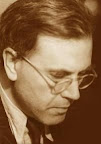
Of course, those of us who are immature are likely to still give ourselves passing marks.  Dietrich von Hildebrand tells us that we must always confront our actions, thoughts, and feelings with the person of Jesus, hold them up to Him as if to a mirror.  In doing so, we may come to feel judged or scolded - that is a temptation from the devil to believe that God is judging us.  We must not believe it.  The voice of Jesus calls out like a shepherd to sheep (Jn 10), and as we come to know Him better, we will hear His gentle voice leading us in the paths we should take, to be the men and women we should be.  If we try to listen to Him, He will not speak to us as He spoke to the spiritually-deaf pharisees.  When He speaks to us, even to say something very hard, as He must sometimes do, He will be as gentle as possible.  Very often, His message will arise in our hearts as a simple recognition of a hard truth about ourselves.

"If today you hear His voice, harden not your hearts," (Ps 95:7-8; Heb 3:15)

Thoughts on Jesus in Our Life

The Missionaries of Charity (I think) have in one of their houses in DC a sign that reads, "Christ is the head of this House, the unseen guest at every meal, the silent listener to every conversation."

Those words recall those of Joshua, son of Nun, "As for me and my house, we will serve the LORD," (Jsh 24:15).

This morning, during my preparation for Mass (I got to church somewhat earlier than usual - refer to the previous post), I finished (finally) reading Transformation in Christ, which I started last year in April at the advice of a good friend. The last pages contained this thought, related to those above, "We must, then, lose our soul so as to find it. In other words, we should renounce all vain effort to incorporate Christ into our life, but endeavor wholeheartedly, with the full sanction of our central personality, to transpose our life into Christ and entrust it to Him; indeed to be possessed by Him."

Hmmm... beautiful.

Mercy is the Measure

Mercy is the virtue by which we freely stoop down to another when we need not have, without pride or gloating, and free them from hurt and bondage. We cancel the debt they owe us without fanfare and self-congratulation. We tend their wounds with gentle ointments. We listen to their heart.

Here's a beautiful passage about mercy from von Hildebrand's Transformation in Christ:

"Mercy presupposes true inner freedom

It also presupposes an inward suppleness and fluidity; a thoroughly melted, quickened, liberated heart. Every inward scar, as it were - every hardening, every incrustation brought about by an experience we have failed to rectify before God - dams up the flux of mercy. Nay, the path of mercy is thwarted by every kind of inner unfreedom: by our bondage, for example, to anxiety or disgust; to the rancor evoked in us by an insult; and in general to every overemphatic preoccupation. For everything that stunts our freedom tends to make us self-conscious and to deprive us of the capacity, implied in mercy, of taking our stand above the situation.

He alone who has attained the supernatural sovereignty that results from true freedom and is reserved for those who seek only the kingdom of God and his justice, who expects nothing of his own forces but everything of God - he alone can participate in the specifically divine virtue of mercy.

None but those who have burst the narrow limits of ego-life, and in full openness and awakeness centered their lives in Christ, can truly respond to the miseria of others and - beyond all mere compassion - perform the act of that redeeming loving kindness which conveys to the wretched a breath of the love of God and lifts them from their misery, "Lifting up the poor out of the dunghill, that he may place him with princes, with the princes of his people," (Ps 112:7-8).

Mercy presupposes humility

Nor is this holy sovereignty possible without humility. He alone who is deeply humble is blessed with true inward freedom and fluidity; he alone is free from all impeding hardness. The general significance of humility as a condition of all participation in the divine life stands out in particular brightness when it is a question of mercy. Our possession of the highest human virtue (which is humility) constitutes the necessary foundation of our progress toward sharing the specifically divine virtue of mercy. We must die to ourselves so that the mercy of Christ may fill us. With St. John the Baptist we must say: "He must increase; but I must decrease," (Jn 3:30).

Our mercy toward others is the measure of our life in Christ

Mercy, the specifically supernatural virtue, thus provides a touchstone more infallible perhaps than the test of any other virtue for a life conceived and molded in Christ. Hence, the question whether we have been merciful must play a decisive part in our examination of conscience. Many are the occasions for mercy which we miss. Only too often do we, as did the Pharisee, pass by a wounded one - clinging to our personal concerns, circumscribed by our lack of freedom.

Yet, the virtue by which we live hourly is precisely the one of which we ought to be most mindful. And the mercy of God is what we live by. It pervades our lives integrally; it is the primal truth on which the whole being of a Christian rests... The way to attain the virtue of mercy lies in our constant awareness of being encompassed by mercy: of the fact that mercy is the air we children of God are breathing. May the mercy of God... pierce and transform our hearts. May it draw us into the orbit of its all-conquering, liberating, [gentle] power, before which all worldly standards collapse.

For according to the words of the Lord's Prayer... only insofar as we become merciful ourselves may we harvest the fruits of His mercy and taste, on a day to come, the last word of His mercy..."

---

I myself have lately experienced the conjunction of receiving and giving mercy. The other day I had my feelings hurt in a trivial way, but a way that kinda hit a nerve. It was hard to let go of my little grudge, and I was afraid that it would poison everything.

As I approached the confessional, the words came into my heart, "Be it done unto me according to Thy word," (Lk 1:38). I began to repeat the words quietly and slowly, over and over as I walked down the road toward my parish. I could feel my hands loosening their grip on the grudge I was carrying. The Lord opened my heart to His will, whatever it should be. As my heart opened, I was freed from the hurt feelings, isolation, anxiety, and stress that were trapped in my closed heart, each aggravating the others like rocks in a tumbler. Those feelings just melted. In the same process my desire and ability to be gentle, mindful of others, and forgive injuries intensified. No - more than that. It wasn't simply that my desire to forgive was intensified; before my desire to forgive had been intense but I couldn't do it. Now it was done. It was done unto me. When I blessed myself in the confessional before telling the priest my sins, I realized that the hand that had clutched that grudge was now emptied and relaxed.

The ability to receive mercy depends upon faith. We must trust that God really does love us and have a plan for our wellbeing or we will not be open to what He wants to give us. We must trust that if we pour our heart out to God, that He will not leave us empty and broken, but will pour gracy and mercy into our soul.

The ability to show mercy depends upon faith. We must trust that God will do justice to those who have injured us maliciously, so that we need not concern ourselves so much with our rights, etc. We must trust that God will heal our wounds. We must trust that God will help us to grow because of them, and help those who have injured us without ill-will to grow as well. Ultimately, we must trust that God is being merciful to us, even when we cannot feel it.

When we are freed from interior wounds and let go of anger and grudges, we can gently tend to others - even to those who have harmed us.

---

Be it done unto me according to Thy word.

Lord Jesus Christ, Son of God, have mercy on me, a sinner.

Holy Patience


"In this sense, holy patience may be described as a sister of wisdom and of contemplation. As these virtues cause us to consider and appreciate everything in a perspective centered on God, thus evoking to the full the beauty and depth of all things, so also in the attitude of patience we emphatically let God act, thus allowing all things to unfold from above - as proceeding from their Origin - and by so experiencing their operation again render to God what is God's," Dietrich von Hildebrand, Transformation in Christ.

St. Anthony and the Desert Day


St. Anthony the Abbot
Religious (Jan 17)

Anthony had had it with the worldly world. He'd had his fill of treasure and trifles as a well-to-do young man. He was born in 251 in Egypt, in the midst of persecutions. He survived those, and even more bitter persecutions at the end of the same century. When he was about 20 years old, while a peace reigned and persecution of the Christians tapered off, his parents died. Within the year, when he went one time to pray in church, he heard a preacher speaking about the rigors that the Apostles endured, and that even the contemporary generation's parents had endured, for the Christian faith. How easy it had become to be a Christian. The preacher spoke about our Lord's admonition to the rich young man to sell his possessions so as to follow him more perfectly. The words resonated with Anthony as if Jesus had been speaking right to him.

Anthony sold his parents' estate, leaving only what was needed to provide for himself and his sister. He began to practice an increasingly austere and simple lifestyle, and after about fifteen more years quit the city altogether and moved into a cave in the wilderness. People drawn to his gentle modesty, wisdom, and wit followed him into the desert. His great hope had been to withdraw into the desert so as to find quietude for prayer, solitude for Jesus. His plan was not altogether foiled. The men who gathered around him began to live a life that was both collective and isolated, gathering for meals and Mass, and retreating again into secluded meditation and prayer. He wrote a rule for his brothers to order their life in common, and is known as the Father of Monasticism.

We each of us live in a very busy world, with a great deal of stuff - possessions, appointments, responsibilities. These burdens can crush us down, like the thorns in our Lord's parable, choke off our growth in Christ. It behooves us prayerfully, in conversation with trusted and spiritual friends, and with the advice of a spiritual director, to pare down our lifestyles, to simplify, and to cut back so that we can make time and space for Jesus. A great help in living a recollected and balanced life, as well as obeying the Third Commandment (remember the Sabbath, anyone?) is the Desert Day.

A Desert Day is a day by one's self, with Jesus. It might be at a retreat center or on a trail in the mountains. It really can be anywhere that will not intrude on our inner recollection; venues with lots of advertisement, music, flashing lights, etc., are straight out, mind you. Nice gardens, churches, quiet boardwalks in small towns - these might do. During the Desert Day one should make a real effort to attend Mass, make a holy hour, meditate on some spiritual reading, stroll about and take in the air, and let Jesus know what's going on in your life. Jesus will speak back to you if you let Him, but because He doesn't want to be a boor, he won't shout. He loves you, and lovers love to whisper in your ear. So if you want to hear Him, you must be quiet and listen closely.

St. Anthony the Abbot, please help us build a little monastery in our soul so that we, like you, can live with Jesus day and night. Amen.

On Zeal and Patience

I will probably be sued for copying such a large portion of a text, but this must be done, come what may. It is from Dietrich von Hildebrand's Transformation in Christ, which has been the lionshare of my spiritual reading since mid-Spring 2007. This portion is taken from chapter 12, entitled, "Holy Patience."

The rapidity of our immediate response may sometimes differ in our inward dedication and our outward actions.

A keen distinction must be made between our inward dedication to God and to His kingdom in ourselves and in others, and our action proper (on ourselves and on others). The call of God once perceived, our response cannot follow quickly enough. We should immediately and unconditionally respond to the sequere me [Lat., "Follow me"], giving ourselves to God without demur or reserve as did Mary: "Behold the handmaid of the Lord: be it done to me according to thy word." All hesitation here would be a perilous error.

But this unhampered inward dedication to God does not by itself involve the performance of all single acts which it entails in a general and essential sense. Particularly does this caution apply to extrinsic and public action, that is, the works of the apostolate.

Certain saints – among them, as we have seen, St. Francis and St. Anthony the Hermit – immediately drew the full consequences from their conversion. But this is a great privilege of grace. Our sense of discretion must enlighten us about whether we may take the decisive step with its full implications at once, or had better remain for a period in inward maturing. There exists a danger of skipping over necessary stages.

Sometimes it also happens that a sincere but not so highly privileged Christian, instead of awaiting a more unmistakable and concrete call of God, overreaches himself in a kind of natural enthusiasm and anticipates certain acts fraught with grave obligations, without being able to posit them with a true inward decisiveness. Many converts immediately want to enter a religious Order, though they lack actual vocation and have not measured the whole significance of such an enhanced dedication to God.

The Church knows this danger; that is why she requires an adequate interval of inner maturing for all great steps in a religious life. Unless a particular and rare grace makes up for it, man needs an appropriate space of time for all deep and great things.

The attitudes deep things require cannot, in general, attain their complete validity and reality except after a period of organic development, whose length varies greatly according to each case. For every deep, fateful word there is a fullness of time in which alone it can be legitimately and fruitfully spoken. Anticipate it hastily by acting without discretion, and your utterance will be shadowy, devoid of maturity, and invalid. Again, let the “destined hour” pass unused, and you will no longer be able to speak that word except in an empty and purely formal fashion.

It is touching to read how the chamberlain in the Acts of the Apostles hastens to be baptized by the deacon Philip; for him, thanks to a special grace of God, the destined hour – the fullness of time – was at hand there and then. But the Church by no means modeled her general practice in admitting converts upon these cases, recorded in apostolic times, of an instantaneous and definitive conversion.

On the contrary, in the first centuries she imposed on the catechumens a long course of preparation through the successive stages of which they had to pass before being admitted to Baptism. Even today, every adult baptism must be preceded by a certain period of instructions and maturing. As regards the preparation for monastic life, the Church only allows the taking of temporary vows at first; final vows require a preparatory stage. Nor does she admit a definitive private vow of virginity without an antecedent temporary one. Thus, in forming these decisive resolutions concerning our inner and personal life, too, we must exercise holy patience, and
accord time the significance in human affairs with which God has invested it…

Notwithstanding all our zeal, then, we must observe the obligation of patience even as workers in the vineyard of the Lord. With careful discretion we must try to perceive the striking of God’s own hour for our work to start in His vineyard rather than insist, in a spirit of natural enthusiasm and impatience, on determining it by ourselves. Suppose we are animated by a glowing zeal: if, at the same time, we have patience, we may be infallibly sure that we no longer live by our nature but by a supernatural principle of life.

A buddy of mine, a close friend, after spending a week visiting a fairly austere Franciscan order, hoping to find his vocation there, remarked to me, "I might have a vocation to join them; but I think a vocation needs time to grow inside of you." Wise man, my friend.