Intentions of the Holy Father for April

Ecology and Justice. That governments may foster the protection of creation and the just distribution of natural resources.
Hope for the Sick. That the Risen Lord may fill with hope the hearts of those who are being tested by pain and sickness.
Showing posts with label penance. Show all posts

If You Are Feeling Weighed Down

If you are Catholic, and trying to do it (i.e., be Catholic) well, and are paying attention, you probably feeling a little down about all the stuff going on right now.  I know I am.  I don't have anything really articulate to write.  The thing feels to me like a very dense storm cloud, fiercer than normal anti-Church nonsense.  It's very incongruous with the weather being so fine outside my window.  The cross is not ours to bear alone, though.  Please do not give up looking to Jesus, looking to heaven for help.

There should be some consolation in this: that our blessed Lord told us that we would be persecuted (Jn 15:20).  Now, don't get me wrong.  Getting called on sin - that's not persecution, it's a public service that we apparently need.  Being gleefully, ferociously stalked by self-appointed "watchdogs" who completely neglect their own house and who bay and howl for the House of God to be torn down to its foundations, head first - that is a little bit closer to what is meant by persecution.  At least, it gives us a watered-down taste of what our brothers and sisters in other countries face every day on a much more violent scale.  We should allow this animosity provoke us to prayer for our enemies and for our brethren whom they treat worse.
We should also take comfort in this prophecy of St. Peter, the first pope, who himself came against fierce opposition:
For the time has come for judgment to begin with the household of God; and if it begins with us, what will be the end of those who do not obey the gospel of God? (1 Pt 4:17)
If you find yourself fazed or perturbed, please remember these words of Teresa of Avila:
Let nothing perturb you,
nothing frighten you.
All things pass.
God does not change.
Patience achieves everything.
Whoever has God
lacks nothing.
God alone suffices.
 It's going to be OK.  Hold fast, pray, enter into the Triduum with your whole heart.  Remember Jesus.

War Movies and Lent

I was thinking about some of my favorite war movies, and about what distinguishes the best of their genre from the worst. Characteristics started coming to mind, and it occured to me:

Lent.

All the war movies that I can think of are trying to do something rather than just be senseless violence. The good ones succeed, and the bad ones fail. The bad ones are just senseless violence.

Lent is very much the same way. In Lent, we are challenged by the Church to do violence to the worst in our nature, and so to free the best in our nature to pursue God more wholeheartedly. We deny the part of ourself that craves creature comforts and luxuries so that we can go wherever God leads. In a "bad" Lent, we either fail to do so entirely, or more commonly perhaps, we do so but with crooked motivations. Bad Lenten motivations are things like self-help, and even to make God happy with us, to prove ourselves to ourselves or to God. In such personalities, the self has unwittingly become god. This self-deification is palpable if we are honest with ourselves. When we think, "This fast will make God happy with me," we often mean, "...make me happy with myself." We do not need to earn God's love. If we feel like we have to prove ourselves to Him, it is likely because we have not yet proven ourselves to ourselves.

But that's not what Lent is about.

Lent is about learning to detach from unnecessary distractions, spend more time in prayer, and serve the poor - that is, Lent is a time to focus more on the things of God than we might normally. We are to focus on God. That's all.

Now, here's where the war movie analogy breaks down a bit. But bear with me. Wars aren't supposed to be for their own sake, and the violence in war movies isn't supposed to be gratuitous. And in the good war movies, the violence isn't gratuitous at all, and nor are the heroes pointless. Instead, in good war movies, the violence shows the peril of the heroes, and the movie shows their heroism: the selflessness, commitment, discipline, love of companions, honor, bravery, defense of innocence. All these virtues are needed in heaps to live the Christian life, and Lent is the perfect time to dig in deeper, to train harder.

Don't worry, you can have chocolate again on Easter.

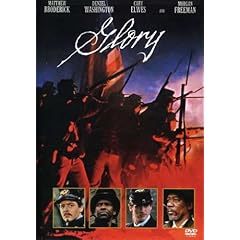
In the meantime, if you find yourself inspired by movies as I often do, you might consider these movies for a Lenten diet. They start as war movies, and progress to the more explicitly religious. For best results, combine with spiritual exercises and service to the poor. These are not my take on "the best movies of all time." They are just suggestions of some movies to inject in your viewing diet, to give yourself a little Lenten food for thought, if you have not already given up movies or television for Lent.

Black Hawk Down

This excellent movie really is one of my all time favorites. It makes palpable all the virtues I listed above. The backdrop conflict makes the virtues all the more poignant. In a WWII movie, the virtues of individual characters can get lost in the the overarching justice of the Allied cause or the wickedness of the Axis cause. In the context of the shattered idealism of the US's brief Somali engagement, the virtues of these characters shines very brightly.


If you can forgive the very brief, fully clothed, yet graphic sexual scene at the very start, the movie is an amazing story of conversion in the face of suffering. Through a barely perceptible process, opportunistic treasure-hunters become willing to lay down their careers and even their lives to help those in need.


Schindler's List

Not exactly a typical war movie, but being set in wartime counts for something. It is an amazing story of conversion, and closely based on real events.  In his contact with suffering people, the eponymous protagonist comes to a powerful change of heart as their humanity and his progressively triumph over every merely material concern.


This story is one of discipline, fraternity, and courage - three chief virtues that make possible living like Jesus in times during which Christians are frowned upon.  It is based on historical fact, which makes it all the more appealing.


Sophie Scholl - The Final Days

Also set during war rather than properly speaking about war, this simple, true story has as its major theme the commitment to truth about human nature regardless of personal consequences.  It tells the true story, based on actual interrogation and trial transcripts, of Sophie Scholl and other members of the White Rose resistance movement in Munich during the Second World War.  Sophie's simple, heartfelt prayers are particularly beautiful.


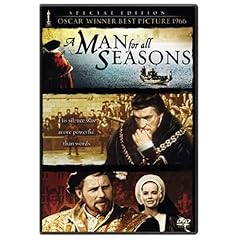
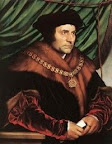
This movie is not at all a war movie. There is no war in it. Except the most important warfare, which is constant, total, and absolute - spiritual warfare. The equivalent of Chief Justice in Henry VIII's England, Sir Thomas More refuses to capitulate and betray the Church and the law of God. The wily soul navigates any number of dangers and temptations, and ultimately the temptation to lose his soul in order to save his life.


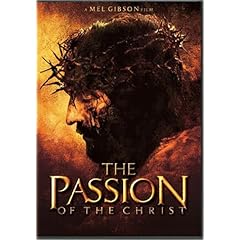
The Passion of the Christ

Watch the Commander-in-Chief of our ragtag brotherhood as he sets the objective and rules of engagement for our Great Battle.

Ashes for a Sinner

At Mass today, Msgr. Rossi made a really striking point. He said that we do not wear ashes on our to proclaim to the world that we are pious, or even to be proud of being Catholic, and certainly not for cultural reasons.  We wear ashes on our foreheads to proclaim that we are sinners in need of mercy.

If those who meet us are challenged to repentence by our ashes, so be it.  But it is crucial that we be challenged to repentence.

John Donne's Holy Sonnet V


I am a little world made cunningly
Of elements, and an angelic sprite;
But black sin hath betray'd to endless night
My world's both parts, and, O, both parts must die.
You which beyond that heaven which was most high
Have found new spheres, and of new land can write,
Pour new seas in mine eyes, that so I might
Drown my world with my weeping earnestly,
Or wash it if it must be drown'd no more.
But O, it must be burnt; alas! the fire
Of lust and envy burnt it heretofore,
And made it fouler; let their flames retire,
And burn me, O Lord, with a fiery zeal
Of Thee and Thy house, which doth in eating heal.

Proverbs That Might Be True, pt. 2

Life is pain, princess. Anyone who tells you otherwise is selling something.
-The Dread Pirate Roberts, "The Princess Bride"

In With the Old

Archbishop Raymond Burke is the head of the Apostolic Signatura, the Church's highest court, subject in law only to the Holy Father himself. On last Sunday, Oct 18, 2009, he sang the Tridentine Mass according to the 1962 Missal of Bl. John XXIII in St. Peter's Basilica in Rome. It was the first time the High Tridentine Mass was sung in Latin in St. Peter's for forty years.


In her blog, Mary Ann Kreitzer points out that forty might not be a coincidence. In biblical thought, it is the number signifying penance, conversion, and waiting for God. Forty is the number of days of rain in Noah's day; of days spent sitting in the ark waiting for the world to dry; of years wandered in the desert; of days til Nineveh be overthrown; of days our Lord spent fasting and praying. The thought is hers, and I got the beautiful picture (at right) from her as well.

I will not go nearly so far as to say that the Church has been in exile away from the true Mass, and now we've got it back. That's all bosh. Where the bishop is, there is the Church (according to St. Ignatius of Antioch); when the Pope speaks, Peter has spoken (according to St. Augustine of Hippo). The Church has given us a new liturgy, the Liturgy of 1971 of Paul VI. According to our Holy Father, that is and will remain the ordinary ritual for the Mass in the Latin ("Roman") church.

But I will go this far: I think the Church is waking up. I think we are finally starting to wander out of the desert of our own denseness. I think those who are daily deciding to stick with her come what may, have counted the cost, are counting the cost, and have a better sense of what we are doing. Fewer and fewer remain who do so only because everybody else is doing so. Just a couple generations ago, so many Catholics had memorized answers that they did not understand, felt they mustn't question or probe, and were mostly content not to do so. The faith of those who remain is harder won, and we may yet be made to fight harder still to continue in the race of faith. Sincere seekers are asking questions with an openness to answers, and they are being answered by knowledgeable Christians who are open to questions. I do not dare say that the Church has been chastened, but I think it is clear that we are being chastened. And we are waking up.

Click the picture for thoughts about
Rev. Mr. Fernando Saenz' first mass as deacon

We will bring that wakeful alertness with us wherever we go. We will bring those questions, and those answers, to the world. We will bring our understanding with us when we go out, because God is giving us a new heart for Him. And we will understand what God is doing even when we do not understand the language of the liturgy in which He is doing it. From October 6 to 15, while traveling in Italy and Germany, I had occasion to attend Mass twice in English, once in Italian, and twice in German. The German sounded a LOT like English, and phrases here and there had refreshingly similar sounds, but I understood hardly any of it. I know more Italian than German, but the Italian sounded even stranger - singsongy and light. At one English-language Mass the microphones were turned down a bit low, so I missed most of it. "Why not Latin?" I thought, "Just as easy to understand!" The other English-language Mass was beautiful, quiet, with an air densely packed by prayer; that was the Mass in which my newly-ordained friend preached for the first time. Seven or eight of us filled up half the chapel. Several Italians, mostly young and presumably understanding only a little, popped in to take up the empty pews. They didn't know it was the day after Fernando's ordination. They didn't know English. We did not know Italian. But somehow, in that place, praying privately together, publicly as a community of new acquaintances and strangers except for Christ, we knew exactly what we were doing. The Mass is the Mass is the Mass, the same in every language and in every place. We knew exactly what we were doing. We were awake.

Somehow, I sense that the growing urge within the Church for the Tridentine liturgy, even if we experience it only periodically, is a sign that we are coming awake.

A Different Kind of Kingdom

Many of us work or have worked for company's whose environments were relaxed, where "business casual" is the attire, and where we are encouraged or required to call our supervisors and even the CEO by their first name, usually Skip, or Chip, or Don.  The purpose of this casualness is to make us feel comfortable, to feel at home, to think of the company as a family.  Yet, everyone seems hellbent on kissing Chip's butt in a way we rarely felt inclined to kiss Dad's butt.  In fact, when we kissed Dad's butt, he usually called us on it very quickly, didn't he?  "Ok son, now what's this all about?  What do you want?  Do you need money for a date?  Do you wanna borrow the car?"  But Skip, Don, and the other bigwigs and supervisors at our company seem to like having their butts kissed.  They are certainly aware that our desks are all straightened way a visit from them is anticipated.  The modern kings, princes, and petty barons are much smoother than maybe they were in medieval times, but they nonetheless manage to make themselves felt, as Jesus put it.

The readings from today's Mass (Is 53:10-11; Ps 33:4-5, 18-19, 20, 22; Heb 4:14-16; Mk 10:35-45), those of the XXIX Sunday in Ordinary Time, probably go in one ear and out the other of folks intent on being worshiped, the Don's and Chip's of this world.  But they might go misunderstood by those of us trying to be Christians, and should give a moment's hesitation to anyone engaged in "the culture wars."  Here's why:

James and John go up to Jesus and ask him if they can be the two top dogs in their kingdom.  In another account (Mt 20:20) it's their mom that does the asking.  How that fact got confused between St. Matthew and St. Mark might be an interesting sociological question, but it's not really relevant to the story or to the message for present purposes.  Anyway, Jesus basically asks them if they can handle it.  "Of course we can," they basically say, "easy."

Easy, indeed.  Now, the other apostles get all tangled up because they want to be the best in the kingdom, too.  Pandemonium ensues.  Jesus calms them all down by stumping them, as usual:

"You know that those who are recognized as rulers over the Gentiles lord it over them, and their great ones make their authority over them felt. But it shall not be so among you. Rather, whoever wishes to be great among you will be your servant; whoever wishes to be first among you will be the slave of all. For the Son of Man did not come to be served but to serve and to give his life as a ransom for many," (Mk 10:42-45).
Now, this is a different sort of kingdom, isn't it?  Not only is it a kingdom with a different goal than the kingdoms of this world, but it is a kingdom operating on a whole different set of principles.  Normal kingdoms depend upon and elevate the majesty of their king; ours depends upon and elevates the crucifixion of our king.  Normal kingdoms run on taxes; ours runs on widows' pennies (Lk 21:1-3).  And this all makes sense: a different goal often requires different means.  One packs different things for a trip to Ocean City than for a trip to Alaska, and one probably uses a different mode of transport.  The Kingdom of God is different than any of the kingdoms of men, not only because it is run by a different king aiming at different goals, but also because it uses different means.

How often do we who "fight to save the culture" fight using the very worst weapons developed by the very worst people in our culture?  We organize committee meets, develop marketing strategies or three year project goals, recruit workers, and bang! off we go.  Of course, our Blessed Lord chided us because we don't even do these things very well (in the parable of the dishonest steward, "for the sons of this world are more shrewd in dealing with their own generation than the sons of light," Lk 16:8).  We use the means of the world to beat the world, but we do not use them well because our Christian faith and morals get in the way; for their own part, using the means of the world often ends up corrupting our Christian faith and morals, which are the whole point of the Kingdom of God.  Now, I am not arguing that committee meetings and marketing strategies are necessarily evilEvil is a very emphatic word.  But those things are emphatically not the way our Lord does things.  We are to make use of the things of the world (Lk 16:9) as appropriate, but never in a way that detracts from our true purpose.  Our true purpose is not to out-world the world, to one up the world at its own game.  Our purpose is to let God build up in us and through us a new sort of world - the Kingdom that is to come.

And that is a different sort of kingdom:
"The LORD was pleased to crush him in infirmity. If he gives his life as an offering for sin, he shall see his descendants in a long life, and the will of the LORD shall be accomplished through him. Because of his affliction he shall see the light in fullness of days; through his suffering, my servant shall justify many, and their guilt he shall bear," (Is 53:10-11).
When we who want to change the world are willing to suffer whatever it please the LORD to visit upon us, as an offering for sin, then we shall see the world change.  If we really believed that our affliction would bring us "to the light," would we seek to dodge it.  If we believed that our suffering would justify many, would we be working so hard to do it with committee meetings?

What I am suggesting is not the abandonment of formal structures in the Church.  I am only urging a return to prayer, fasting, almsgiving, to penance, to service to the weakest and poorest, to those most mangled by the Kingdoms of this world.  I am not suggesting that we have stopped doing those things in the Church, not at all.  I only wonder if we haven't somehow gradually gotten our minds onto the wrong track, if maybe we haven't settled in a bit too much, those of us in the pews.  I am not denigrating petition-signing, election-time campaigning, and blog-writing.  I just hope they haven't taken the place of hairshirt-wearing and prisoner-visiting.  The ancient world was converted to Christ when they saw Christians picking abandoned babies up off the sides of roads, when they saw Christians nursing people with contagious diseases, when they saw Christians giving their own last bit of food to a hungry stranger, trusting in Providence for their own next meal.  The postmodern world will be converted to Christ when they see us lifting male prostitutes up out of the gutters, when they see us nurturing drug-addicted babies, when they see us living simply (and donating the rest of our salary) so others might simply live.

Well, in any event, I doubt many have been converted by seeing how we conduct our committee meetings.  Let's refocus our hearts.  And that, dear brothers and sisters, needs prayer.

Ashes: The Christian in Lent

Ok, so I am going to try, briefly, to tie a few things together.

1. Every Christian is by baptism a priest, prophet, and king (or queen, as the case may be). That includes every man, woman, and child who has been claimed by Christ under those regenerating waters. What does this mean, though? I am going to strip away the rhetoric for once and (try to) get to the point.

1A. Christ is the Great High Priest, the Great Prophet, and the King of All Creation. In baptism, we are united with Him and become part of Him, and adopted brothers of His, and adopted sons and daughters of the Living God with whom He is One, and we through Him.

1B. A priest, fundamentally, is one who makes intercession to God and offers sacrifices to Him on behalf of the people, and gives to the people God's blessings. Every Christian is called to be a man or woman of prayer, especially for others, and of sacrifice, especially of our own bodies and wills. We offer these prayers and sacrifices, in imitation of Christ, on behalf of ourselves, our loved ones, and the world. Ordained priests serve this role in a particularly acute, sacramental way within the Church, and the whole Church (that's all the baptized!) serves this role within the world in a less crystalized, more day-to-day way.

1C. A prophet, fundamentally, is not one who tells the future (though he might), but one who speaks for God - "pro-pheme" in Greek, a "speaks-for." Christ came as the final, fullest revelation of God's love for us. In His own flesh, He (God) manifests His desire to be with us intimate in bodily union, a union accomplished first in baptism and then most perfectly in Eucharistic Communion. Jesus' very existence makes this will of God clear to us. His words announced what He and His Father are about. We Christians, sharing in the mission of our Master, our Friend (John 15:12-17, esp., 15:15), also must speak God's word. We must put priority on living it out though. We cannot wait to live it perfectly before we speak it, or else we'll never speak it. But the emphasis in our lives must be on prayerfully hearing God, digesting and living His voice, and then amplifying it to the world in our own deeds and words.

1D. A king (or queen), fundamentally, is not one who bosses around and tyrannizes, but one who has been given authority by God to make a patch of the world more like the Kingdom of Heaven. That's all of us. We all have a patch of the world over which we have influence or even authority: our homes, friends, work environments, students, neighborhoods - all of these to varying extents are within our reach, as it were. We are, like Jesus, to use what the Father has given us to make our area more like God would have it be. We are to use our abilities, influence, and authority firstly for service - never for lordliness (Mt 20:20-28). We are to heal hearts, serve the weak and poor, right wrongs, salvage relationships, make good use of resources - all to make the world more like the Kingdom.

1E. These three dimensions of Christ's life and of our life in Christ are called the Triple Munera, the Three Offices/Duties/Functions of Christ. The Church, His Mystical Body, shares in them - our ordained clergy firstly and in a particular, sacramental and directing-leadership sort of way - and all the rest of us in a general and raw-horsepower sort of way.

2. We have just begun Lent. During Lent we are commended to remember our sinfulness and God's mercy in a particularly acute way in order to prepare for the remembrance of the Passion, Death, and Resurrection of our blessed Lord. The Church has three ways of life that are now more than ever to be lived out with diligence - prayer, fasting, and almsgiving.

2A. Prayer is time spent opening our heart and lifting it toward union with God. It might be while we do something else, but like everything else, if we want to really get good at it (like all communication, it takes practice) we need to set aside time for it daily. Lent is an especially good time to adapt some new prayer discipline - a daily rosary or morning offering, weekly Stations of the Cross, something. Prayer is especially important for living our our priestly office, but also for our prophetic office, and even for our royal office. After all, if we are to govern as God would have us, we had better be listening to Him.

2B. Fasting is, broadly speaking, abstaining from some food, drink, (or other other pleasure) or food and drink in general. The Church's rule is minimal: on Ash Wednesday and Good Friday we must carry out a simple fast, which means we take no meat, only one full meal, and up to two other meals that combined are smaller than a meal, without any snacking in between. Only those who have reached adulthood and haven't yet reached old age are required to fast. Everyone else merely abstains from meat, and everyone abstains from meat on Fridays in Lent. Really, the Church encourages us to abstain from meat on all Fridays, or to do some other sacrifice instead. During Lent, we pick an additional Lenten abstinence or fast that can hopefully be a sacrifice we continue in altered form after Lent, something that will change our lives for the better, for the godlier. Fasting is especially important to the prophetic office because one who preaches the Word of God had better feed on it, and remember that it is his primary food (Mt 4:3-4). Because priests offer sacrifice, a sacrifice of our time and even of our own bodily needs and desires, is perhaps the most concrete way to sacrifice our will to God. But good kings also sacrifice to God because they know that they are not the real top-dog, but that God is.

2C. Almsgiving is giving to the poor. It should be a near daily way of life for Christians, something we plan into our budget and not just something we do if we have anything left over (who really ever does?). Living a Christian life, or working for the Church, is not a substitute for generosity to her poorest children. I used to work for the Church and was given a small salary, and did not give to the poor very much. I am very embarrassed of that now. I might have given something. I earn less now, because I am studying full time, but give a lot more than I did then (it is still not much, lol). Even homeless people can give a bit of change. At least I know now that I am doing what I can to support the Church (the tithe) and care for those in need (almsgiving, properly speaking). Almsgiving is especially important to our royal office as Christians because as Christian king-lets and queen-lets, we are not to lord our Christianity over others ("See how holy I am!") but to serve them. The neediest first. Almsgiving keeps us oriented in that direction.

2D. As per Matthew 6, we are not supposed to do these things SO THAT others can see them. But as per Matthew 5, we are also supposed to be a good example to glorify God by our good deeds. How do we reconcile these two things? We should do our good deeds as part of our ongoing interior conversion. The quieter the better, generally speaking. If, for the sake of another, it is useful to the other that he should know of a good deed of ours, then we may allow him to know. And we need not be ashamed of our good deeds, either, especially when we are doing them as part of a group activity of the Church, as part of a public gesture of the People of God. If you are as vainglorious as I am, then it is probably best to keep your personal good deeds as private, tucked inside your vest when possible. The whole idea is to lose ourselves a bit in the heart of God and in the needs of the world.

2E. For each of our disciplines of prayer, fasting, and almsgiving, we should pick something that fulfills all four of the criteria that follow:


  1. It should be difficult. A challenge, people. Lent is not supposed to be easy, but a reminder of our weakness.


  2. It should be doable. Lent is not setting us up for failure, but setting us up to remember that we need God.


  3. It should be permissible. We must not do anything contrary to our real duties. A student cannot give up homework for Lent. Nice try, kids.


  4. It must be good. We can commit to going to Mass on Wednesday evenings. We can commit to giving up sweets. Mass is a good thing. Sweets are good things. We are supposed to be giving Jesus good gifts, whether we give him prayers or sacrifices or acts of love to his poor brethren. We must not give up fornicating. Fornicating is bad. We should have given that up ANYWAY. Although, frankly, I suppose Lent is a good time to do so if you haven't already. But give up sweets, too.
2F. And don't forget to go to confession before Easter. It is the solemn duty of a Christian to so. In fact, we call (confession) + (receiving holy communion during the Easter season) our "Easter duty," or the "Easter obligation." By secretly confessing our sins, we loudly proclaim not only our sinfulness (our true, current condition) but also the Lordship of Jesus. It's the only time of year that we are required to go to communion in order to maintain our communion with the Church. And to do so, we should prepare by going to confession. Especially if we haven't been in a while. If it kinda hurts, or you can think of ten reasons not to go, or you are scared - that's all pride and fear waging a spiritual warfare in your head to keep you from God. Don't listen. Just go to the priest and receive Jesus' mercy like the Bible tells us to (James 5:16 and John 20:23). You won't regret it.

Happy Lent!

The Birth of the Word that Made the World

When God created the world, according to Genesis 1, he did so by speaking a word. "Let there be light," He says, and again, "Let there be a firmament," and so on. The world that He made "very good," (Gn 1:31) quickly fell away from Him. It might be more accurately stated that Man, His finest creation, was seduced into a rebellion against Him by an evil spirit. Man, in his turn, brought the greater part of the material world with him.

God promised through the prophets to create a new creation, a new heavens and a new earth (Isa 65:17; 66:22), where justice and peace would "kiss," (Ps 85:10). Genesis recounts what we might consider a "false start" of sorts in this new creation: God floods the earth as if to wash away sin. The same account, of Noah and the flood, tells how the flood killed most human beings, but failed to kill sin living in each human being. A mere bathing of the world would not suffice - in this new creation, in which we would have not stony hearts, but soft hearts of living flesh (Ez 36:26), we would need a bathing of conscience (Heb 9:13-14).

The new creation would start with a new Man (Eph 2:14-16). And just as the first creation began with a word, so would the new creation. The new creation began when the Word became a man. So it is fitting that the first mass on Christmas day, at midnight, starts with an antiphon the first words of which are, "The Lord said..." The eternal Godhead, the divine origin of reality, the transcendent unmoved Mover became a little baby in the womb of a little woman in a little corner of a little province. And that virginal conception was the hidden beginning of the new creation. When He emerged from her womb, leaving intact her virginity unruptured by His miraculous conception therein, the new heavens truly made their first appearance on an earth being recreated by Him as His mother swaddled Him in her arms. The event was so momentous that heaven could not contain itself. Angels burst forth from heaven to celebrate and announce the fact.

St. Peter, after our Lord's death, resurrection, and ascension made more clear what sort of thing this new creation would be, continued speaking about it (2 Pet 3:13), echoing the very words of the prophet Isaiah before him. From the time of our Lord's ascension and the descent of the Holy Spirit upon the Church, we have in the Church the means to share in our Lord's new way of existing, in the new creation. Baptism, firstly, is the sacrament by which we are scrubbed more deeply clean than the flood could manage. It washes us in the sacrificial blood of Jesus that wins the forgiveness of sins. Confirmation seals us and ratifies this new life in us. Penance restores that purification when we squander it, and the holy Eucharist sustains and strengthens it, and most perfectly unites us to Him. Marriage draws the otherwise-natural union of a man and woman into this supernatural way of living. Holy Orders configures men to represent Christ more perfectly to the rest of the Church. Anointing prepares us for the final transition from the last stages of this life, to the fullness of the life that Baptism begins in us.

This new creation in Christ, that every baptised person carries about in his soul, necessarily overturns the existing world order of sin, or else is overturned by it. The two cannot coexist forever. We must be standing with God and waging war, even if slow and faltering, against sin in our hearts and around us; or else we are standing in sin, and sinking, even if slow and faltering, into deeper and deeper sin until we can stand no more.

Christmas presents to us more than a new baby boy. It presents us with a challenge to choose between that Baby and all that He came to undo: sin, suffering, and death. We do ourselves a great disservice if, as we pay homage to the King, we neglect to mind His Kingdom.

That said, it's only a heavy thing if we do not want to choose Jesus. If we love goodness and are even willing to suffer a bit rather than sin, having God in our corner is very, very good news indeed. Merry Christmas.

All Souls' Day

(2 Nov)

The genealogies found in the Old and New Testaments are often the most "boring" parts for us. Not so for our ancestors. Our Litanies of Saints call to mind the saints we invoke, but also, we believe, make them more present in a real, and not just a subjective way. So it was with our ancestors. The litanies of their ancestors surrounded them with the "great cloud of witnesses" (Heb 12:1) that came before. By invoking, "Abraham was the father of Isaac, and Isaac the father of Jacob, and Jacob the father of Judah and his brothers, and Judah the father of Perez and Zerah by Tamar, and Perez the father of Hezron, and Hezron the father of Ram, and Ram the father of Ammin'adab, and Ammin'adab the father of Nahshon, and Nahshon the father of Salmon..." the Jews were calling their ancestors to witness to their interaction with God.

We Christians call the saints to witness in like manner because of their heroic sanctity, we rely on their prayers and intercession and special favor with the Almighty. The Jews, in a sense, were at their best, even more humble, by calling all their ancestors to mind. Everyone descended of Abraham, Isaac, and Jacob was called upon for assistance in this way, the good, the bad, and the ugly. They were not called in light of their heroic sanctity, but in light of the promise made to their Fathers, to Abraham, and to Isaac, and to Jacob, and their descendents forever. These fallen and fallible men were called upon in light of the simple fact of God's faithfulness to the promise, in light of the fact of His mercy.

Yesterday, we commemorated all the saints, who by grace have merited great favor with God, and whose aid will merit great grace for us. Today, let us not only pray for all the souls of those departed in Christ, but also call out to them for their prayers (CCC 958). They stand in purgatory, most of them, not as witness of God's justice, but undergoing His merciful cleansing, not because of their own merits, but because of His faithfulness to the promise.

Let's pray that we likewise be faithful to that same promise.

Holy Souls in Purgatory, pray for us who pray for you.

Encountering the Risen Christ in the Sacraments: An Addendum From the Day

Scholastic matters brought me to my university's campus, unusual since normally I am in my office on Thursdays. Confessions are scheduled there for a couple hours before mid-day, and I had a bit of free time, so I slipped in. The priest listened patiently. I try not to make confessions perfunctorily, but to put my heart into it, to give myself back to Jesus. I ask Him to take me back, to come back to me, to come back into me, and to draw me back to Himself.

"Don't be discouraged. Perseverance is the key thing in the Christian life," Father, whose given name I will never know, told me from behind the screen. "Jesus will always be here waiting, waiting for you. However deep the woundedness runs in you, remember that God's love runs deeper." He spoke simple words to me and a power beyond those words and filling them entered into me. As I left the anonymous confines of the box where, nameless, I am known in some ways better to a stranger and to God than to anyone else, the spring was back in my step.

"That's right. God does love me. He does have a plan for me. And I am on the right track. How silly of me to have forgotten. Thanks, Jesus."

My penance was also simple but clever. He said, "Pray to the Virgin, who knows what each soul needs, to suggest an acquaintance who needs prayers, and for that person offer an Our Father, a Hail Mary, and a Glory Be. Now make your Act of Contrition and I will give you absolution." The privatest of sacraments, Confession, is still very much a public thing. The priest stands in for Christ and the Church. I, while confessing only my own sins, in that moment somehow symbolize the whole Church in our sinfulness, returning to the Eternal Father. In some way, I even symbolize Jesus, offering Himself (though He was perfect and did so perfectly) to the Father. My pride being as immense as it is, I am very grateful for the anonymity, and awed by the love that transcends it without violating it.

Another thing that hits me again in a fresh way is that I prayed for someone who at that moment, as far as I know, needed it more than anyone else I know. And he or she will not know until heaven that those little prayers were offered on their behalf.

A last thing strikes me. Maybe someone is praying for me right now. Maybe someone in the Body of Christ, right now, is praying for you, dear reader. It's a beautiful thought that we are loved and cared for far beyond our knowledge. In fact, I think as I lay falling asleep, I will mutter a few decades for all of you, especially whichever of you needs them most. God knows.

What I Learned By Not Running Sixteen Miles

Sunday evening I was scheduled to go back to the C & O Canal Trail and run sixteen (16!) miles. I started a wee bit earlier than I had the week before, hoping to avoid the deep darkness and the Terror of the Woods. I got to the Canal and stretched, and off I went. The problem was that the date being a week later, and so close to the autumnal equinox, we are losing a half hour or so of daylight each week at this point, and so very quickly it began to get dusky again. On top of that, some Spanish rice and chicken, which I had scarfed down a couple hours earlier hoping to digest quickly for some last minute energy, was causing some, um... mild unpleasantness. Now, don't get me wrong - my symptoms were limited to some moderate distension, a bit of gas (sorry), and some very mild cramps. Nothing that can't be run through, but the sort of symptoms that tend to demoralize.

As I ran, it got darker and darker. My halfway point was also the starting point (I was doing two laps on a there-and-back course) and as I approached it, I realized that it was 8:15 p.m. and just plain dark, and I was only halfway done. Now a debate began to rage in my head: to bail out and call the run a make-up for one of the 7-8 mile tempo runs I'd skipped while trying to adjust to my new academic career, or push through and finish the sixteen miles? The distension and other symptoms were subsiding, but could always return. The darkness would certainly get darker, and then the trail (safe from bandits, I think) would become a bit dangerous because of physical obstacles. "WUSS!" something inside of me shouted. "Isn't it be better to dig in, push on, and develop my fortitude - moral, emotional, physical perseverance?" something else asked plaintively. Prudence? What would prudence say? The debate raged and raged, absorbing my thoughts and began to steal away my enjoyment of the run, and even my peace.

Now, prudence, far from being prudery, is the virtue by which one knows the most important good, and the best way to achieve it, and by corollary, how to prioritize other lesser goods beneath it. It is the most practical natural virtue, so I said a quick prayer for some, tried to clear my mind, and thought. The purpose of this run is to get into better shape to prepare me for my marathon. If I injure myself in a pothole, that won't happen. More importantly, this marathon isn't the most important thing: I still had some Syriac homework to do, and class in the morning; if I ran for another hour, and was consequently whacked physically, those things would be shot - and they are more important than the marathon or the workout. While my stomach didn't feel lousy, it didn't feel great, either. Tomorrow I could run without the Spanish rice and chicken. Feeling like a wuss isn't pleasant, but it isn't as important as these considerations: (1) school/work, (2) safety, (3) marathon performance. In fact, if I was doing this just to feel good about myself, then damaging my career and injuring my body would be counterproductive, and one of those was certain to happen, and the other one increasingly likely. OK... so at the eight-mile mark I stopped running, walked back to my car, drove home, ate my dinner of leftovers, and did my Syriac homework.

Last night, with the day planned out better, I drove back to the C & O Canal Trail and did the sixteen mile run. All of it. I stopped for a minute or so a couple times in order to stretch out better, and overall enjoyed the run. My average pace was about 8:27 min/mile if memory serves. My roommate ran the first 12 with me, and then met me at my finish mark, water bottle in hand. I've never been so flush with gratitude in my whole life. We went home and had dinner, a pit stop at McDonald's for milkshakes and 7-11 for a big bag of ice were our only distractions. After eating dinner and icing my leg joints for 45 minutes or so, I went to bed. Today, my legs are tired, but limber, and I feel fine.

So what I learned about being a Christian by not running the sixteen miles the first time around was this: when we are in the throws of a struggle, our decision-making process can become very convoluted. Virtue and vice become jumbled, and the right path gets lost from sight as surely as when I was running in the dark. Our emotions rise up in a great rebellious assault, and our minds get clouded as we begin to rationalize. Telling rationalizations from true and good reasons becomes nightmarishly difficult. I think I made the right call to give up my run the first night, but it was hard to make the call. Likewise, when fighting temptations to sin, it can be very difficult to figure out the right thing to do. It is best in life, as it would have been in my run, to make a sound decision before getting into the thick of things, and then to just hold the course against all comers - trusting that our first decision, made in the calm, clear daylight, will turn out to have been the right one.

The Jesuits recommend a frequent spiritual exercise called the Examen, in which we look over a block of time past and block of time to come, in the calm recollection of a prayerful heart, resolve to do better, and practically speaking how we will do so, anticipating obstacles, and making prudent decisions before all hell breaks loose in our psyche. C. S. Lewis identifies this phenomenon of good-decision-stuck-to-even-when-it-becomes-hard-later as the basic, natural, human sort of faith, faithfulness, fidelity. It's what married couples and religious do when they make their vows - only, those choices are so monumental that merely human faith is insufficient, and for fulfillment of those choices grace from God is needed.

That's the lesson: make good decisions before decision-making gets difficult; then when the hard times come and all hell assaults our resolve, we need only pray for the grace of fidelity to our good decision.

And yeah, sixteen miles IS the longest run I've ever, ever done in my entire life. Not too shabby, if I say so myself. Marine Corps Marathon, here I come!

Judas, Peter, and John


I want to look back to last Tuesday's (Tues after Palm Sunday; Isa 49:1-6; Ps 71; Jn 13:21-38) Gospel reading from St. John's Gospel. Our Lord predicted that Peter would betray Him, and He was right. Our Lord made the same prediction about Judas, and was also right. Perhaps our Lord made these predictions so that, after they had accomplished their respective villanies, Peter and Judas would remember what our Lord had said. Judas began to understand with horror some of the gravity of what he had done and attempted, in a kind of childish way, to undo his folly. When the reality of the situation became apparently hopeless, Judas murdered himself (Mt 27:3-5). Peter, after his treachery, remembered the words of the Teacher (Mt 26:75) and the memory of our Lord's gentle prediction caused him to weep bitterly.

Of the apostles, only one was present, perhaps having followed at a distance, at the Crucifixion itself. The Beloved Disciple, St. John, stood with the Blessed Virgin Mary at the foot of the Cross (Jn 19:25-26). She was unweakened by sin and so could stand faithful. But how could he stand with her in that dark hour, when all others fled? The answer is buried, I think, in a much earlier chapter that recounts the events of the evening before. During the Last Supper, it was St. John, the Beloved Disciple, who "was lying close to the breast of Jesus," (Jn 13:23) resting upon him, listening quietly to the beating of His Strong and Sacred Heart.

Let us bury ourselves in Jesus in prayer, resting our heads upon His breast, and our hearts close to His. Let us listen quietly for Jesus, and be strengthened by Him, so that we can stand with the Blessed Virgin at the foot of the Cross, though every other friend betray us and all Hell array against us.

St. John, the Beloved Disciple, pray for us.

More from the Beautiful Roman Liturgy, again

This time I want to cite the Liturgy of the Hours, rather than the Missal. The collect for Monday of the Second Week of Lent prays, "God our Father, teach us to find new life through penance. Keep us from sin, and help us live by your commandment of love. We ask this through our Lord Jesus Christ, your Son, who lives and reigns with you and the Holy Spirit, one God, forever and ever. Amen."

"New life through penance," is a beautiful expression that almost perfectly summarizes the Christian hope, in my mind. It is also a beautiful example of what might be called the Christian Paradox. Our Lord himself expressed it, among other ways, by saying, "Whoever seeks to gain his life will lose it, but whoever loses his life will preserve it," (Lk 17:33). It is in death that we will find a more glorious Life than can be imagined; it is in suffering that we are to look for joy; it is in childlike simplicity that we attain great wisdom; the poor have great wealth in heaven; the meek shall inherit the earth. The Christian Paradox is called in some contexts The Great Reversal. It is nonsense from the outside, a stumbling block to skeptics. But to those who attempt it, who give it their all and throw their lot in with Christ's, who pick up their cross and follow Him daily, to those blessed souls something amazing happens and all the world is left astounded.

Mourning and Weeping in Lent

Throughout much of our lifetime, we try to be big, strong, mature, and wise - whatever we understand those things to be. Usually it involves putting on an act for ourselves, for our neighbors, and even for God. All He wants is for us to be His little children, His little boys and girls. Lent is a special time for God to break through in our lives - to puncture our defenses, pull down the walls we've put up, irrigate the dry and barren field of our heart.

But breakthroughs mean that things get broken. Getting broken (or being made aware of our brokenness) hurts. "Christ, the final Adam, by the revelation of the mystery of the Father and His love, fully reveals man to man himself..." the Second Vatican Council teaches (Gaudium et Spes, #22), and being shown ourselves can be unpleasant. But He does not show us our flaws and failures in order to mock us. Quite to the contrary, according to the same document He does so in order to make "[our] supreme calling clear," in order to show us the great destiny He wants to impart to us.

For now we labor, "mourning and weeping in this valley of tears," but God will bring us out of the exile of sin and death if we permit Him to do so. While we do our penance, especially during this season of heightened penance, we have a great sign of hope. The Blessed Virgin Mary, Mother of the Lord and our Mother, has already been crowned in glory after her long and patient wait. The Queen of Heaven knows what it is to make pilgrimage on earth. She knows what it is suffer in exile. We must not give up our hope, but fix our eyes firmly on heaven, ask God for help, and wait patiently for Him to fulfill His promises. He wants to purify and perfect us much more than we can imagine, and it is that painful purification that will enable us to enjoy heaven once we attain it. In the meantime, let us keep turning in prayer, especially to our gentle and loving Mother, so that she will help to smoothe our way and "show unto us the blessed fruit of [her] womb, Jesus."

Our exile is not forever (and neither is Lent).

Hail, Holy Queen, Mother of Mercy, our Life, our Sweetness, and our Hope, to thee do we cry, poor banished children of Eve. To thee do we send up our sighs, mourning and weeping in this valley of tears. Turn then, most gracious Advocate, thine eyes of mercy toward us, and after this our exile, show unto us the blessed fruit of thy womb, Jesus. Oh clement, oh loving, oh sweet Virgin Mary. Pray for us, oh Holy Mother of God, that we may be made worthy of the promises of Christ. Amen.

Held in Prayer

It is so important that we do not become engulfed in our own suffering, and neglect others in their hard times. If we get carried away, our little hangnails and stubbed toes can prevent us from seeing others' illness, misfortune, heartbreak, and so on.

I am becoming more and more aware how many people are suffering. People have been telling me about their errant children, their job loss, their severe illness, their heartbreak, and more. Yesterday, in his homily, Fr. Ervin told about a girl he visited in the hospital. At thirteen years old, with a body wracked by hardship, she pointed out to him a small child in the bed next to hers. The little child often slept fitfully, she explained, and moaned frequently during the long nights. The thirteen year old that Fr. Ervin visited then told him, "Father, I prayed to God that he would give me that little girl's pain so that she doesn't have to endure it and can have a good night sleep." It is amazing, how much love God will put into our hearts once we become willing to endure suffering. This willingness gives us the ability to serve others even at great sacrifice. It also gives us the ability to perform penance for our sins and for the love of God.

At the very least, we can in prayer hold up these suffering souls, pester our Lord and our Lady with their names, and ask God to give us some share of their burden, if we dare take it up. Our Lord and our Lady are eager to help, and will help us to help if we ask.

From the Beautiful Roman Liturgy


This is the second preface to the Eucharistic Prayer for the season of Lent. It is absolutely beautiful, and has been the choice of the priests at all the Masses I have heard so far this Lent.


"Father, all-powerful and ever-living God,
we do well always and everywhere to give you thanks.
This great season of grace is your gift to your family to renew us in spirit.
You give us strength to purify our hearts, to control our desires,
and so to serve you in freedom.
You teach us how to live in this passing world
with our heart set on the world that will never end.
Now, with all the saints and angels, we praise you forever:
Holy, holy, holy Lord..."


Heavenly Father, purify our hearts, we pray, and help us to control our desires, rather than be controlled by them, so that we may live in freedom in this passing world until we arrive safely in the world without end. Amen.

Miserere me, Domine

Have mercy on me, O God, according to thy steadfast love; according to thy abundant mercy blot out my transgressions.

Wash me thoroughly from my iniquity, and cleanse me from my sin!

For I know my transgressions, and my sin is ever before me.

Against thee, thee only, have I sinned, and done that which is evil in thy sight, so that thou art justified in thy sentence and blameless in thy judgment.

Behold, I was brought forth in iniquity, and in sin did my mother conceive me.

Behold, thou desirest truth in the inward being; therefore teach me wisdom in my secret heart.

Purge me with hyssop, and I shall be clean; wash me, and I shall be whiter than snow.

Fill me with joy and gladness; let the bones which thou hast broken rejoice.

Hide thy face from my sins, and blot out all my iniquities.

Create in me a clean heart, O God, and put a new and right spirit within me.

Cast me not away from thy presence, and take not thy holy Spirit from me.

Restore to me the joy of thy salvation, and uphold me with a willing spirit.

Then I will teach transgressors thy ways, and sinners will return to thee.

Deliver me from bloodguiltiness, O God, thou God of my salvation,and my tongue will sing aloud of thy deliverance.

O Lord, open thou my lips, and my mouth shall show forth thy praise.

For thou hast no delight in sacrifice; were I to give a burnt offering, thou wouldst not be pleased.

The sacrifice acceptable to God is a broken spirit; a broken and contrite heart, O God, thou wilt not despise.

Do good to Zion in thy good pleasure; rebuild the walls of Jerusalem, then wilt thou delight in right sacrifices, in burnt offerings and whole burnt offerings; then bulls will be offered on thy altar.

Ashes to ashes, dust to dust...


"Remember, oh man, that thou art dust, and unto dust thou shalt return." With these words we enter into the penitential season of Lent, in which we recall our native state of sin. We are each of us born into sin, separation from God, and we renew that division from God each day in a hundred ways, some small and others large. All of us, men, women, and children, continually find new ways to abandon our Almighty Lover and the life of joy He offers us. We do so because we want to be big boys and girls, adults, and have got it into our heads that being an adult means doing it our own way. We think we have a better plan. But since He's all-knowing and all-loving, our bright ideas never turn out to be quite as good as His. In fact, they often turn out to be disastrous.

We must abandon this abandonment of God, and give ourselves to Him with abandon. We must turn back, do penance, and return to our Loving Father. Lent is the season especially devoted to the intensification of the Christ-life in us, so that we will get better at not sinning, get better at trusting, get better at praying, get better at sacrificing and loving.

The Church requires that during this Lenten period we fast on Ash Wednesday and Good Friday, and abstain from meat on those days and on the intervening Fridays. Mother Church also encourages us to adopt new practices, or reinvigorate relaxed practices, of prayer, fasting, and almsgiving. We ought to find ways to pray, fast, and give to the poor that are difficult for us, but still doable, that are permitted by our station in life, and are in themselves good things. One might give up eating-out, and put the money normally budgeted for that into one's Operation Rice Bowl for the poor, and spend in prayer the time eating-in saves us, say one half hour daily. We might take up the rosary again, after having put it down for a while; start working at a soup kitchen; and give up meat. The main thing is to take our Christian living up a notch, and hopefully to keep it there once Lent has ended.

St. Anthony and the Desert Day


St. Anthony the Abbot
Religious (Jan 17)

Anthony had had it with the worldly world. He'd had his fill of treasure and trifles as a well-to-do young man. He was born in 251 in Egypt, in the midst of persecutions. He survived those, and even more bitter persecutions at the end of the same century. When he was about 20 years old, while a peace reigned and persecution of the Christians tapered off, his parents died. Within the year, when he went one time to pray in church, he heard a preacher speaking about the rigors that the Apostles endured, and that even the contemporary generation's parents had endured, for the Christian faith. How easy it had become to be a Christian. The preacher spoke about our Lord's admonition to the rich young man to sell his possessions so as to follow him more perfectly. The words resonated with Anthony as if Jesus had been speaking right to him.

Anthony sold his parents' estate, leaving only what was needed to provide for himself and his sister. He began to practice an increasingly austere and simple lifestyle, and after about fifteen more years quit the city altogether and moved into a cave in the wilderness. People drawn to his gentle modesty, wisdom, and wit followed him into the desert. His great hope had been to withdraw into the desert so as to find quietude for prayer, solitude for Jesus. His plan was not altogether foiled. The men who gathered around him began to live a life that was both collective and isolated, gathering for meals and Mass, and retreating again into secluded meditation and prayer. He wrote a rule for his brothers to order their life in common, and is known as the Father of Monasticism.

We each of us live in a very busy world, with a great deal of stuff - possessions, appointments, responsibilities. These burdens can crush us down, like the thorns in our Lord's parable, choke off our growth in Christ. It behooves us prayerfully, in conversation with trusted and spiritual friends, and with the advice of a spiritual director, to pare down our lifestyles, to simplify, and to cut back so that we can make time and space for Jesus. A great help in living a recollected and balanced life, as well as obeying the Third Commandment (remember the Sabbath, anyone?) is the Desert Day.

A Desert Day is a day by one's self, with Jesus. It might be at a retreat center or on a trail in the mountains. It really can be anywhere that will not intrude on our inner recollection; venues with lots of advertisement, music, flashing lights, etc., are straight out, mind you. Nice gardens, churches, quiet boardwalks in small towns - these might do. During the Desert Day one should make a real effort to attend Mass, make a holy hour, meditate on some spiritual reading, stroll about and take in the air, and let Jesus know what's going on in your life. Jesus will speak back to you if you let Him, but because He doesn't want to be a boor, he won't shout. He loves you, and lovers love to whisper in your ear. So if you want to hear Him, you must be quiet and listen closely.

St. Anthony the Abbot, please help us build a little monastery in our soul so that we, like you, can live with Jesus day and night. Amen.