Intentions of the Holy Father for April

Ecology and Justice. That governments may foster the protection of creation and the just distribution of natural resources.
Hope for the Sick. That the Risen Lord may fill with hope the hearts of those who are being tested by pain and sickness.
Showing posts with label Persecuted Christians. Show all posts

If You Are Feeling Weighed Down

If you are Catholic, and trying to do it (i.e., be Catholic) well, and are paying attention, you probably feeling a little down about all the stuff going on right now.  I know I am.  I don't have anything really articulate to write.  The thing feels to me like a very dense storm cloud, fiercer than normal anti-Church nonsense.  It's very incongruous with the weather being so fine outside my window.  The cross is not ours to bear alone, though.  Please do not give up looking to Jesus, looking to heaven for help.

There should be some consolation in this: that our blessed Lord told us that we would be persecuted (Jn 15:20).  Now, don't get me wrong.  Getting called on sin - that's not persecution, it's a public service that we apparently need.  Being gleefully, ferociously stalked by self-appointed "watchdogs" who completely neglect their own house and who bay and howl for the House of God to be torn down to its foundations, head first - that is a little bit closer to what is meant by persecution.  At least, it gives us a watered-down taste of what our brothers and sisters in other countries face every day on a much more violent scale.  We should allow this animosity provoke us to prayer for our enemies and for our brethren whom they treat worse.
We should also take comfort in this prophecy of St. Peter, the first pope, who himself came against fierce opposition:
For the time has come for judgment to begin with the household of God; and if it begins with us, what will be the end of those who do not obey the gospel of God? (1 Pt 4:17)
If you find yourself fazed or perturbed, please remember these words of Teresa of Avila:
Let nothing perturb you,
nothing frighten you.
All things pass.
God does not change.
Patience achieves everything.
Whoever has God
lacks nothing.
God alone suffices.
 It's going to be OK.  Hold fast, pray, enter into the Triduum with your whole heart.  Remember Jesus.

The Brouhaha Over The Pope

I might be the last to have heard about these events, but it has lately come to my attention that the Holy Father is himself being accused of aiding and abetting child molestation, specifically by ordering the abandonment of the church criminal trial of a vicious child molesting priest in Wisconsin.  The New York Times' Laurie Goodstein "broke" the story, which in reality turns out to be little more than a well-orchestrated hoax, as Fr. Raymond J. DeSouza shows.  In fact, not only do the documents cited by Ms. Goodstein as evidence flatly contradict her assertions, but neither she nor any of the other papers or blogs to carry the story have ever contacted Fr. Thomas Brundage, ecclesiastical judge in the original case that was supposedly thrown out by then-Cardinal Ratzinger.  As the Anchoress points out, this sham is just the next in a string of annual hoaxes, fabrications, and exaggerations that by pure happenstance all come at Eastertide.


Sincere, devoted Catholics are more sickened than anyone else by the horrorific revelations of diabolical priestly sin and of the horrendous abdication of episcopal responsibility that have wracked the Church these last ten and twenty years.  But that's not what these fabricated accusations are about.  Nor are the legitimate stories, for the most part, being so vigorously reported because of a hunger and thirst for justice on the part of the media.  This brouhaha is about ideology.  That's why other organizations, a number of which are far more deeply saturated in this wickedness, are left unscathed by the media; it's why the media won't hesitate to run journalistic garbage as news.  Ideology?  Yes.  Sexual ideology - specifically, birth control, fornication, homosexuality, women's ordination, and so on.

We must pray for our Holy Father.  He has recently asked for prayers that he will not flee from ravening wolves who want only to shipwreck the Church.  This opportunity is one we must not miss to band together with each other and Christ, and to walk with this cross on our shoulder, together, to Calvary.

Der Spiegel Reports on Christian Martyrdom

Spiegel Online reports that the Religion of Peace has actually been busy martyring Christians for some time now, wherever it can get its hands on them.  Check it out here.

More on the Church Persecuted

This story, from InsideCatholic, is an excellent and well-written account of the martyrdom of three Pentecostal pastors in Iran during the last decade of the last century.  Just keep saying it over and over again, secularist pundits: Islam is a religion of peace... Islam is a religion of peace... Islam is a religion of peace... Islam is a religion of peace...

The End Times?

Here's another post from the desk of Deacon Dave Wells... posted under my name while he learns to post on his own :)


The year is quickly coming to a close. Now, don’t run out and buy your noise makers, balloons, or champagne just yet, because the year I’m talking about is the liturgical year. The Church’s year begins with Advent and ends with the feast of Christ the King, which we celebrated this past Sunday. As we get towards the end of the year, the Sunday readings appropriately reflect the end times. They remind us that we are on a journey, that our ultimate goal is heaven, and that Christ will come again at the end of time.

In the second to last line in the whole Bible, in the Book of Revelation, Jesus promises, “Yes, I am coming soon.” The author of Revelation then responds, “Amen! Come, Lord Jesus!” Those should be our thoughts and words as well: “Amen, come Lord Jesus!”

A question that we might have is “What exactly is going to happen when he does come?” It’s important to follow the teaching of the Church here for two reasons. One reason is that the end hasn’t come yet, so this drives people to speculate, guess. I haven’t seen the movie, 2012, which came out this past weekend, but rest assured that the producers didn’t study Church teaching before producing it. I haven’t heard anything about the movie yet, but for as entertaining as it may be, it is probably fraught with errors. The second reason why we have to be careful is because what has been revealed to us about the end times is very symbolic. The language associated with the end times is called apocalyptic language. We see it today both in the first reading and in the Gospel. We don’t read apocalyptic language as we read Sports Illustrated or a science text book, but we realize it’s very symbolic language and we must interpret it in line with how the Church has always read it.

That being said, what do we know about the end times? Christ’s second coming will follow a period of great persecution for the Church. We see this in today’s first reading and Gospel. Many believers will have their faith shaken as the evil one futilely attempts a last gasp effort at defeating Christ’s Kingdom. Following this final trial, Christ will come again in glory at the end of time to judge the living and the dead. Christ says as much in today’s Gospel: “And then they will see the Son of Man coming in the clouds’ with great power and glory.” All of those who died before this time will receive their resurrected bodies, and those still living and those who have resurrected will either be punished for their sins by going body and soul into hell or rewarded for their faithfulness by going body and soul into heaven. This event won’t just affect us, but all of creation. We read in today’s Gospel, “the sun will be darkened, and the moon will not give its light, and the stars will be falling from the sky.” This language, which we don’t necessarily read literally, does show that the end times will be a cosmic event. Christ will bring about a new heavens and a new earth, as Scripture relates. The universe will be transformed in a way unimaginable to us. This is what the Church teaches about the end times, which we must be prepared for always. There will be great persecution of the Church, followed by Christ’s coming in glory to judge the living and the dead, who will receive their resurrected bodies at this point; and, finally, his second coming will be a cosmic event, affecting all of the created universe.

“Good” you may say but, “Why hasn’t Christ come back yet?” “What’s taking so long for him to come in glory?” we might ask. One response is found in St. Peter’s second letter, “with the Lord one day is like a thousand years and a thousand years like one day.” It has been two thousand years since Christ ascended into heaven. In the grand scheme of things, two thousand years are a blink of the eye in a universe that’s billions of years old; and even less than a blink of the eye when considered from God’s perspective from eternity.

To think about this question from another way, imagine if Christ returned in glory five years ago. The world would have ended five years ago. That means that some of my youngest nieces and nephews or your sons or daughters or grandchildren wouldn’t have been born and hence, they wouldn’t have existed, much less been saved by Christ. With each passing day, new members are added to the human race, and these are people that God has willed to exist from all eternity and to be with him for all eternity. God doesn’t benefit from the passage of time before he comes in glory, because he’s already perfect; rather, we benefit because more people are brought to salvation every day. The end times won’t come until all the people God desires to save—and he desires to save all of us—have lived on earth.

Connected with this previous point, I have a third answer to our question about why Christ seems to delay in returning. It’s really an act of mercy on God’s part that he hasn’t come yet. An analogy might be helpful to explain this. As a kid, I hated getting up for school. My mom had to yell at me to get up about six or seven times a morning. Finally, I’d tumble out of bed, and take my good ol’ time in getting ready. I recall with nightmarish memories my mom sometimes yelling, “The carpool’s here to pick you up! I hope you’re ready!” And, of course, I wasn’t ready—homework wasn’t done, or teeth weren’t brushed, or one shoe was nowhere to be found. But guess what? It was too late. I couldn’t do anything more, or stall more; it was simply time to go. When Jesus comes suddenly at the end of time, it’s time to go. As the Gospel says, “He will send out the angels and gather his elect from the four winds.” Each day that Christ doesn’t come gives us another chance to grow in holiness. We have another day to improve a little more, to be a little bit nicer, to love God a little more sincerely. After Christ comes, there isn’t any chance to improve or amend our ways. So each day that Christ delays his return is a chance to grow a little bit holier so that we might be all the more fulfilled and joyful in heaven.

In answer to the question, “Why hasn’t Christ returned yet?” because one day for God is like a thousand years and a thousand years like one day; he hasn’t come because all the people he desires to save have not been saved yet; and also, each day he doesn’t come is an act of mercy for us, because it gives us a chance to improve and love God more.

Christ has accomplished his mission. God became a man, died to save us, resurrected from the dead, and ascended into heaven. The only thing that remains is for him to come again in glory. Our attitude should not be one of fear as long as we stay close to the Church and truly love God. God loves us and desires our salvation. Our attitude should be like that of the author of Revelation, who said, “Amen, come Lord Jesus!”

To Jesus Christ Our Sovereign King


Hint: click the song to hear it played and sing along.  I know, I'm wicked clever ;-)
 
The above is one of my favorite songs, and today is one of my favorite feasts.  We celebrate Christ in his Kingship on the last Sunday of the Church's liturgical year because on the last day of the world he will come in his glory to judge the "quick and the dead."  Two years ago I wrote a post on Christ the King and on Bl. Miguel Pro, martyr of the Mexican Revolution who died proclaiming that name.

We are living in darker and darker times, and great efforts are being made to muddy the waters, to keep things from being clear.  Sin abounds, and that makes it harder to see things clearly, harder to know what to do, harder to summon the courage to do it.

Here is a notable point.  In medieval times, the people did not defend their kings from barbarian hordes; rather, they lent their services to him so that he could defend them.  Jesus Christ does not need us to defend him or his honor.  His is not only our king, but our God; we need him to defend us.  Against all the pressures, deceptions, and coercion of sin in the world and in our hearts, let us have constant recourse to him, to our great and mighty King and to the heavenly host at his command.  By recourse to prayer and the sacraments, let us remain united in faith, hope, charity, and even in good cheer amidst suffering, which is surely one of the most powerful witnesses to those three great virtues.

All Called to Be Saints

Here is the first contribution of Rev. Mr. David Wells to this blog.  I have adapted slightly, with his permission, the homily that he gave on the Feast of All Saints, about two weeks ago.  Before long, his posts will appear with his own signature.  Enjoy!

The Marine Corps Marathon on a recent Sunday in D.C. and I know a few people who ran in the race.  One was a priest who used to be where I currently serve as deacon, at St. Jude’s, Rockville, Maryland; he goes by the name of Fr. Rob Walsh.  From what I hear, Fr. Walsh finished the marathon but it was not beautiful to behold.  Even with months of training, running a marathon is no easy feat.  Everyone who runs a marathon follows a training regimen, more or less strictly, so that when race day comes, they don’t get to mile seven and start looking for the nearest metro stop.  In other words, they have a goal—finishing the marathon—and a plan for how they will carry that out—their training regimen.

"My uncle was fond of saying that the goal of life is heaven.  “The goal of life is heaven.”  One spiritual writer puts it this way: “The ultimate failure in life is not to be a saint.”   Recently, the Church celebrated the Feast of All Saints.  We honor those who have reached that goal of heaven and we ask for their help and prayers to rally us on to the finish line.  The saints are like those people who cheer us on after they’ve finished the race, because they know that the award is well worth the struggle.  But even if we have the goal firmly established, how do we reach that goal?  The last thing we want is to be like that person who decides to run a marathon and has no plan for running it.

"Now the plan for going about reaching our goal of heaven is unique for each of us.  God has a distinct plan, a distinct mission, for each one of us.  But that being said, there are some things we all share in common.  There are certain things that if we keep them in mind and carry them out, will aid all of us in reaching our goal of heaven.  I’ve come up with three suggestions, but the Lord knows there are many other things.

"The first piece of advice I have is “keep your eye fixed on the prize.”  When you first begin training for the marathon and you’re sore and out of breath after a half mile; when it’s 95 degrees out and not a bit of shade on the route; and when those shoes everyone says you have to buy cost more than your last suit.  When you encounter all of these setbacks, if your goal is not fixed firmly in place—to run a marathon—you’ll soon give up and head back for the air conditioning.

"The saints recognized and always kept at the forefront that the goal of life is union with God in heaven.  This motivated not just their big decisions but was the motivating factor behind their small decisions as well.  We should think about heaven . . . a lot.  It should fascinate us.  The first reading from the Book of Revelation powerfully and symbolically illustrates the glory of the saints in heaven.  St. John asks who the persons wearing white robes and holding palm branches are.  He is told that these are the saints who suffered great tribulations on earth but whose robes have been washed by Christ’s blood and now glorify God forever.

"In the second reading, St. John reminds the community to whom he writes that they are God’s children now.  This great saint and mystic admits next, “What we shall be hasn’t been revealed.”  It’s beyond our wildest imagination and surpasses our greatest hopes what we shall be like in heaven.  And finally, in the Gospel, Jesus encourages his disciples to undergo suffering and face difficulties during this life, because they will enjoy great glory in heaven.  “Blessed are the poor in spirit, for theirs is the kingdom of heaven.”  “Blessed are they who are persecuted for the sake of righteousness for theirs is the kingdom of heaven.”  The saints greatly look forward to heaven and to being with God forever.  We, too, must keep our eye fixed on the prize, and not get too distracted by our everyday problems.  This world is short, eternity is forever.

"The second thing we should keep in mind to reach our goal of heaven is that it’s possible.  It’s possible to be a saint.  No, this is too weak a statement.  It’s expected of us, it’s normal in God’s eyes.  Not only that, but God wants us to be saints and will give us every aid necessary in order to reach our goal.  Sometimes it feels like God is working against us, but this is never the case.  He’s our number one fan and supporter.   Pope John Paul II canonized more saints in his 25 years as pope than were canonized in the previous 450 years.  In doing this, he wanted to show us that not only is it possible to be a saint, it should be thought of as normal to be one.  We’re all called to be one.

"One of the things that makes this difficult is that we think the saints were superhuman and we could never equal their feats.  We don’t read souls, pray all day, talk with God in mystical prayer, or appear in two places at once.  Well, don’t worry, because the saints, apart from Mary, were far from perfect.  St. Padre Pio, an Italian, was known for being short-tempered.  St. John Marie Vianney failed out of seminary and was sent to the middle-of-nowhere city of Ars, France because it was thought there he could do the least damage.  St. Teresa of Avila got so mad at God once, she shouted at him, “if this is the way you treat your friends, no wonder you have so few!”  The saints weren’t great because they were superhuman or perfect, but because they realized they were sinners and relied totally on God.  Reaching our goal is possible, because God desires it, the saints root us on, and the Church is like our mother, giving us the spiritual nourishment to accomplish it.

"The third thing to keep in mind as we strive toward our goal is that we fail daily, but we should persevere nonetheless.  Discouragement is one of the most debilitating things for us as faithful Christians.  Scripture says that even the just man falls seven times a day.  Mother Teresa wisely said that she received so much grace because she was such a great sinner.  The great St. Paul tells us that he is the foremost of sinners.  But this doesn’t get him down.  He recognizes his sin, and then abandons himself to god’s infinite mercy.  After a century of two World Wars, countless other massacres, and many other evils, humanity is tempted to reflect and concentrate on its own sinfulness.  This couldn’t be any more false.  The message Christ gives us is that of mercy.  His mercy completely swallows up the worst of our sins if we turn to him with true contrition.  If we are faithful to the sacrament of confession, we are well on our way to reaching our goal.

"If we keep our eyes fixed on the prize of heaven, realize that it is not only possible but it’s expected of us, and if in spite of our failings we persevere in the race, we shall surely be among those who are with God forever in heaven.  This is our hope and this drives us on.  My brothers and sisters, let us enter the race, so that one day we may share the joy of the communion of saints in heaven.  My all the angels and saints pray for us and intercede for us."
Awesome, Deacon Dave! Thanks!

People, Look East

"People, Look East" is one of my favorite Christmas songs.

It is also a good clarion call to the Church in the West.  We are complacent, and we have problems: complacency, corroded morale, secularism on the warpath against anything remotely healthy or humane, and so on.  But we are not being murdered in the streets.  For most of us in the West, the Apostle's words still apply: "In your struggle against sin you have not yet resisted to the point of shedding your blood," (Heb 12:4).

That is not the case in the East.  The Chinese and Vietnamese governments have certainly been violently opposed to and contrived all manners of repressing the irrepressible growth of the Church in East Asia.  It is a little considered fact, though, that in what was perhaps his only remotely endearing quality, Saddam Hussein insisted on a peace that permitted the Church to continue in the region called Iraq, where she has existed since apostolic times, or shortly thereafter.  My studies in ancient Syriac (Suraya, in its own language) focused on literature from that region: from that region comes the earliest translation of the Bible.  At the time, it was called Chaldea (Kal-dee-ah), and from that name the Christians of the region derive theirs, although they call themselves Suraya.  The were more or less absorbed into the Nestorian heresy, but that heresy had more or less dwindled over a thousand years or so, and since 1553 they have been (back) in union with the Catholic Church.  It was these Chaldean Catholics that continued on in Iraq.  Under Saddam Hussein, one of them was even a foreign minister.

It is not so anymore.  With a sort of forced secularism removed from society, the sectarian violence that has engaged Sunni against Shiite has also engulfed the much smaller Chaldean community.  These people are our brothers and sisters in Christ, united in one Baptism, one Faith, one Church, sharing with us the Pope as supreme pastor on Earth.  And they are being tortured and murdered to death in the streets, their bishops assassinated in public, and their churches torched and razed.  Their attackers do these things with complete impunity.

For more information about the Chaldean Catholics, check out the Wikipedia articles - they are probably reasonably kinda accurate-ish.

They have their own website / newsource / blog.  Check it out, too, by clicking here if you have a few free minutes.  We can at least pray for our brothers.  We can try to find concrete ways to encourage them.  Perhaps we can find someway to get our godless government to pressure their corrupt government to stop its people from killing our people... er, I mean, its own people.

Signs of the Times

It is not terribly shocking to hear that Fr. Alberto CutiƩ has decided to defect from the Catholic Church, and go to one (the Episcopal - that is, Anglican-in-America) in which things will be more to his liking. For one, they don't mind his inability or lack of ongoing commitment to celibacy. Fair enough - they don't require or esteem celibacy in the first place. More intriguing is the fact that they don't mind that he is an oath-breaker. He made solemn promises of obedience and celibacy, and now has unilaterally dodged them both in one fell swoop. They don't suit him anymore. One would think that Fr. CutiƩ's new superior would at least want to be sure that he can stick to a vow, no?

Well, it's perhaps fitting, after all. After all, the Anglican Communion was founded when an oath-breaking king became tired of his promises regarding sexuality, and decided to put away his first wife for another. And another. And another. One wonders how many churches Fr. CutiƩ will put away to suit his evolving tastes before the whole thing is done. It's a little known fact that England and her kings were legal vassals (governmental subordinates) of the Pope until Henry VIII broke his forefathers' faith. In most of Europe, the Pope could take up special collections and so forth; in England, he could collect taxes and call for soldiers. Henry VIII would rather have things his own way, though, rather than honoring the promises of his fathers. Now that Fr. CutiƩ has broken with Rome, one must wonder if he will really let himself be governed by another master, or if he will be his own... if perhaps he is already his own master. That's the devil's motto, in Milton's Paradise Lost: "I will not serve." That and his television show frankly smack of a towering pride.

Meanwhile, our President has named an ambassador to the Holy See: Miguel Diaz. He is Catholic, in the way that the Sandinistas are. He is "pro-Life," in the way that Douglas Kmiec and the President are. He publishes on presses that call themselves Catholic but are either notorious for dissent, uncommitted to the teachings of the Church, or flat out deny the entirety of Christian revelation. Like Fr. CutiƩ and the President, he is young, good looking, smooth, and charismatic. He has a track record of supporting social justice issues for the poor and weak (except for, as one commentator has pointed out, the poorest and weakest, i.e., the unborn). He is suave and probably very convincing, and will probably be charged by the White House with getting the Vatican to believe that white is black and black is white, that good is evil, and evil good.

And against these slicksters, whom can Holy Church send forth, tattered and bruised by her own conduct as much as by that of her enemies? The likes of this man:

Now, don't get me wrong. Archbishop Favalora of Miami is likely a very competent administrator, strong shepherd, and loving father. He has enormous responsibilities of which, dear reader, you and I cannot even dream. I wouldn't criticize a bishop to save my life, I hope. I used to, but I'm done with that. It just helps out our enemies. And His Excellency's words regarding Fr. CutiƩ strike me as very well chosen. Still, looking at him and hearing his words will not be very convincing to most Americans - Catholic or otherwise - when the likes of Fr. CutiƩ or Prof. Diaz is sitting on the opposite side of the talk-show host. The Archbishop certainly has authority over both them (well, over Diaz only indirectly, since Diaz doesn't live in his diocese), and his reasoning is doubtless sounder than that of CutiƩ. All the same, I have a sickening feeling in my gut that many, many of the priest's fans, preferring to have their ears tickled, will choose him over Jesus' plump, wrinkly old vicar in Miami.

"For the time is coming when people will not endure sound teaching, but having itching ears they will accumulate for themselves teachers to suit their own likings, and will turn away from listening to the truth and wander into myths," 2 Tim 4:3-4.

A close friend of mine is being ordained a priest this weekend in Burlington, Vermont. Several more friends from my time in seminary will be ordained priests and (transitional) deacons in the next few weeks. They are young. Some are more charming and charismatic than others, but they are all very good men and that shines through. They believe in Jesus. They love and obey his Church. They defend life. I couldn't close without pointing out a few stars amid the dark night sky.

The Dedication of St. John Lateran

OK, so most of you probably know that St. John Lateran isn't a person, but a place. It is the cathedral of the diocese of Rome, and its last name is in reference to its location: the Lateran hill. It was a government administration building and was given by the Emperor Constantine to Pope Sylvester I in AD 324. The church building is referred to as omnium urbis et orbis ecclesiarum mater et caput, which means, "mother and head of all the churches of city and of the world."

Before 324, Christians had gathered for Mass and for community functions in rented facilities or in homes. Anything they had purchased collectively might be confiscated during periodic persecutions. This gift by the emperor marked the beginning of Christianity's stability and security in the world. The gift of the church building to the Church is important because it was the first time that a whole society, in the person of its ruler, gave tribute to the Church. The gift marks the beginning of the period known as Christendom, during which the unifying principle of the West was Jesus Christ and His Church. Christendom would undergo bumps and bruises, to be sure. Barbarian invasions, Viking raids, conquest by Muslims, heresies, conflict between Church and state would all scrape against the Church. For over a thousand years, though, Jesus Christ was the unifying principle, the center of gravity, of Europe. In the last few hundred years, the Nation-State has taken His place in peoples' hearts and minds throughout the West. Now, even more pathetically, it seems that political parties and sporting clubs have taken over.

In celebrating today's solemn feast, we pay tribute to Rome, the head church of the Church, to whom ultimate responsibility is given for governance of the Church and evangelization of the world, who nurtured the Roman Rite celebrated by more than half of Christians worldwide, who provided thousands of martyrs to water the seedbed of faith with blood. As we enter darker times, in which leaders in Europe and America seek to disavow our Christian past so as to shrug off the duties of Christian morality, we can expect to run into the same difficulties that our forebears encountered. We can expect to have church buildings and property confiscated following trumped-up or fraudulent accusations, as happened during Roman days. We shall only be able to endure these things if we nurture ourselves with the love of God and through sincere piety and charity, through commitment to justice and striving for peace. We must, as our times grow darker, bind ourselves tighter to each other and tighter to our head, Jesus Christ, and to His Vicar on earth, the Holy Father.

A Saint for Our Financial Times

Pope St. Callistus I (14 October)

The Catholic Church has a saint for everything, even banking disasters. Don't believe me? Check out St. Callistus. Born a slave probably in the last quarter of the 2nd century, he showed a great deal of aptitude so that his master, Carporphorus, placed him in charge of one of the master's properties - a bank. This situation wasn't entirely rare - very wealthy men owned slaves, and they would pay for the training of their more intelligent slaves in a variety of fields. Callistus' master was a Christian, and most of the bank's clients and investors were also Christians - that was a bit more rare, and occured during a lull in persecution that lasted for a generation or so.

Anyway, Callistus blew it. In fact, he blew it so big that he split, got out of Dodge, took a road leading away from Rome. Carporphorus set off with guards in pursuit of him and when he apprehended Callistus on a ship in the Mediterranean, Callistus jumped overboard to escape. He was captured, brought back to Rome, tried, and sentenced to hard labor. Carporphorus eventually took pity on Callistus, who pled for an opportunity to gain new money from investors. So Carporphorus used his connections to secure Callistus' release from the labor camp. Callistus received an even more severe punishment, though, when in desperation he busted up a synagogue shouting at the assembled Jews and demanding money from them. Packed off to the mines, Callistus seems to have had the opportunity for prayer and reflection that he needed for a more sincere, deeper conversion. This conversion was perhaps inspired as he came into contact with Christians much worse off socially and economically who were being jailed and sent to the mines because of their religious beliefs. Whatever inspired it, his conversion seems to have been profound.

Providence had it that Callistus' name was inadvertently added to a list of Christians jailed for their faith, who were scheduled to be released as a result of secret negotiations between the Pope and the Emperor. When Callistus' release was made known to the kind-hearted Pope, he could not find it in himself to correct the mistake and have Callistus reincarcerated. Callistus was ordained a deacon and placed in charge of a large Christian cemetery outside of the city, a duty that he carried out very well.

After about a decade, a new pope, St. Zephyrinus, recalled him to Rome and gave him duties that kept him very close to the pope. St. Zephyrinus was a very loving man, but not very astute theologically. St. Callistus, on the other hand, was able to show his mettle by helping the pope weigh in about important controversies of the day. St. Callistus, the beneficiary of clemency on several occasions, helped the pope to articulate and defend the Church's already ancient belief that even the worst sins could be forgiven - even sins like adultery, murder, and apostasy. As an emancipated slave, and much to the irritation of many wealthy pagan and Christians in Rome, St. Callistus also successfully appealed to the pope to uphold the validity of marriage between slaves and freemen. This decision was important because it defended the equal worth of every human being and the sanctity of marriage as a divine institution rather than a mere social convention. Over the course of several years, the pope and the deacon became close personal friends as well.

When Pope St. Zephyrinus died in AD 219, Callistus was elected by the clergy of Rome to take his place. He was ordained a priest and then bishop, and installed as the new pope. A wealthy Roman priest, Hippolytus, rejected Callistus' election because he thought him too "soft" on sinners. Hippolytus got some dissenting priests to elect him instead, thus creating the first antipope. (Don't worry, Hippolytus would eventually repent and reconcile with one of Callistus' successors, receive forgiveness himself, and die in the good graces of God and the Church, and even be canonized a saint!)

St. Callistus was a bad investor and a troublemaker, and certainly seemed nothing but trouble and a bad investment to his master. Yet an influx of grace brought him from ruins and despair to new hope and a new life in Christ. In our own times troubled by economic structures founded on fundamentally sinful practices, doubt about the worth and meaning of every human life, and social mores contrary to Christian marriage, St. Callistus seems to be the perfect patron and intercessor!

St. Callistus, pray for us!

The Divinity of Jesus of Nazareth

Some time ago I was asked in a comment to respond to the question, "Where would you say the evidence is that compels you to believe that [Jesus] was a god?" In response to that question, I've written on the historicity and facticity of Jesus of Nazareth, and on the reality and knowability of God. Along the way, some basic Thomistic ontology and some epistemology has worked its way into my writing. In short, the one thing that hasn't entered into my writing is a direct answer to a very direct question. The groundwork is sufficiently laid, I believe, to give a cogent answer to the question asked.

As previously noted, evidence can only take us so far in things. The Church does not teach that the divinity of Jesus of Nazareth is provable as the existence of a Creator is. That said, there are serious reasons and evidences in favor of the divinity of that particular itinerant rabbi. The present treatment will treat the data recorded in the four gospels and in Acts of the Apostles as basically historical in nature though each account is not entirely reconcilable with the others. Contradictions between them on immaterial points aren't themselves troubling because they are to be expected. Even something as trivial as a traffic accident will give rise to several testimonies contradicting each other here and there, but their existence and rough congruence is enough to establish the fact of the accident and some basic details. While presupposition of the historicity of the gospels is questioned by some scholars, it is essentially respected by the majority of historians and biblicists. When accounts of miracles are excluded, the accounts in the gospels are almost uniformly accepted. Miracles can only be excluded on philosophical grounds, rather than historical. In short, one can say a particular miracle didn't happen because miracles in general are impossible and witnesses to them are either deliberate or sincere fabrications, but not because there is no historical witness to them. But having admitted the existence of a transcendent God who interacts with the universe at least as far as creating it requires, it becomes difficult to see why a miracle would be flat out impossible. Of course, to say a miracle is possible does not mean that they are common, or scientifically explainable (they wouldn't be miracles then, but natural occurences). Of course, a miracle is quite likely very rare, even very unlikely. Otherwise, they are not noteworthy. Simply by recording them as miracles, the witnesses acknowledge their unlikeliness. While the gospels witness to a number of miracles, we will only consider one - the most important one, namely the bodily Resurrection of Jesus of Nazareth from death. This miracle is the most important, and therefore the most questioned and denied. But we will come back to this miracle in a moment.

The first reason to believe in the divinity of Jesus of Nazareth is because he did not leave us any alternative. It is frequently said that he was a good and holy man, or a prophet. He himself put the kabosh on such sayings though by openly claiming divinity. One of his most dramatic claims to divinity occurs in John 8:58-59, Jesus said to them, "Truly, truly, I say to you, before Abraham was, I am." So they took up stones to throw at him; but Jesus hid himself, and went out of the temple. His claim to have existed before Abraham, who was certainly born more than a millennium before Jesus, is hard to explain as anything other than a claim to divinity. Moreover to describe himself Jesus uses the Holy Name of God revealed to Moses in the wilderness, the Sacred Tetragrammaton, YHWH, which is literally "I am," in Hebrew, and which Jews never even pronounced aloud. The claim struck them as blasphemous, and so they prepared to stone him. Rather than save himself by repudiating his words, Jesus slips away. Later, after apprehending him and dragging him to the Roman governor, the charge laid against him by the Jewish elders is this:
The Jews answered him, "We have a law, and by that law he ought to die, because he has made himself the Son of God," John 19:7. The passage notes that the governor, Pilate, became anxious as a result of their anger and his claim. The thousands of followers Jesus had gathered might very well have been stirred to rebellion if they believed him to be a deity. It seems that Jesus' enemies and the local authorities took Jesus' claim very seriously, although they clearly did not believe it.

Even if we cannot believe the claim, we must take it equally seriously. Good moral teachers, like Gandhi and the Buddha, like Confucius, do not claim to be God. For that matter, they really even claim to be good. Goodness is recognized in them and their teachings by contemporaries and subsequent generations, but everyone recognizes that to go beyond that, to claim to be God, would not be good at all. It would be lunacy (if sincerely) or deceit (if spoken in bad faith). But nobody supposes Gandhi to have been God, and Gandhi least of all.

Jesus seems several times to have made precisely this claim, both explicitly and implicitly (in the passages, for instance, in which he forgives sins, raising the question, "Who can forgive sins but God only?" Lk 5:21, cf. Mt 9:1-9). He refused to repudiate the claim when doing so would have kept followers looking for a good moral teacher from abandoning him (Jn 6:53-66). He refused to repudiate it when it would have perhaps saved his life. The claim then leaves us with two possibilities: that he was insane, or a charlatan. C. S. Lewis and George MacDonald have said that given his claim he was either a lunatic or a liar. Nonsense about him having been a nice teacher like the Buddha cannot be taken seriously in the light of such claims by anybody who believes that there is actually a God; and for that matter, it cannot be taken seriously by anyone who believes there is no God. It can only be taken seriously by someone who does not care.

But there is a third possibility, other than Jesus having been deranged or deceptive. He may, logically speaking, actually have been Divine, precisely as he seems to have claimed. The convincing proof of his divinity for his followers was his Resurrection from the dead: this Jesus, delivered up according to the definite plan and foreknowledge of God, you crucified and killed by the hands of lawless men. But God raised him up, having loosed the pangs of death, because it was not possible for him to be held by it, Acts 2:23-24. The ambiguity of the text in presenting the identity of God and Jesus is not the salient point of the passage. The key point is "it was not possible for him to be held by [death]," which asserts Jesus' divinity and takes the Resurrection as its evidence. The earliest disciples after the Resurrection believed in Jesus' divinity because of the bodily Resurrection - a miracle they certainly considered weird, even unique. Paul makes a big deal out of the importance of the Resurrection and of the large number of witnesses to it. He writes about fifteen years later to the Christians living in Corinth:

"Now I would remind you, brethren, in what terms I preached to you the gospel, which you received, in which you stand, by which you are saved, if you hold it fast -- unless you believed in vain. For I delivered to you as of first importance what I also received, that Christ died for our sins in accordance with the scriptures, that he was buried, that he was raised on the third day in accordance with the scriptures, and that he appeared to Cephas, then to the twelve. Then he appeared to more than five hundred brethren at one time, most of whom are still alive, though some have fallen asleep. Then he appeared to James, then to all the apostles. Last of all, as to one untimely born, he appeared also to me. For I am the least of the apostles, unfit to be called an apostle, because I persecuted the church of God. But by the grace of God I am what I am, and his grace toward me was not in vain. On the contrary, I worked harder than any of them, though it was not I, but the grace of God which is with me. Whether then it was I or they, so we preach and so you believed. Now if Christ is preached as raised from the dead, how can some of you say that there is no resurrection of the dead? But if there is no resurrection of the dead, then Christ has not been raised; if Christ has not been raised, then our preaching is in vain and your faith is in vain. We are even found to be misrepresenting God, because we testified of God that he raised Christ, whom he did not raise if it is true that the dead are not raised. For if the dead are not raised, then Christ has not been raised. If Christ has not been raised, your faith is futile and you are still in your sins. Then those also who have fallen asleep in Christ have perished. If for this life only we have hoped in Christ, we are of all men most to be pitied. But in fact Christ has been raised from the dead, the first fruits of those who have fallen asleep," (1 Cor 15:1-20).

And those first Christians took their claim seriously enough. Some foolish, really foolish bigmouths will say that those first Christians, the Apostles and their disciples, didn't really believe in the Resurrection, or Jesus' claim to divinity if he did make such a claim, or even that he was really a prophet, but that those first Christians were charlatans who merely smelled a profit. They are foolish for overlooking the fact that profiteers bail when their profits slow down, and they certainly bail out or 'fess up before they are executed for their crimes. But executed those first Christians were, and before long, by the dozens and hundreds - right from the very first days after the Resurrection (cf. Acts 7 for an account of Stephen's martyrdom).

Even if we cannot believe a claim ourselves, it behooves us to give the benefit of the doubt in matters of sincerity to people who are willing to die for a claim. I take very seriously the nationalist beliefs of Japanese Kamikaze pilots for that reason. But here we have an interesting difference. The Japanese Kamikaze pilots stopped. In fact, even while they were going, they had to be given hard alcohol to keep going. But they stopped because they realized that the Emperor was scamming them. They may have loved Japan, but they realized that Japan did not love them. But for two thousand years Christians in every century have been shedding their blood rather than shed blood, and rather than deny the Lordship of Jesus, the real sovereignty of Him over them, the great love He has for them and demonstrated Himself on the Cross. Also striking is the love Christians so often show for their killers. In the account of Stephen, he makes a request to God for mercy upon his killers, even as they kill him - modelling his own dying act on Jesus'. Fanatics who die "for a cause," usually go down killing others; Christians martyrs forgive the ones killing them. There is a noteworthy difference.

This testimony is the essential duty and function of the Church. I take seriously the testimony of the Church because, while composed of human beings, and not even especially good or clever human beings, she has persisted for two thousand years, shedding her blood and testifying to the Lordship of the man Jesus of Nazareth, who while a real human being was also the transcendent creator of the universe, who died and rose from the dead, and who still lives and desires a life together with us. If she were merely wicked - launching crusades and inquisitions, burning witches and putting down peasants - it makes it all the more unlikely that such a thing would be tolerated for very long. Priestcraft isn't a compelling answer to this problem of why the peasants and kings of Europe tolerated such horrors for so long, because it takes a real idiot to endure someone making your life and the life of everyone you know intolerably miserable when you can just as easily pop him in the nose or hang him from a rope - if the Church was just so wicked, and nothing more.

Despite the great deal of wickedness in many of her members, despite the idiocy of most of her members, despite the sluggishness of nearly all her members, still she trudges on in all four corners of the world proclaiming the same central fact proclaimed on the first Christian Pentecost: "Let all... know assuredly that God has made him both Lord and Christ, this Jesus whom you crucified," (Acts 2:36). And what's more, she has grown steadily in the midst of vicious persecutions, and where she is persecuted she has grown the most, defying all odds and expectations. I cannot think of another explanation for this literally unparalleled phenomenon except that she has an unparalleled source of power. In a weird way, the wickedness of many Christians convinces me of the lordship of their lord, because otherwise I cannot see how they could have managed from then til now. No other group has made such claims, and no other group has got such a mass of testimony.

Now, these are all reasons that the Christian faith is reasonable, but they are not proof, as I said at the start. They are reasons to believe that Jesus made such a claim, that his disciples sincerely claimed to witnessed his Resurrection, and that the Church of which they were the beginning has since continued the same message. They are not proof, but they are reasons to believe, or at leasts reasons that belief is reasonable. However reasonable, before I would believe that the man Jesus was also God, and before taking on all the consequences for how I live my life, I would want more than reasons that belief is reasonable. I would want to meet the man that I was supposed to worship, around whom I was supposed to reorganize my entire life.

And meet Him I have. In the next installment I will briefly outline the five principle kinds of encounter I have had with the Risen Lord Jesus in my own life. I may go into more detail about each one; we'll have to see. Thank you for your patience, and if I've left anything out, or made some blunder in logic, please point it out to me so that I can address the point.

Blessed Are You Who Mourn

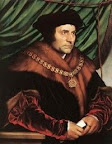
I've been reading a very good life of St. Thomas More, James Monti's The King's Good Servant, But God's First. It is a critical collection of previous biographies and manuscripts, with any number of citations to the writings of St. Thomas More, especially of his correspondence with Erasmus of Rotterdam, a longtime friend of More's. The book does an excellent job of contextualizing the life of St. Thomas More, and of drawing reasonable inferences about the saint's habits and thought based on known premises and the saint's own writings. It also delves considerably into the spiritual life of the saint, and his manners and the conduct of his household. A very good read.

It is relevant under this title because it seems to me that St. Thomas More was one who mourned. Dietrich von Hildrand, in his very excellent book, Transformation in Christ, lays out some of the principle significances of mourning. Essentially, they boil down to feeling a sort of gap. The world, though redeemed by Christ, is still in process. There is a rift between what creation once was and will eventually be again (on the one hand), and (on the other) what it is now. We travel from Eden to Eternity, not as mere wanderers, but as exiles. We feel this most acutely at times of tragedy. "Right, mom's gone on to heaven. We'll see her soon. But I miss her now!" The response is perfectly reasonable. Soul and flesh were not meant to be torn asunder, nor were families, nor were friendships - such ripping apart is the result of sin, and we are right to be pained by it. We are blessed to be pained by them, to mourn our present condition, to weep in this valley of tears because doing so means that we are awake. To feel the tear means that we are conscious to reality. It is in this state of consciousness that we can have a real relationship with the Living God. It is aware of, and pained by, our wounds and the wounds of the world that we can go to the Divine Physician for healing.

The alternative is that taken by bleary-eyed optimists and addicts of all stripes: escape from reality. Rather than deal with the pain of reality, rather than unite themselves consciously with Christ Crucified for a fallen world, such folks dodge the present condition of the world and attempt to create their own substitute, either by a false attitude or giving themselves to the glamor (the word originally means illusion) of sin.

St. Thomas More loved his family, his country, and his king. He had no ill will against any of them, despite how he was daily maligned for not going along with the crowd. At first commissioned by King Henry VIII to defend the Holy Faith and Holy Church, More gradually found his companions falling away. As the king's pleasure turned from the defense of the Church to hostility toward her, more and more laymen, government officials, and even bishops abandoned the cause. At last, St. Thomas More found himself almost alone. Even family members attempted to persuade him to acquiesce to the king's lusts. Months in the Tower of London, interrogations, and even betrayals left More saddened by life's bitter turns and weary with the world.

"I am, said I, the King's true faithful subject and daily beadsman and pray for his Highness and all his and all the realm. I do no­body harm, I say none harm, I think none harm, but wish everybody good. And if this be not enough to keep a man alive, in good faith, I long not to live and I am dying already, and have since I came here been divers times in the case that I thought to die within one hour, and I thank our Lord I was never sorry for it, but rather sorry when I saw the pang past. And therefore my poor body is at the King's pleasure; would God my death might do him good." [Click here for Paul Scofield's performance of the speech in "A Man for All Seasons."]

It is important to note that More did not seek martyrdom, much less did he desire to die. Rather, he took very seriously the spiritual destruction going on all around him, and ultimately became aware of his inability to check it. So God prepared him with special graces for a special exit.

We must fight and resist sin at every turn. Firstly, we must combat it in ourselves. Secondly, we must love our neighbors and our enemies - otherwise we will only increase sin in the world. This part is harder than it sounds. Loving our family means protecting them. Loving our enemies may mean warning them of their sins and possibly provoking their rage. Thirdly, if combating our own sins and loving our neighbors and enemies has not exhausted us, we are in a position to combat sin in the world - actually to go on the spiritual warpath against it, rather than simply trying to keep it in check or at bay within our natural sphere of influence.


Happy Anniversaries

Ok, so last night I watched "A Man for All Seasons," in honor of St. Thomas More and St. John Fisher Day. Just this morning, getting ready to post something about one of my favorite saints, I remembered that I had already written something about him. Here it is.

As it turns out, that was the very first post of my blog - posted one year ago yesterday. So, in addition to the anniversary to being the anniversary of the martyrdom of St. John Fisher, recusant bishop of Rochester, it is also the anniversary of my blog - I know, a truly momentous occasion.

I reread my post on St. Thomas and St. John, and can't really think of much else to add. Last night I also decided to start reading a modern critical history making use of newly available sources of St. Thomas's life, times, and writings that seems very good, from Ignatius Press: The King's Good Servant, But God's First. The author promises to draw out St. Thomas More's deep spiritual life in a way that previous biographies have neglected.

It's been quite a week at work and also socially for me, and I've found prayer time scarce. It occurs to me that time isn't ever any more or less scarce, but only that for some reason I let important things: God, sleep, balancing the checkbook, etc., slide to lower places of priority. St. Thomas More, in the movie at least, seems to have been expert at keeping first things first, which is the skill at the heart of the virtue of prudence - the habit of knowing the most important thing, and how best to get it. Maybe if I ask enough, St. Thomas will lend me a bit more. Lol.

St. Thomas More and St. John Fisher, pray for us.

Fight the Power

St. Charles Lwanga and Companions, Martyrs (3 June)

Today is the memorial of St. Charles Lwanga, a martyr, and the companions slain with him. He was an official in the court of King Mwanga of Uganda, a renowned pederast. When his predecessor at court, also a Catholic, was killed for denouncing Mwanga's murder of Protestant missionaries and for his perverse sexual predations, Charles knew that he might be next. Charged by the king with bringing him boys to abuse, holy Charles brought the king only excuses. By the beginning of 1886, the king's patience wore thin. He began a persecution of Christians in his court.

Toward the end of May of 1886, Charles and twenty or so others were ordered to undertake a trek of 37 miles under armed guard to the place of execution. Along the way, they passed the compound of the missionary priests who had evangelized them. The priests, White Fathers, were amazed to see their little flock being herded to death, and stricken at being powerless to save them. Charles called out to the priests to encourage them, "Why are you so sad? This is nothing to the joys you have taught us to look forward to!"

Arriving at their destination Charles and his companions (about half of whom were Protestant) were wrapped in mats and burnt to death in a heap on 3 June 1886. They died singing hymns and praising Jesus.

In our own day there are very powerful and wealthy persons working to legitimate grossly immoral sexual activity, even the preying of grown men on adolescent boys. We Christians are called to work across denominational lines to help perserve the safety of our young people and to build a culture that appreciates authentic human sexuality. In doing so, we will certainly be challenged and humiliated, threatened, perhaps assaulted, and maybe even murdered. Recently, Oklahoma state representative Sally Kern, the wife of a Baptist minister, spoke out against the homosexualist agenda and she has since received tens of thousands of pieces of hate mail and even death threats. The Catholic Bishop of Motherwell, Scotland, the Rt. Rev. Joseph Devine, has received like treatment for his outspoken opposition to gay marriage, adoption by gay couples, and his warnings of a well-orchestrated movement to achieve those and even more pernicious ends. We must work with all men and women of good will who understand what is at stake in this newest front in the global culture wars.

St. Charles Lwanga and companions, pray for us.

Mary, Behind Enemy Lines

The Count of Ourem, when he had driven the Moors from Abdegas, took one of their daughters to be his bride in about 1158. She was converted by his love, and in her honor he renamed the town for her: Fatima, a name beloved to her former coreligionists because it was borne by the daughter of Mohammed. Almost eight centuries would pass before the name of Mohammed's daughter would become beloved to Christians as well as Muslims. We still await the day when the name of God's mother will be as beloved to them as it is to us. Fatima holds the key, the Servant of God Fulton Sheen insisted, because the place named for Mohammed's daughter, or at least for one named for her, is the place that God's mother has made her own.

On May 13, 1917, when Mary first appeared there, though the little seers who saw her did not know it, all hell was breaking loose. Russia wasn't settled down from its democratic March Revolution and was already poised for the coming communist October Revolution. Mexico had just ratified its rabidly anti-Catholic and anticlerical Constitution of 1917, aiming all its government's powers toward the destruction of Holy Church. The forces of godless communism began to ravage the East and the Americas. At the same time, Europe, the heartland of Christianity, suffered under the Great War's slaughter so enormous that soon the entire continent would be scandalized from the Faith, and this under its hypocritically "Christian" leadership. It was in this context that the Blessed Virgin, the Holy Mother of God, brought a message to three little shepherds.

The Blessed Virgin taught the little children what Holy Church has always taught her children: pray and fast for the conversion of sinners. She encouraged them to do penances in reparation for the many insults to our Lord's Sacred Heart and to her Immaculate Heart. The forces of Satan, threatening then to overwhelm the world, could not be turned back by tanks and planes, for "For we are not contending against flesh and blood, but against the principalities, against the powers, against the world rulers of this present darkness, against the spiritual hosts of wickedness in the heavenly places," (Eph 6:12).

This basic message was taken seriously even before our Lady gave it to the children. It was by praying the Rosary that Don Juan of Austria and Pope St. Pius V turned the Muslim armies out of Christianity's heartland in 1571. Though that battle was fought with fire and iron, it was won with wooden beads.

Some generations later, in 1984, the bishop of that place gave a speech in Vienna in which he said, "The Secret of Fatima speaks not about atomic bombs, nor about nuclear warheads, nor about SS-20 missiles. Its contents concern but our faith. To identify the Secret with catastrophic announcements or with a nuclear holocaust is to distort the meaning of the message. The loss of faith of a continent is worse than the annihilation of a nation; and it is true that Faith is continually diminishing in Europe."

Europe, it seems, has suffered a spiritual nuclear holocaust. We must wonder if the Faith in the US has not also been gutted, for all our churchgoing piety, when our divorce rate is so high and so many pregnancies end in abortion, when pornography has become a staple in our spiritual diet, and violence is such a popular form of entertainment that children now post on the internet videos of themselves beating each other up. Around the world the power of our Western practical, if not proclaimed, atheism struggles to legitimize every form of immorality conceivable. And it is not only the forces of godlessness that threaten to overwhelm humanity, but, as in 1158, Islam itself wages war on Christ, or at least those who used nominally to call themselves Christian.

The world now, as in 1917, very much needs the message of Fatima. We are surrounded on all sides - godless atheism and anti-Christian Islam. In a world awash in war and rumors of war, we have the same hope that accompanied the Count of Ourem, the little seers of Fatima, the martyrs of Mexico and Russia and China. Against their swords and terror, threats of bodily harm and spiritual nihilism, we have the Great and Holy Mother of God, the Queen of Heaven and Earth, who charges into battle firing not shells but beads. Whether we are on the front lines against the devil, or living well within his conquered territory, we can be sure that she hears the clicking of our beads and the murmur of our prayers. She hears and transmits the distress signal to the Commander-in-Chief. Her Son, the Just Judge of the Living and the Dead, responds.

Pray, fast, do penance.

God's Personal Secretary


Feast of St. Mark, Evangelist (25 Apr)

St. Mark's personal history is the matter of some confusion. He seems to have been named John Mark, and called as much, but also John, and yet again Mark in Acts of the Apostles, St. Paul's writings, and in one of St. Peter's letters. It is not just his given name that is unclear, though. So are his travels.

Mark seems perhaps to have met St. Peter when, after his release from prison, the Apostle stayed at the home of Mark's mother. He travelled with St. Paul for a while, separating from him and his party over whether to travel deep into Asia Minor (modern Turkey). There is good evidence to suggest that during his period he travelled to Egypt and planted or nurtured the Church in Alexandria. The Coptic (Egyptian) Christians to this day count him as their first bishop. It is clear that in any event he eventually joined up with St. Peter in Rome. There, he wrote and organized the writings of St. Peter, which probably form the basis of his Gospel. He also translated and managed the affairs of the elder Apostle, doing the day to day work that kept St. Peter free for his ministry.

Perhaps either his own, or the ever-exuberant personality of St. Peter seems to be reflected in the Gospel of St. Mark in a few ways. Firstly, in that gospel account, our Blessed Lord never simply does anything. Rather, he seems always to immediately do everything. Our Lord is depicted as always on the go, a Man with a Plan, and no time to waste. Another feature of St. Mark's account is the early, frequent, and strong confrontations between our Lord and his adversaries, especially the Pharisees. Of the four Evangelists, he is the one depicted as or with a lion for these features of his Gospel.

It is unclear how St. Mark died. The earliest mentions of his death are rather late, in the 4th century, but they agree that he was martyred in Alexandria. Perhaps after Ss. Peter and Paul had been killed in Rome, St. Mark felt it important to return to his earlier ministry.

In a way it is fitting that his life is veiled to history. He, though a bishop in his own right, left that honor to serve as secretary to St. Peter, the first pope, in what was doubtless a difficult time of life for the both of them. By being content to have a small role in a growing Church, St. Mark bequeathed to us a priceless gem, his Gospel, that probably wouldn't have been written if he had clung to his earlier, more lauded role. He is an encouragement to the average Christian who doesn't seek glory or praise, but the humbler roles in a parish - cleaning floors, running errands for the pastor, and so on.

St. Mark, patron of secretaries, pray for us.

The Archbishop of Mosul

The Italian Catholic website Asianews.it has just reported that the kidnappers of the Archbishop of Mosul, Faraj Rahho, have reported that His Excellency is dead. The report did not specify the cause of death, but he is known to have been in bad health for some time. According to the BBC, the kidnappers disclosed the location of his buried body.

His ordeal began with his abduction February 29, after leading the Stations of the Cross in a parish of his diocese. Since then, he had been held in captivity and incommunicato at an unknown location. During his kidnapping, three aids with him were murdered.

His predecessor was also kidnapped, though more briefly, and returned safely. During his predecessor's governance of the city's faithful the cathedral was bombed.

Holy Faraj Rahho, Martyr for Christ and His Church, pray for us.

Friends of Jesus, Together, Overturn the World

Ss. Perpetua and Felicity, Martyrs and Holy Wives (Feb 7)

When he consolidated full control of the Roman Empire in AD 197, it wasn't long at all before Septimus Severus initiated a bitter persecution of Christianity because of its unwillingness to conform to the state-sponsored syncretism, or mixing of religions, that he wished to promote. Among the measures he instituted was the prohibition of conversion to Christianity (or to Judaism) under penalty of death. The persecution intensified from year to year: Bibles were burned, Christians were dismissed from the civil service and military, clergy were ferreted out on false pretenses, pressure was brought to bear on wealthy and powerful Christians to renounce the faith publicly.

None of this mounting terror stopped a beautiful, educated, young mother of the noble class of Carthage, in North Africa, from converting to Christianity. Vibia Perpetua entered the catechumenate despite pleas by her father. Her brother, inspired by her example, entered the catechumenate as well. Her pregnant slave, Felicity, was already a baptized Christian and the two rejoiced to be sisters. Within a few weeks, someone informed on Felicity, who was swept up in a dragnet along with her brother, her friend the slave, her catechist, and several of the other catechumens in her group. The lot were taken to jail to await judgment.
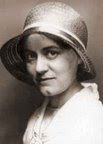
While in jail, each member of her family pled with Perpetua. Her father and mother pled. "Father," she asked him, "Do you see that water jar?" When he responded in the affirmative, she replied, "Can you call it rightly by any other name?" When he replied in the negative, she added, "And neither can I call myself rightly by any other name but Christian."

Her husband, who adored her, pled. She was young, and beautiful, and intelligent. A darling of local society. "How can you do this?" he pled. He reminded her of her infant son. She replied lovingly that the best things she could give her child was Christ.
The judge assigned to hear her case pled. He even went so far as to offer to seal the chambers and require that she only allow him to announce that she had made sacrifice to Caesar - but not that she actually do so. He offered to spare her slave for her sake. She replied that her slave was as willing to die for Christ as she was.

Perpetua and her brother were baptized after their sentence was handed down: death. The lot was taken to the colloseum of Carthage, and held there for several days. Because it was illegal to execute a pregnant woman, Felicity would not be put to death until she had delivered. It was in Perpetua's dark prison cell that Christ's revolution came to light. St. Paul had asked Philemon to overlook the status of his slave, Onesimus, for the sake of Christ. Perpetua put St. Paul's plan into action. Perpetua, a wealthy noblewoman, fed, cleaned, and cared for Felicity, her very pregnant slave. And Perpetua served her hand and foot, much to the discomfort of her jailers. Almost two centuries earlier Our Blessed Lord had asked rhetorically, "Will any one of you, who has a servant plowing or keeping sheep, say to him when he has come in from the field, `Come at once and sit down at table'?" (Lk 17:7). Here, Perpetua answers him to the shock of the pagan world - "Yes!" In Christ there is no slave and free, but only love between brothers and sisters. In today's re-paganized world, this leveling of love is again a revolutionary act.

If you doubt that the old Pagan order has been restored in the modern world, sweeping away Christ's revolution, you have only to ask yourself how many would do as St. Perpetua did for her friend St. Felicity. How many post-Christian neo-Pagans (whether they recognize themselves as such or not) make friends with other people who make one fifth their income? The only remains of Christ's revolution in the world are found in the Church. Here in the Church we Christians serve those who, in the natural order of the modern world, would be our servants. Soup kitchens, literacy classes, and all manner of social services are provided to social lessers for the love of Christ.

The judge had offered to spare Felicity for the sake of Perpetua, but in the end, it was Perpetua was who allowed to live a bit longer to tend to Felicity until the slave had given birth. At that time, their children were taken away from them and the two ladies were taken to the colloseum. The Roman world watched in amazement as another round of Christians were happily united to their Lord; this time, to add to the spectacle, a slave and her mistress went together as sisters.

So it is with us. As we allow Christ's love to transform us in our inner depths, we will almost unintentionally push against the artificial boundaries laid down by society, like a child who has outgrown his pants. Around us the seams of society's cold and loveless institutions will strain and rip as they begin to overflow with the love of Christ. Christ's revolution is not fought with guns, or even petitions and votes. It is waged with friendship that defies all odds, prayerful hope in dark prison cells, love that never ceases to sacrifice. Christ's revolution will buckle and explode the narrow walls of our hearts and then the narrow walls of our society. It is like a mustard seed, Our Lord said. Buried under a concrete foundation it will grow and uproot a whole house. It will move mountains. Christ's revolution will, we pray, overturn the foundations of the modern pagan society in which we live, tearing down the thin veneer of Christianity and replace it with a hearty, vital, living Faith in the Living God. Ss. Perpetua and Felicity joyfully lived this revolution in their lives. Pray, Holy Women, that we may live it in ours.

Ss. Perpetua and Felicity, pray for us.

Prototype of the Convert

Feast of the Conversion of St. Paul (Jan 25)

St. Paul's conversion becomes in our mind the very prototype for a conversion to our holy Faith because of the dramatic change he underwent. From killing Christians to proclaiming Christ seemingly overnight, if the account from Acts of the Apostles is read without interpretation.

In reality, things weren't quite as decisive as all that. Firstly, tradition holds, and the his letters themselves seem to indicate, that St. Paul spent several years in Arabia between his initial conversion and the beginning of his preaching (Gal 1:17). During this time, the zealous and violent Pharisee was transformed gradually into the zealous and gentle Apostle.

Moreover, it must be borne in mind that Saul the Pharisee did not knowingly oppose God. Quite to the contrary, according to his own best natural lights, Saul was passionately obedient to God. His problem was not caring for God too little, but knowing Him too little. "Saul, Saul, why do you persecute me?" the Pharisee was asked. He responded with a telling question of his own, "Who are you, Lord?" (Acts 9:4-5). It hadn't occured to him earlier that the Jesus whose followers he hounded might actually have been God. The radical repositioning that changed Saul into St. Paul was, at least firstly, a recognition. He didn't change his mind about God, but about Jesus, by recognizing Him to be God. Most of us need a much more radical conversion, because even if we recognize Jesus to be God, we do not recognize God to be God - that is, we make ourselves God while paying mere lip service to the Creator. While Saul was mostly in error, we are mostly in a much more serious spiritual problem - hypocrisy.

All that said, Saul's conversion into Paul was radical and shocking enough to alarm and amaze the Christian communities he encountered (Acts 9:21). And even though his vocation needed maturation and testing in the harsh Arabian desert, his zeal was never dampered and he immediately began to preach the One whose disciples he had murdered (Acts 9:20).

Most of our conversions don't happen with the apparent pace of St. Paul's. The Holy Spirit works in all of us, but what was patent in St. Paul immediately is latent and subtle in most of the rest of us. Gradually the Holy Spirit molds and kneads our soul, strengthening from without and supporting from without. The rate of our growth is exactly equal to our willingness, and a major work of the Holy Spirit is to increase our willingness, our attitude of obedience to God. Those unbaptized persons or unconfirmed Christians who seek admission into Holy Church and so receive her holy sacraments manifest the same sort of obvious conversion that St. Paul did. Still, all of us need ongoing conversion, and some of us, even while practicing the Faith externally yet need a much more radical conversion.

I thought it would be fun to include a roughly chronological list of some cool converts who have already departed this life for the eternal, coming from different walks of life throughout the ages. Many of them paid a steep price, even martyrdom, for their integrity and commitment to Christ. May they be rewarded for it, and may we imitate them! If you can think of others, please tack them up as comments!

St. Justin Martyr, Ss. Perpetua & Felicity, St. Ambrose of Milan, St. Augustine of Hippo, St. Martin of Tours, St. Patrick of Ireland, St. Stephen the King of Hungary, St. Juan Diego, St. Elizabeth Ann Seton, St. Kateri Tekakwitha, Alphonse Ratisbonne, John Henry Cardinal Newman, Buffalo Bill, Gerard Manley Hopkins, Oscar Wilde, Fr. Robert Hugh Benson, G. K. Chesterton, Fr. Ronald Knox, Sigrid Unset, Evelyn Waugh, Dorothy Day, Max Scheler, Dietrich von Hildrebrand, Edith Stein, Jacques Maritain, Salvador Dali, Graham Greene, Walker Percy, Valery Goulding (nee Monckton), Adrienne von Speyr, Malcolm Muggeridge, Thomas Merton, Andre Frossard, Rene Girard, Christopher Lasch, Jean-Marie Cardinal Lustiger, Catherine Doherty, John Wayne, Lord Alec and Lady Merula Guinness, Bob Hope

Coincidentally, this post is my 100th on the blog. Happy reading!

St. Paul and all other Holy Converts in Heaven, pray that we ourselves be converted.